本期目录

2024年, 第35卷, 第03期 刊出日期:2024-03-22
  

  • 全选
    |
  • Rong-Nan Yi, Wei-Min He
    中国化学快报. 2024, 35(03): 109253. https://doi.org/10.1016/j.cclet.2023.109253
    摘要 ( ) PDF全文 ( ) HTML 可视化 收藏
  • Lulu Bu, Daofu Liu, Longde Wang, Mei Sun, Chao Gao, Yongshu Xie
    中国化学快报. 2024, 35(03): 109290. https://doi.org/10.1016/j.cclet.2023.109290
    摘要 ( ) PDF全文 ( ) HTML 可视化 收藏
  • Wei-Lei Zhou, Siwei Wang, Yong Chen
    中国化学快报. 2024, 35(03): 109300. https://doi.org/10.1016/j.cclet.2023.109300
    摘要 ( ) PDF全文 ( ) HTML 可视化 收藏
  • 评论
  • Fuli Wang, Penglu Wang, Jin Zhang, Dengchao Peng, Mengmeng Wei, Dengsong Zhang
    中国化学快报. 2024, 35(03): 108800. https://doi.org/10.1016/j.cclet.2023.108800
    摘要 ( ) PDF全文 ( ) HTML 可视化 收藏
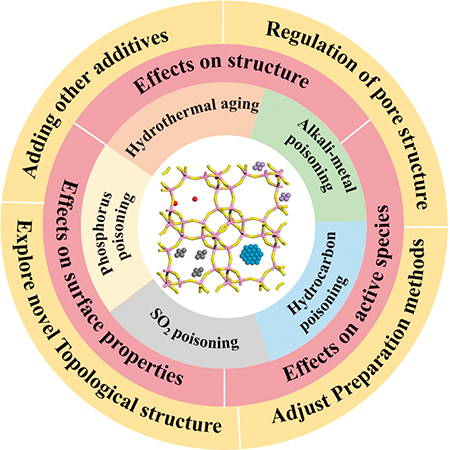
    Molecular sieve catalysts, owing to their unique chemical properties, are widely used as catalysts among various catalytic reactions. Abundant Brønsted acid sites in molecular sieve catalysts usually enable active components to disperse well on the catalyst surface, and help to adsorb a large number of gas molecules to achieve maximum catalytic performance. Therefore, a variety of molecular sieve catalysts have been developed and used in the selective catalytic reduction of NOx by NH3 (NH3-SCR). For example, Cu molecular sieve catalysts such as Cu-SSZ-13 and Cu-SAPO-34 with wide temperature windows and stable structure are considered and applied as commercial catalysts for NOx removal in diesel vehicles for a long time. Although molecular sieve catalysts possess many advantages, they still cannot avoid the serious deactivation caused by various factors in practical applications. In this review, reasons leading to the deactivation of molecular sieve catalysts for NOx reduction in actual working conditions were concluded. The deactivation mechanisms of molecular sieve catalysts for NOx reduction were analyzed and the corresponding anti-deactivation strategies were summarized. Finally, challenges and prospects of molecular sieve catalysts for NOx reduction were also proposed.
  • Xiangjun Liu, Shuai Zhang, Miao Wang, Junqi Wang
    中国化学快报. 2024, 35(03): 108723. https://doi.org/10.1016/j.cclet.2023.108723
    摘要 ( ) PDF全文 ( ) HTML 可视化 收藏
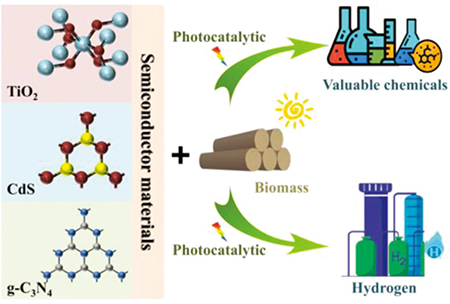
    Biomass is the most bountiful renewable carbon resource on earth. Photocatalytic transformation is a promising method to utilize biomass to obtain high-value-added chemicals and it has more obvious advantages compared with thermochemical and biological processes due to the milder operational conditions, fewer reagents and equipment. Semiconductor material is one of the most common kinds of heterogeneous biomass photocatalysts, which has the advantages of high selectivity, stable catalytic performance, long activation time, and low cost. In this paper, the significant research progress on the photocatalytic transformation of biomass with semiconductor materials to produce high-value-added chemicals is reviewed, and the three most typical semiconductor photocatalysts (TiO2, CdS, and g-C3N4) are detailed. The photocatalytic mechanism and photocatalytic system optimization including structural modification, metal co-catalyst loading, and introduction of heterojunction are presented. Besides, the main problems, the development direction and trend of semiconductor materials in photocatalytic transformations of biomass in the future are prospected, which provide guidance and inspiration for the further development of semiconductor photocatalysts and make contributions to the progress in efficient utilization of biomass.
  • Ye Yuan, Junan Pan, Weinan Yin, Haoxuan Yu, Fengshun Wang, Weifeng Hu, Longlu Wang, Dafeng Yan
    中国化学快报. 2024, 35(03): 108724. https://doi.org/10.1016/j.cclet.2023.108724
    摘要 ( ) PDF全文 ( ) HTML 可视化 收藏
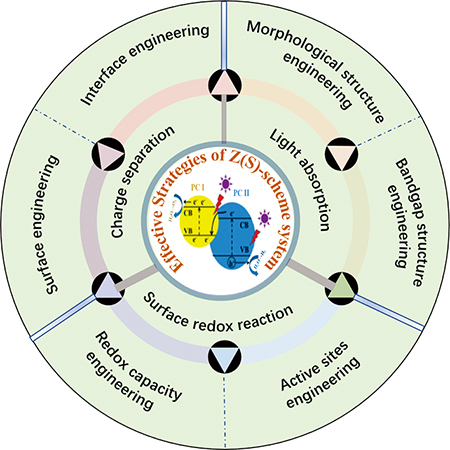
    Artificial Z(S)-scheme photocatalytic water splitting systems have attracted extensive attention due to their advantages such as wide light absorption range, high charge separation efficiency and strong carrier redox ability. However, it is still challenging to design and prepare Z(S)-scheme photocatalysts with low-cost and highly stability for efficiently photocatalytic overall water splitting using solar energy. This review mainly introduces various strategies to improve the photocatalytic water splitting performance of Z(S)-scheme systems. These strategies mainly focus on enhancing or extending the range of light absorption, promoting charge separation, and enhancing surface redox reaction in Z(S)-scheme systems. Finally, the main challenges of Z(S)-scheme photocatalytic water splitting systems and their future development directions are pointed out. This review would be beneficial to understanding the challenges and opportunities faced by the research field of Z(S)-scheme photocatalytic systems, and has important guiding significance for the development and utilization of high-performance Z(S)-scheme photocatalytic reaction system in the future.
  • Si Sun, Shuang Song, Shuai Yang, Yong-Li He, Yang Shi, Peng Zhou, Zhao-kun Xiong, Yang Liu, Heng Zhang, Ye Du, Chuan-Shu He, Bo Lai
    中国化学快报. 2024, 35(03): 109242. https://doi.org/10.1016/j.cclet.2023.109242
    摘要 ( ) PDF全文 ( ) HTML 可视化 收藏
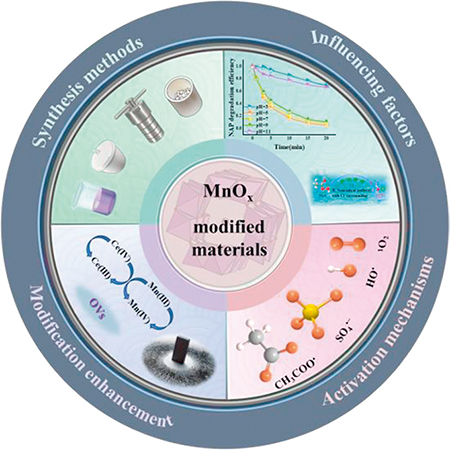
    Manganese oxides (MnOx), as low-toxicity and high-abundance catalysts, have been demonstrated to hold great promise for application in advanced oxidation processes (AOPs). However, further application of this material is restricted due to its unsatisfactory oxidant activation efficiency. Fortunately, recently remarkable research on deep activation mechanisms and modification of MnOx have been undertaken to improve its reactivity. Herein, modification enhancement mechanisms of MnOx to efficiently degrade various organic contaminants were discussed and highlighted, including metal doping, coupling with other metal oxides, composite with carbonaceous material, and compounding with other support. The activation mechanisms of different MnOx and derivative-modified material (such as doped MnOx, metal oxide-MnOx hybrids, and MnOx-carbonaceous material hybrids) were summarized in great details, which was specifically categorized into both radical and non-radical pathways. The effects of pH, inorganic ions, and natural organic matter on degradation reactions are also discussed. Finally, future research directions and perspectives are presented to provide a clear interpretation on the MnOx initiated AOPs.
  • Yingying Zhao, Jiangpei Yuan, Lei Zhu, Yu Fang
    中国化学快报. 2024, 35(03): 109065. https://doi.org/10.1016/j.cclet.2023.109065
    摘要 ( ) PDF全文 ( ) HTML 可视化 收藏
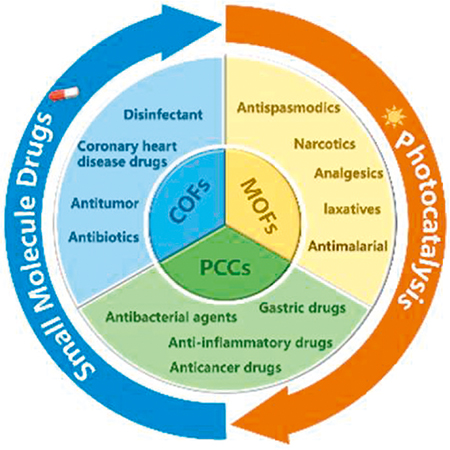
    Small-molecule drugs are widely used in daily life. There are still issues with the current industrial synthesis techniques for small-molecule drugs, such as the use of expensive metal catalysts, convoluted reaction processes, and non-recyclable catalysts. The benefits of photocatalytic organic synthesis over conventional techniques are mild conditions, environmental friendliness, and great selectivity. Porous framework materials can precisely modulate catalytic sites' electronic state and ligand structure to improve photocatalytic performance. In particular, MOFs, COFs and PCCs based photocatalysts have received extensive research interest due to their unique morphology, structural adjustability, high photocatalytic performance, unique recyclability, excellent chemical stability, easy synthesis and low cost. Therefore, a key area for future research is the development of porous framework materials as photocatalysts for the synthesis of small-molecule drugs or drug precursors.
  • Ya-Nan Tang, Dingding Jiang, Xuejun Wang, Yunqi Liu, Dacheng Wei
    中国化学快报. 2024, 35(03): 108688. https://doi.org/10.1016/j.cclet.2023.108688
    摘要 ( ) PDF全文 ( ) HTML 可视化 收藏
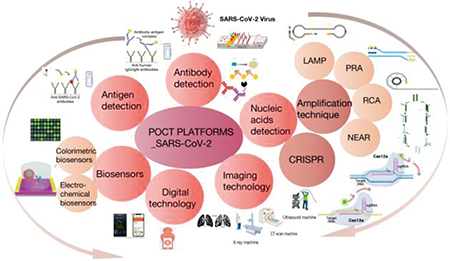
    The outbreak of COVID-19 has drawn great attention around the world. SARS-CoV-2 is a highly infectious virus with occult transmission by many mutations and a long incubation period. In particular, the emergence of asymptomatic infections has made the epidemic even more severe. Therefore, early diagnosis and timely management of suspected cases are essential measures to control the spread of the virus. Developing simple, portable, and accurate diagnostic techniques for SARS-CoV-2 is the key to epidemic prevention. The advantages of point-of-care testing technology make it play an increasingly important role in viral detection and screening. This review summarizes the point-of-care testing platforms developed by nucleic acid detection, immunological detection, and nanomaterial-based biosensors detection. Furthermore, this paper provides a prospect for designing future highly accurate, cheap, and convenient SARS-CoV-2 diagnostic technology.
  • Yanshu Luo, Xinyu Zhang, Yuanzhi Xia
    中国化学快报. 2024, 35(03): 108778. https://doi.org/10.1016/j.cclet.2023.108778
    摘要 ( ) PDF全文 ( ) HTML 可视化 收藏
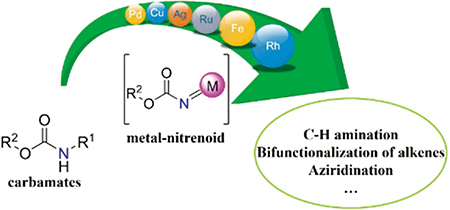
    Nitrene transfer reactions are powerful tools in synthetic organic chemistry. In recent years, transition-metal catalyzed nitrene transfer reactions with carbamates as the nitrene precursors have been widely pursued. Such species undergoes facile C-H amination, aziridination, and bifunctionalization of alkenes under the catalysis of different transition metals including Rh, Fe, Ru and others, enabling the efficient construction of various nitrogen-containing molecules. In this review, the recent developments in nitrene transfer reactions with carbamates via N-O bond cleavage were introduced based on different types of reaction, and the key mechanistic information and synthetic applications of the methodologies were discussed.
  • Peiwen Liu, Hui Jin, Yan Chen, Derong Wang, Haohui Yan, Mingzhao Wu, Fang Zhao, Weiping Zhu
    中国化学快报. 2024, 35(03): 108877. https://doi.org/10.1016/j.cclet.2023.108877
    摘要 ( ) PDF全文 ( ) HTML 可视化 收藏
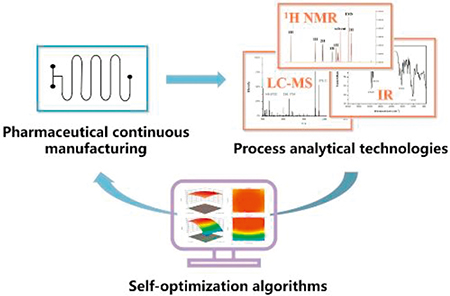
    The pharmaceutical industry is now paying increased attention to continuous manufacturing. While the revolution to continuous and automated manufacturing is deepening in most of the top pharma companies in the world, the advancement of automated pharmaceutical continuous manufacturing in China is relatively slow due to some key challenges including the lack of knowledge on the related technologies and shortage of qualified personnels. In this review, emphasis is given to two of the crucial technologies in automated pharmaceutical continuous manufacturing, i.e., process analytical technology (PAT) and self-optimizing algorithm. Research work published in recent 5 years employing advanced PAT tools and self-optimization algorithms is introduced, which represents the great progress that has been made in automated pharmaceutical continuous manufacturing.
  • Yuanzheng Chen, Jiaojiao Zhu, Jinsong Ding, Wenhu Zhou
    中国化学快报. 2024, 35(03): 108706. https://doi.org/10.1016/j.cclet.2023.108706
    摘要 ( ) PDF全文 ( ) HTML 可视化 收藏
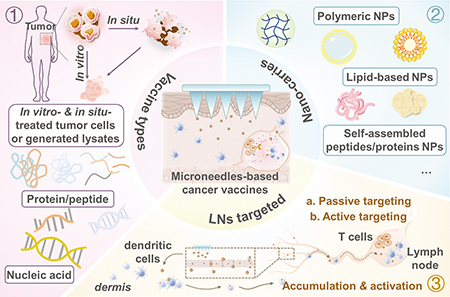
    Therapeutic cancer vaccines have undergone a resurgence in the past decade. Because of the high level of immune cell accumulation and abundant capillary lymphatic system in the dermis, percutaneous vaccination is considered to be an ideal treatment route. For convenient administration, the recent development of microneedles (MNs) provides a safe, painless, and low-cost transdermal delivery strategy, which could bypass the first-pass metabolism of vaccines for enhanced stability and bioavailability. However, the therapeutic effect of MNs-based cancer vaccines is not optimal, which is limited by the complex set of host, tumor, and environmental factors, as well as the limited vaccine loading capacity. Therefore, further improvements are still required to push their clinical translation. In this critical review, we deliberate on how to improve the therapeutic effect of MNs-based vaccines for cancer immunotherapy, summarize the recent advances in MNs-based cancer vaccination, and provide an overview of various design strategies and mechanisms for active or passive targeting delivery, aiming to develop safer, more effective, and more stable MNs-based cancer vaccines. Finally, we briefly describe the potential of vaccine platforms in combination with other therapies, suggest the need to design vaccines according to specific circumstances, and discuss the biosafety of repeated administration for enhancing clinical efficacy.
  • Ya Wang, Shengxin Guo, Lijiao Yu, Wei Zhang, Zhenchao Wang, Yonggui Robin Chi, Jian Wu
    中国化学快报. 2024, 35(03): 108207. https://doi.org/10.1016/j.cclet.2023.108207
    摘要 ( ) PDF全文 ( ) HTML 可视化 收藏
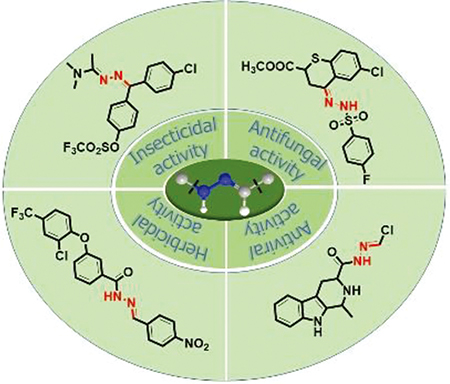
    As a common active substructure, hydrazone has attracted increasing attention and is considered essential for pesticide discovery. It has been widely regarded as a potential insecticidal, antibacterial, antifungal, antiviral, and herbicidal agent. In this review, we highlight the pesticide versatility of hydrazone fragments and provide a comprehensive summary of the biological activity, structure-activity relationship analysis (SARs), and primary mechanism of their analogs. This profile is expected to give valuable information for discovering new pesticides.
  • Xumeng Deng, Kaihao Chen, Kai Pang, Xiaoting Liu, Minsong Gao, Jie Ren, Guanwen Yang, Guangpeng Wu, Chengjian Zhang, Xufeng Ni, Peng Zhang, Jian Ji, Jianzhao Liu, Zhengwei Mao, Ziliang Wu, Zhen Xu, Haoke Zhang, Hanying Li
    中国化学快报. 2024, 35(03): 108861. https://doi.org/10.1016/j.cclet.2023.108861
    摘要 ( ) PDF全文 ( ) HTML 可视化 收藏
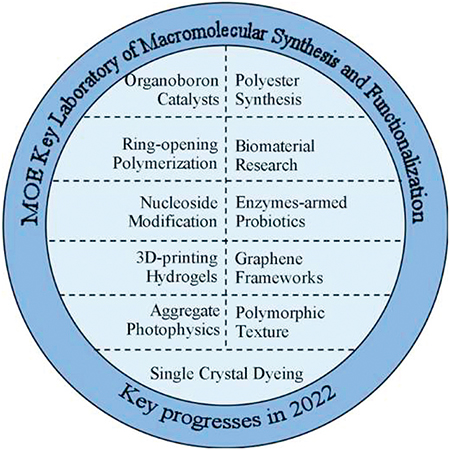
    In 2022, The MOE Key Laboratory of Macromolecular Synthesis and Functionalization in Zhejiang University had achieved several important results. First, a series of well-defined dinuclear organoboron catalysts were developed to precisely control the enchainment of ether and carbonate segments during the copolymerization of CO2 and epoxides. Second, polyester had been synthesized through cationic copolymerization of cyclic anhydride. Third, ring-opening polymerization of carbon dioxide based valerolactone had been achieved, revealing the prospect of 3-ethylidene-6-vinyltetrahydro-2H-pyran-2-one (EVL) in utilizing CO2 and synthesizing functional polymers. Fourth, machine learning methods have been applied to biomaterial research, enabling high-throughput screening of functional biomaterial surfaces for implantable devices, and searching for potent antimicrobial peptides in whole combinatorial peptide libraries. Fifth, methods of characterization of biomacromolecule RNA transcription and manipulation of nucleoside modification were developed. Sixth, artificial enzymes-armed Bifidobacterium Longum probiotics were established to tune down gut inflammation. Seventh, three-dimensional (3D) printing technologies were used to engineer tough supramolecular hydrogels. Eighth, hydroplastic foaming graphene frameworks for acoustic and conductive polymer composites were provided for application. Ninth, aggregate photophysics about the nature of through-space interactions (TSIs) and manipulating their strength in small molecules with non-conjugated structure had been elucidated. Tenth, the forming mechanism of a newfound nested texture in poly(l-lactic acid) (PLLA) spherulitic films had been revealed. Finally, the isotropically dyeing mechanism of KDP single crystals grown from hydrogels have been explored. The related works are reviewed in this paper.
  • 通信
  • Han-Qing Zhao, Peili Lu, Fei Chen, Chen-Xuan Li, Rui Yan, Yang Mu
    中国化学快报. 2024, 35(03): 108694. https://doi.org/10.1016/j.cclet.2023.108694
    摘要 ( ) PDF全文 ( ) HTML 可视化 收藏
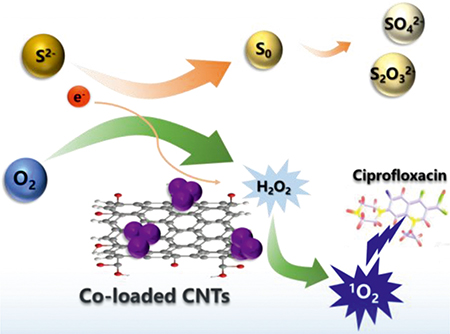
    Sulfide oxidation under aerobic conditions can produce active oxygen for the transformation of organic pollutants in aquatic environments. However, the catalytic performance of transition metal-supported carbon material on this process is poor understood. This study found that Co-loaded carbon nanotubes (CNTs) was able to realize the efficient aerobic transformation of antibiotic ciprofloxacin (CIP) by sulfide, with the pseudo-first order reaction rate constant improved from 0.013 h-1 without catalyst to 0.44-0.71 h-1 with 100 mg/L Co-loaded CNTs. Singlet oxygen (1O2) was the main active specie playing key roles in the process of CIP aerobic transformation with presence of Co-loaded CNTs. Mechanism studies indicated that the excellent electron transfer ability of Co-loaded CNTs might play an important role to promote the electron transfer and facilitate the formation of intermediate H2O2 and 1O2. Additionally, the Co-loaded CNTs/sulfide system effectively reduced the acute toxicity of organic pollutant, and Co-loaded CNTs showed remarkable cycling stability and negligible leaching. This study gives a better understanding for the Co-loaded CNTs mediated aerobic antibiotics transformation by sulfide, and provide a reference for the application of Co-loaded carbon materials on organics aerobic transformation by sulfide.
  • Jinpeng Du, Jingyi Wang, Yulong Shan, Shichao Han, Wenpo Shan, Hong He
    中国化学快报. 2024, 35(03): 108781. https://doi.org/10.1016/j.cclet.2023.108781
    摘要 ( ) PDF全文 ( ) HTML 可视化 收藏
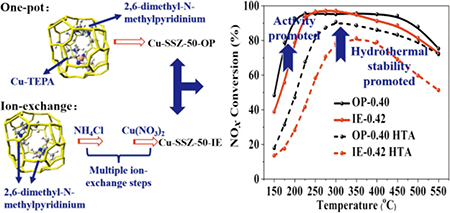
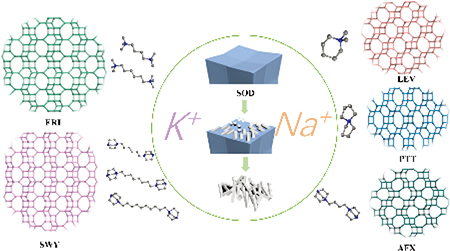
    Nitrogen oxide (NOx) is one of the most critical contaminants in the air, and the control of NOx emission from diesel vehicles is very important. Cu-based small-pore zeolites have already been applied for NOx abatement on diesel vehicles. Among the small-pore zeolites, Cu-SSZ-50 catalysts with good NH3-SCR catalytic activity were believed to have potential for application. In this study, a one-pot synthesis method for Cu-SSZ-50 catalysts was developed for the first time, using the co-templates of Cu-TEPA and 2,6-dimethyl-N-methylpyridinium hydroxide. In this synthesis method, Cu-SSZ-50 with various Cu contents can be obtained by adjusting the amount of Cu-TEPA without the need for a further after-treatment process. The addition of Cu-TEPA affected the framework atoms and Cu species, and a lower Si/Al ratio and more SCR active Cu species were obtained. The synthesized catalyst with a Cu/Al ratio of 0.40 exhibited over 90% NOx conversion between 200 ℃ and 450 ℃ for the selective catalytic reduction of NOx with NH3 (NH3-SCR). Meanwhile, over 80% NOx conversion could be obtained from 250 ℃ to 450 ℃ after hydrothermal aging at 750 ℃ for 16 h. In addition, both L-H and E-R mechanisms were proven to exist for the one-pot-synthesized Cu-SSZ-50 by in situ DRIFTS experiments. The simple synthesis procedure, excellent catalytic activity and hydrothermal stability brighten the prospects for the application of Cu-SSZ-50.
  • Kaiqiang Hou, Genwang Zhu, Yujie Feng, Yanming Liu, Xie Quan
    中国化学快报. 2024, 35(03): 108704. https://doi.org/10.1016/j.cclet.2023.108704
    摘要 ( ) PDF全文 ( ) HTML 可视化 收藏
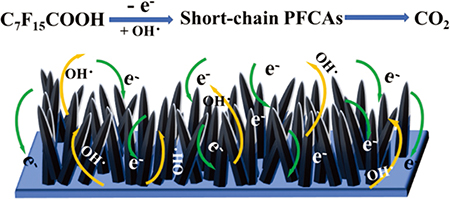
    Electrochemical oxidation is an effective method to degrade persistent organic pollutants. However, due to the limited catalytic activity of traditional thin film electrodes, the anodic oxidation process is slow and usually requires high energy consumption. Herein, Ti/SnO2-Sb electrode with regulated surface structure was reported to enhance the performance for electrochemical oxidation of persistent organic pollutants. The electrode deposited with SnO2-Sb nanoneedles (Ti/N-SnO2-Sb) showed higher oxidation activity. Its kinetic constant for perfluorooctanoic acid (PFOA) oxidation was 2.0 h-1 and the total organic carbon removal rate was 81.7% (4 h) at a relatively low current density of 6 mA/cm2. Compared with Ti/SnO2-Sb thin film and nanoparticles, Ti/N-SnO2-Sb significantly improved the electrochemical active area and ·OH yield, and simultaneously reduced the electron transfer resistance, which enabled it to oxidize PFOA more rapidly even at a lower potential. This work provides a new strategy for promoting the electrochemical oxidation performance.
  • Qi Wu, Anyang Li, Ruibo He, Yaxi Wu, Lei Hou, Guoping Yang, Wenyan Zhang, Yao-Yu Wang
    中国化学快报. 2024, 35(03): 108639. https://doi.org/10.1016/j.cclet.2023.108639
    摘要 ( ) PDF全文 ( ) HTML 可视化 收藏
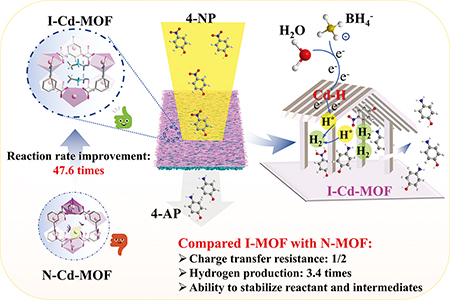
    Nitroaromatic hydrogenation catalysis without precious metals remains a longstanding challenge. The rate of electron transfer is the crucial factor affecting hydrogenation catalysis. Herein, an ionic Cd-based metal-organic framework (I-Cd-MOF) exhibiting a unique structure with one-dimensional (1D) opening nanochannels and good electron transfer ability was synthesized for catalyzing hydrogenation of 4-nitrophenol (4-NP). The catalytic activity of the unique I-Cd-MOF without noble metals is detected, which is higher than most reported noble metal catalysts. Remarkably, the reaction rate of I-Cd-MOF (4.28 min-1) is about 47.6 times higher than that of the Cd-based neutral MOF (N-Cd-MOF) with the similar crystalline structure. Liquid chromatograph mass spectrometer (LC-MS) and theoretical results demonstrate that 4-NP and five intermediates are stabilized in the channels of I-Cd-MOF, which increases the possibility of contact with H* and H2 generated at the Cd sites. The I-Cd-MOF was extended to other nitroaromatic hydrogenation catalysis, which still displays excellent activity. More importantly, the I-MOF@Filter membrane was successfully constructed for continuous hydrogenation catalytic reactions, which maintains a high catalytic performance after 7 cycles of recycling without washing. This work fills in the application of the I-MOFs in hydrogenation catalytic reactions and provides an effective way for the rapid and green degradation of nitroaromatic compounds.
  • Yujie Zhang, Siyi Liu, Dongdong Chen, Xing Xu
    中国化学快报. 2024, 35(03): 108666. https://doi.org/10.1016/j.cclet.2023.108666
    摘要 ( ) PDF全文 ( ) HTML 可视化 收藏
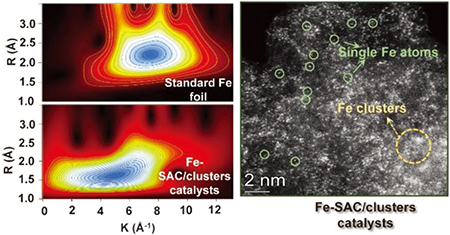
    Fabrication of single atom catalysts (SACs) by a green and gentle method is important for their practical Fenton-like use. In this work, a high effective iron-based catalyst was prepared from the iron-rich Enteromorpha for NPX degradation via peroxymonosulfate (PMS). Both Fe-SACs and iron-clusters was fabricated from the intrinsic iron element in Enteromorpha after the urea saturation. The Fe-SACs/clusters can achieve 100% of NPX oxidation within 20 min with the kobs of 0.282 min-1. Quenching tests indicated that the radical pathways were not dominated in the catalytic systems, and strong electron transfer process can be induced in the Fe-SACs/clusters + PMS system by using the NPX as electron donor and Fe-SACs/clusters/PMS* complexes as electron acceptor. This result was consistent with the phenomenon observed in the galvanic oxidation system. In addition, the Fe-SACs/clusters was deposited onto the ceramic membrane (CM) by the spraying-crosslinking process to form a Fe-SACs/clusters@CM, which showed an effective and continuous NPX degradation in a heterogeneous PMS system.
  • Xinwei Li, Pengge Wang, Shuwen Han, Yu Huang, Wingkei Ho, Steven Sai Hang Ho, Shun-cheng Lee, Meng Wang
    中国化学快报. 2024, 35(03): 108709. https://doi.org/10.1016/j.cclet.2023.108709
    摘要 ( ) PDF全文 ( ) HTML 可视化 收藏
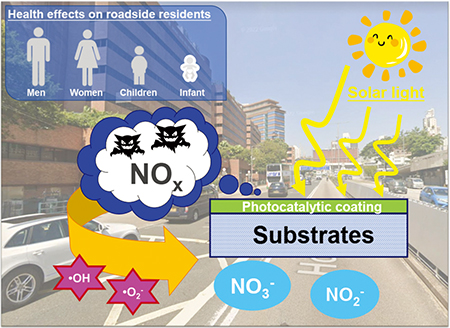
    A facile chemical method for the development of photocatalytic coating products was proposed based on practical application perspective for the Hong Kong roadside nitrogen oxides (NOx) mitigation. TiO2-based photocatalytic coating PC-C film with crystallized size of around 5-6 nm was synthesized with the peptization of H2O2. The PC-C coating possesses a super-hydrophilicity surface and is proven to have a NOx degradation rate of 46.8% with an optimum pH level of 7. In addition, the PC-C coating presents a promising photocatalytic NOx degradation compared with other commercially available coating products and P25 when applied on two building materials of poly-methyl methacrylate (PMMA) and concrete surface. A weather resistance simulation and a 180-day on-site field trial were carried out the attenuation effects of photocatalytic coating applied in outdoor exposure. Based on epidemiological estimation and field investigation, hospital admissions for respiratory diseases (HARD) and mortality cases (MC) could be reduced with the application of PC-C coating along the street canyon. This work demonstrates the feasibility of air pollution control measures for the local roadside NOx using photocatalytic technology, offering promising health benefits with environmental remediation.
  • Zhuoni Jiang, Zhiqing Ge, Shuo Yan, Jingjing Shu, Mozhen Wang, Xuewu Ge
    中国化学快报. 2024, 35(03): 108637. https://doi.org/10.1016/j.cclet.2023.108637
    摘要 ( ) PDF全文 ( ) HTML 可视化 收藏
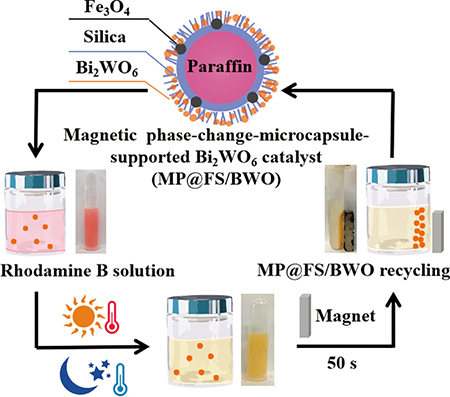
    The design and synthesis of novel photocatalyst with self-temperature control function is an important topic in the field of advanced environmental functional materials. In this work, submicron-sized magnetic phase change microcapsules composed of paraffin core and Fe3O4-loaded silica shell are prepared, on which the Bi2WO6 crystals is grown in situ through hydrothermal reaction to obtain novel magnetic phase-change-microcapsule-supported Bi2WO6 catalyst (MP@FS/BWO). The MP@FS/BWO has a paraffin encapsulation ratio of 57.1%, and the phase change enthalpy of 105.1 J/g in a temperature range of 50-60 ℃, which endows the MP@FS/BWO with a certain self-temperature regulation ability. MP@FS/BWO shows excellent catalytic performance in the decomposition of rhodamine B under the simulated sunlight irradiation. After the light source is turned off, it still has good catalytic ability by maintaining high temperature due to its temperature control function based on the phase transition process. The MP@FS/BWO can be easily recycled by magnetic separation and shows good structural stability and reusability. This work provides a new idea for the development of long-effect and energy-saving outdoor photocatalysts.
  • Chunying Wang, Xiaofeng Liu, Jingyi Wang, Yaobin Li, Shaohua Xie, Fudong Liu, Changbin Zhang, Yuming Zheng, Wenpo Shan, Hong He
    中国化学快报. 2024, 35(03): 108739. https://doi.org/10.1016/j.cclet.2023.108739
    摘要 ( ) PDF全文 ( ) HTML 可视化 收藏
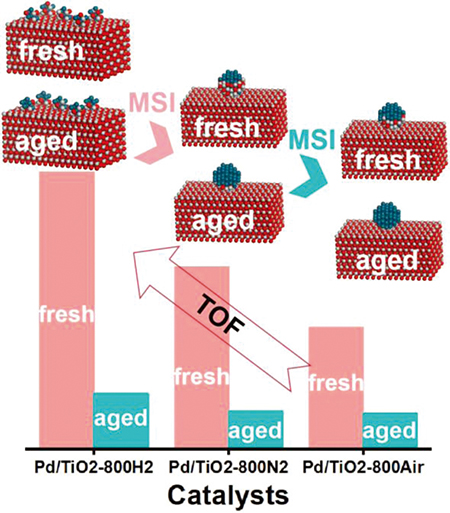
    Pretreatment of the carrier for supported catalysts can effectively improve the strong metal-support interaction (SMSI) and increase the dispersion of precious metals, which are critical to many important catalytic reactions. In this work, we tuned SMSI on Pd/TiO2 catalysts through inducing surface defects of TiO2 by pretreated with different atmospheres (H2/N2, N2, O2/N2) at the high temperature (800 ℃). Multiple characterization results illustrated that surface defects anchored Pd species and thus enhanced their dispersion. During reduction, Ti3+ species formed and transferred onto the metallic Pd species and then induced SMSI, which effectively stabilize Pd species in the metallic state. The stronger MSI, the more stability of Pd species. As a case, Pd/TiO2-800H2, with strongest MSI, displayed the best HCHO oxidation performance at low temperature (10 ℃).
  • Ziming Zhao, Qing Dai, Sihan Huang, Wenjing Lu, Yaohan Chen, Jifu Zheng, Suobo Zhang, Shenghai Li, Xianfeng Li
    中国化学快报. 2024, 35(03): 109231. https://doi.org/10.1016/j.cclet.2023.109231
    摘要 ( ) PDF全文 ( ) HTML 可视化 收藏
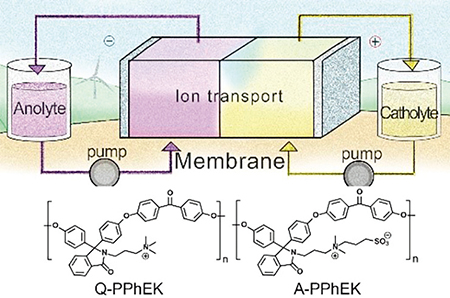
    Vanadium flow batteries (VFBs) have drawn considerable attention as an emerging technology for large-scale energy storage systems (ESSs). One of the pivotal challenges is the availability of eligible ion exchange membranes (ICMs) that provide high ion selectivity, proton conductivity, and stability under rigorous condition. Herein, a ‘side-chain-type’ strategy has been employed to fabricate highly stable phenolphthalein-based cardo poly(arylene ether ketone)s (PAEKs) membrane with low area resistance (0.058 Ω cm2), in which flexible alkyl spacers effectively alleviated inductive withdrawing effect from terminal ion exchange groups thus enabling a stable backbone. The assembled VFBs based on PAEKs bearing pendent alkyl chain terminated with quaternary ammonium (Q-PPhEK) demonstrated an energy efficiency above 80% over 700 cycles at 160 mA/cm2. Such a remarkable results revealed that the side-chain-type strategy contributed to enhancing the ICMs stability in strong oxidizing environment, meanwhile, more interesting backbones would be woken with this design engaging in stable ICMs for VFBs.
  • Fen Wei, Weichao Xue, Zhiyang Yu, Xue Feng Lu, Sibo Wang, Wei Lin, Xinchen Wang
    中国化学快报. 2024, 35(03): 108313. https://doi.org/10.1016/j.cclet.2023.108313
    摘要 ( ) PDF全文 ( ) HTML 可视化 收藏
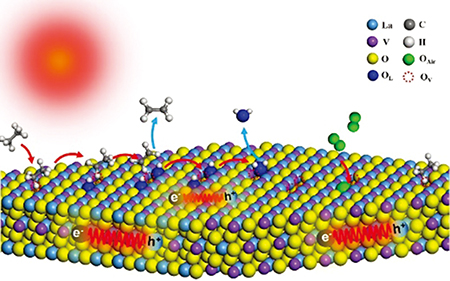
    Thermocatalytic nonoxidative ethane dehydrogenation (EDH) is a promising strategy for ethene production but suffers from intense energy consumption and poor catalyst durability; exploring technology that permits efficient EDH by solar energy remains a giant challenge. Herein, we present that an oxygen vacancy (Ov)-rich LaVO4 (LaVO4-Ov) catalyst is highly active and stable for photocatalytic EDH, through a dynamic lattice oxygen (Olatt.) and Ov co-mediated mechanism. Irradiated by simulated sunlight at mild conditions, LaVO4-Ov effectively dehydrogenates undiluted ethane to produce C2H4 and CO with a conversion of 2.3%. By loading a small amount of Pt cocatalyst, the evolution and selectivity of C2H4 are enhanced to 275 μmol h-1 g-1 and 96.8%. Of note, LaVO4-Ov appears nearly no carbon deposition after the reaction. The isotope tracked reactions reveal that the consumed Olatt. recuperates by exposing the used catalyst with O2, thus establishing a dynamic cycle of Olatt. and achieving a facile catalyst regeneration to preserve its intrinsic activity. The refreshed LaVO4-Ov exhibits superior reusability and delivers a turnover number of about 305. The Ov promotes photo absorption, boosts ethane adsorption/activation, and accelerates charge separation/transfer, thus improving the photocatalytic efficiency. The possible photocatalytic EDH mechanism is proposed, considering the key intermediates predicted by density functional theory (DFT) and monitored by in-situ diffuse reflectance infrared Fourier transform spectroscopy (DRIFTS).
  • Jing Li, Yeqin Feng, Fangyu Fu, Xing Xin, Guoyu Yang, Hongjin Lv
    中国化学快报. 2024, 35(03): 108736. https://doi.org/10.1016/j.cclet.2023.108736
    摘要 ( ) PDF全文 ( ) HTML 可视化 收藏
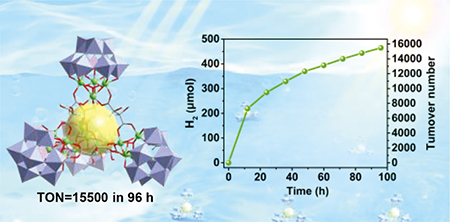
    The design and syntheses of metal-organic cages (MOCs) based on polyoxometalates (POMs) building blocks have attracted increasing attention due to their intriguing molecular architectures and physicochemical properties. In this work, we have successfully synthesized and systematically characterized a tetrahedral polyoxometalate-based organic cage (POC), K3Na17H12[(C4H6O6)6[Ni4(OH)3(A-α-SiW9O34)]4]·96H2O (Ni16L6(SiW9)4), using tritopic Ni4-substituted Keggin cluster (Ni4SiW9) as nodes and flexible l-(+)-tartaric acid ligands as linkers. The resulting POC tetrahedron has been firstly investigated as efficient catalyst for visible-light-driven hydrogen production, achieving a turnover number of 15,500 after 96-h photocatalysis. Such high catalytic performance of Ni16L6(SiW9)4 POC catalyst could be attributed to its unique cage structure, thereby offering more efficient catalytic component accessibility. In addition, spectroscopic analyses illustrated the photocatalytic mechanism and the structural stability of the TBA-Ni16L6(SiW9)4 catalyst during the photocatalytic process.
  • Jiachen Zhao, Deshuai Yu, Jianmin Chen, Shihao Lin, Yonghua Tang, Chaoyu Fan, Dongfang Zhou, Youhui Lin
    中国化学快报. 2024, 35(03): 109080. https://doi.org/10.1016/j.cclet.2023.109080
    摘要 ( ) PDF全文 ( ) HTML 可视化 收藏
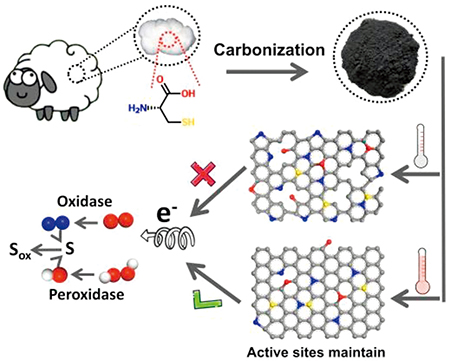
    It is well-established that high carbonization temperature will trigger the enzyme-like activity of carbon-based materials. However, the catalytic mechanism is still ambiguous, which hinders the further rational design of nanomaterials as enzyme mimics. Hereby, N, S-rich carbonized wool nanosheets (CWs) were synthesized at different pyrolysis temperatures. As expected, only CWs treated with high-temperature possess intrinsic oxidase- and peroxidase-like activities. Meanwhile, density functional theory (DFT) calculations demonstrate that graphitic nitrogen and the co-existence of nitrogen and sulfur in the carbon matrix serve as the active sites for the enzyme-like process. More importantly, combining theoretical calculations and experimental observations, the high-temperature triggered catalytic mechanism can be ascribed to the fact that an appropriate high-temperature maximizes the graphitization degree to a certain extent, at which most of the catalytic active sites are well retained rather than evaporating. Moreover, coupling with excellent photothermal conversion efficiency and catalytic performance, CWs can be applied to photothermal-catalytic cancer therapy under near-infrared region (NIR) light irradiation. We believe this work will contribute to understanding the catalytic mechanism of carbon-based nanozymes and promote the development of new biomedical and pharmaceutical applications.
  • Chang Lu, Jinkai Zheng, Juewen Liu
    中国化学快报. 2024, 35(03): 108808. https://doi.org/10.1016/j.cclet.2023.108808
    摘要 ( ) PDF全文 ( ) HTML 可视化 收藏
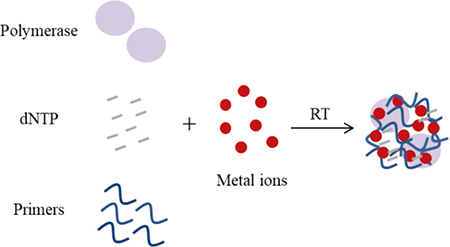
    Polymerase chain reactions (PCR) are a very important tool for use in cloning, nucleic acid sequencing and diagnostic testing. The storage conditions of PCR reagents are limited to freezing and a lot of mixing steps are needed. In this paper, we report using metal ions to form coordination nanomaterials with the intrinsic components of the PCR reagents including dNTP, DNA primers and DNA polymerase as an integrated PCR reaction system. To complete PCR reactions, users need only to dissolve the coordination nanomaterials with a buffer and add template DNA. A few transition metal ions were screened and Cu2+ was found to be the most effective metal ion for this purpose. Then the encapsulation efficiency of PCR reagents was measured, which can reach close to 100% for the primers and DNA polymerase, but only 10% for dNTP because dNTP was excess. Further study also exhibited this integrated PCR reaction system can be used for DNA detection with a similar detection limit to the normal PCR, and showed good stability of encapsulated PCR nanomaterial after storage for a week.
  • Meijuan Liang, Gege Song, Yeqing Wan, Yingying Chen, Fuan Wang, Xiaoqing Liu
    中国化学快报. 2024, 35(03): 108573. https://doi.org/10.1016/j.cclet.2023.108573
    摘要 ( ) PDF全文 ( ) HTML 可视化 收藏
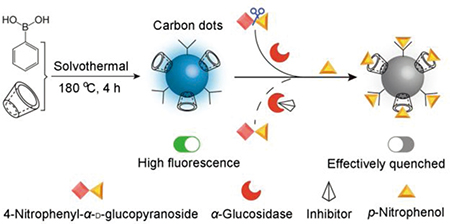
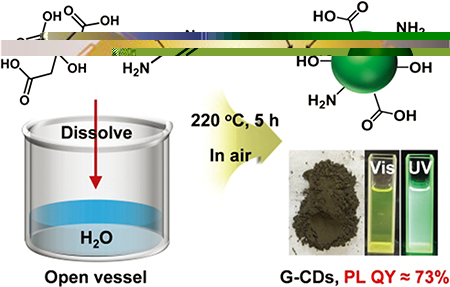
    Monitoring α-glucosidase (α-Glu) activity is of great significance for the early diagnosis of type II diabetes. Here the blue fluorescent carbon dots (CDs) were integrated with two different recognizing molecules, β-cyclodextrin and phenylboronic acid, for assembling a multifunctional CDs (mCDs) nanoplatform for sensitively analyzing α-Glu and its inhibitors. The hydrolyzed product of 4-nitrophenyl-α-d-glucopyranoside (α-Glu substrate), p-nitrophenol, could efficiently quench the fluorescence of mCDs due to its cooperative molecular recognition with β-cyclodextrin and phenylboronic acid. The mCDs could be utilized for the detection of α-Glu activity with the limit of detection of 0.030 U/L. Moreover, the present α-Glu detection platform revealed a high selectivity, and other natural enzymes showed scarcely any effect on the present mCDs system. The proposed method could be facilely used to screen α-Glu inhibitors with satisfying performance. The rational mCDs is expected to supplement more comprehensive biosensing platforms for highly sensitive and specific recognition of disease-relevant biomarkers with clinical importance.
  • Shengkai Li, Zhiyang Li, Qing Hao, Shen Wang, Yanxia Yang, Jieqiong Xu, Zhiwei Yin, Liang Zhang, Zhuo Chen
    中国化学快报. 2024, 35(03): 108636. https://doi.org/10.1016/j.cclet.2023.108636
    摘要 ( ) PDF全文 ( ) HTML 可视化 收藏
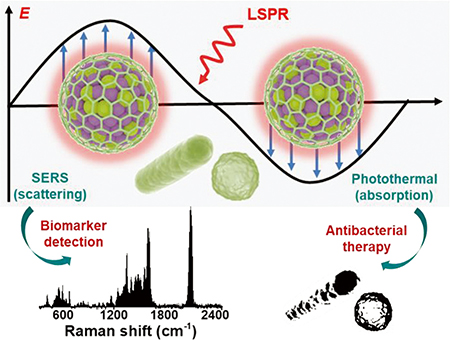
    Plasmonic metal nanomaterials with intrinsic surface-enhanced Raman scattering (SERS) and photothermal properties, especially AuAg nanoalloys with both the outstanding merits of Au and Ag nanocrystals, show huge application prospects in bacterial theranostics. However, the direct exposure of AuAg nanoalloys in external conditions probably cause undesirable reactions and poisonous metal ion leakage during SERS detection and photothermal antibacterial therapy process, which severely hinder bacterial theranostics applications. Herein, we report an ultrastable graphene-isolated AuAg nanoalloy (GAA) with AuAg core confined in few-layer graphitic shell as a versatile platform for bacterial detection and therapy. The encapsulation of graphene ensures the good stability of AuAg core, that its superior SERS and photothermal properties are therefore further guaranteed. GAA is used for SERS detection of two vital bacterial biomarkers (including corrosive cyanide and pyocyanin), exhibiting good SERS quantitative and multiplexing ability. GAA is further used for photothermal antibacterial therapy application, and ultrahigh antibacterial efficacies for both Gram-negative Escherichia coli and Gram-positive Staphylococcus aureus are achieved under 808 nm laser irradiation. This work proposes a valuable method to develop robust bacterial theranostic platform.
  • Meijuan Zhou, Qian Liu, Mengting Pan, Ying Yang, Xiaoxia Dai, Changjun You
    中国化学快报. 2024, 35(03): 108673. https://doi.org/10.1016/j.cclet.2023.108673
    摘要 ( ) PDF全文 ( ) HTML 可视化 收藏
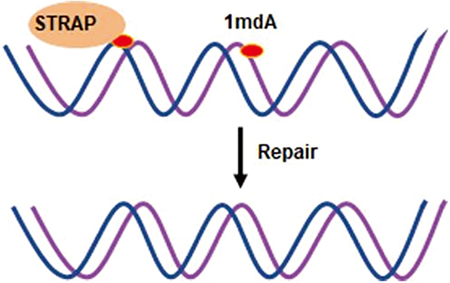
    N1-methyladenosine (m1A) is an important RNA modification that functions in various biological processes by interacting with cellular proteins. However, the binding proteins of N1-methyldeoxyadenosine (1mdA) in DNA remain largely unknown. Herein, we employed a quantitative proteomics strategy to identify the potential binding proteins of 1mdA in human cells. Our results revealed that serine-threonine kinase receptor-associated protein (STRAP) can bind to 1mdA-carrying DNA. We further demonstrated that STRAP participates in alkylating agent-induced DNA damage response and can promote the repair of 1mdA embedded in DNA. Moreover, we investigated the effects of STRAP on 1mdA-induced perturbation in transcription using a shuttle vector- and next-generation sequencing-based assay, and found that STRAP is involved in the transcriptional bypass of 1mdA in human cells. Together, our study revealed STRAP as a novel 1mdA-binding protein in human cells and provided new insight into the biological implications of STRAP and 1mdA modification in human diseases.
  • Xingdong Yang, Shi-Ming Ying, Sen Zhang, Jinxia Dai, Wei Gao, Tian-Qi Wang, Jun-Qin Qiao, Hong-Zhen Lian, Li Mao
    中国化学快报. 2024, 35(03): 108674. https://doi.org/10.1016/j.cclet.2023.108674
    摘要 ( ) PDF全文 ( ) HTML 可视化 收藏
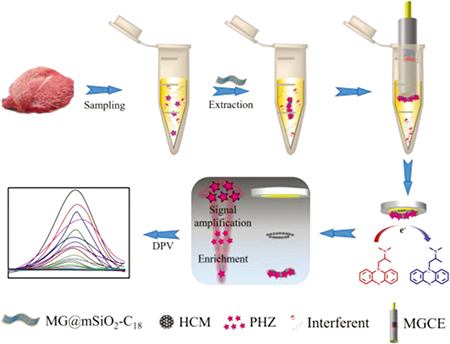
    Promethazine (PHZ) is used as a sedative in veterinary medicine, and its residue can threaten the health of human. The electrochemical detection of PHZ is suitable method for application in the field. However, the traditional electroanalysis is difficult to perform directly in meat samples due to matrix interference. This work integrates magnetic solid-phase extraction and differential pulse voltammetry for highly sensitive and selective determination of PHZ in beef and beef liver for the first time. CoFe2O4/graphene coated with C18-functionalized mesoporous silica (MG@mSiO2-C18) is synthesized as dispersed magnetic adsorbent to extract PHZ. Magnetic glassy carbon electrode modified with nitrogen-doped hollow carbon microspheres (HCM) attracts the MG@mSiO2-C18 with PHZ, and directly detects the PHZ without elution procedure. MG@mSiO2-C18 can separate PHZ to avoid the interference of impurities on following detection, and also concentrate PHZ on magnetic electrode. Additionally, the electrode modification with HCM can amplify the electrochemical signal of PHZ. Finally, the integrated PHZ determination method exhibits a wide linear range from 0.08 μmol/L to 300 μmol/L with a low limit of detection of 9.8 nmol/L. The beef sample analysis presents excellent recovery, demonstrating that this protocol is promising for the rapid and onsite detection of PHZ in real meat samples
  • Lingpeng Zhan, Yanyi Huang, Guanbo Wang
    中国化学快报. 2024, 35(03): 108685. https://doi.org/10.1016/j.cclet.2023.108685
    摘要 ( ) PDF全文 ( ) HTML 可视化 收藏
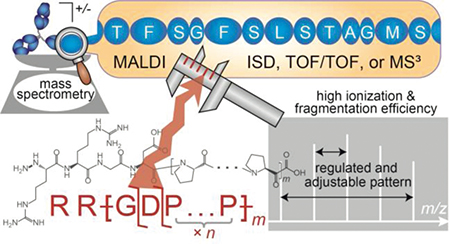
    Matrix-assisted laser desorption/ionization (MALDI) mass spectrometry (MS) plays an indispensable role in analyzing protein covalent structures. The reliable identification of amino acid residues and modifications relies on the mass accuracy, which is highly dependent on calibration. However, the accuracy provided by the currently available calibrants still needs further improvement in terms of compatibility with multiple tandem MS modes or ion polarity modes, calibratable range, and minimizing suppression of and interference with analyte signals. Here aiming at developing a versatile calibrant to solve these problem, we designed a synthetic peptide format of calibrant R(GDP) (referred to as “Gly-Asp-Pro, GDP”) according to the chemical natures of amino acids and polypeptide fragmentation rules in tandem MS. With four types of amino acid residues selected and arranged through rational designs, a GDP peptide produces highly regulated fragments that give rise to evenly spaced signals in each tandem MS mode and is compatible with both positive and negative ion modes. In internal calibration, its regulated fragmentation pattern minimizes interference with analyte signals, and using a single peptide as the input minimizes suppression of the analyte signals. As demonstrated by analyses of proteins including monoclonal antibody and Aβ-42, these features allowed significant increase of the mass accuracy and precision, which improved sequence coverage and sequence resolution in sequence analyses (including de novo sequencing). This rational design strategy may also inspire further development of synthetic calibrants that benefit structural analysis of biomolecules.
  • Wenjing Zhang, Jie Hong, Lei Yang, Zuqiang Xu, Yu Xiang, Wei Xu
    中国化学快报. 2024, 35(03): 108695. https://doi.org/10.1016/j.cclet.2023.108695
    摘要 ( ) PDF全文 ( ) HTML 可视化 收藏
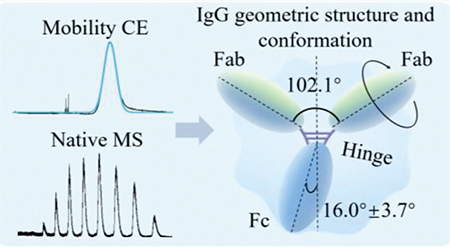
    Available online Immunoglobulins G (IgGs) are Y-shaped globular proteins, however, their high flexibility and heterogeneity pose great challenges to their structure and conformation determinations. Geometric structure of IgG closely correlates to its biofunctions, such as the antibody escape of human immunodeficiency virus (HIV) could attribute to the distance mismatch between the ends of two Fab arms (antigen-binding sites) and envelope glycoprotein spikes on virion surface. Herein, we report the first use of mobility capillary electrophoresis (MCE) and native mass spectrometry (nMS) to resolve the internal geometric structure and conformation of an IgG (trastuzumab) in solution phase. After proteolysis, the ellipsoid dimensions of IgG and its subunits were measured by MCE-nMS experiments. IgG was then reconstructed, in which the sizes and relative positions of these three subunits in three-dimensional space were characterized. It was found that the two Fab arms have an angle of ~102.1° and a distance of ~11.0 nm between the two antigen-binding sites under native condition, and the Fc arm was tilted ~16.0° towards one of the Fab arms. Fc was not on the plane of Fab-Fab, but has an angle of no larger than 103.1°. Under acidic environment (pH 3.0), each subunit of the IgG would unfold into larger dimensions, and the angles between these subunits also change. With great potential for tumor imaging and therapy, the structure of F(ab')2 fragments was also measured and validated by molecular dynamic simulation. It was found that the electrostatic force among these three subunits and steric hindrance stemming from Fc help maintaining the angle between two Fab arms.
  • Hang Yu, Baoying Wen, Min Huang, Ru Feng, Libin Pan, Manyi Xu, Hao Lin, Lin Cong, Sen Zhang, Yan Li, Chi-Hin Cho, Chongjing Zhang, Xiaoguang Chen, Yan Wang
    中国化学快报. 2024, 35(03): 108235. https://doi.org/10.1016/j.cclet.2023.108235
    摘要 ( ) PDF全文 ( ) HTML 可视化 收藏
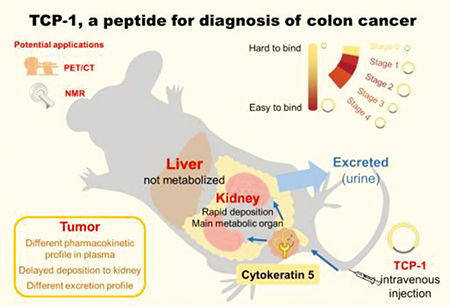
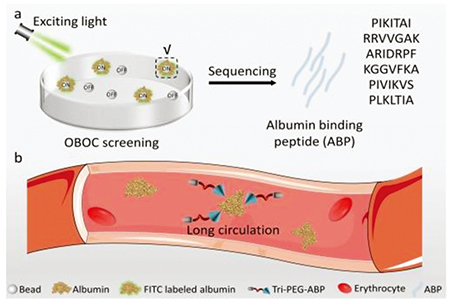
    A nine cyclic peptide (TCP-1) showed excellent specificity for colon cancer. TCP-1 binds with human tumor tissues at early stages and mice tumor with diameters of 1-4 mm, suggesting that TCP-1 may be used for early diagnosis of colon cancer. The mechanism of the targeted binding of TCP-1 to colon cancer was also studied using immunoprecipitation, LC-MS and bioinformatics. After screening and identifying of the possible binding target proteins of TCP-1, keratin, type II cytoskeletal 5 was speculated to be the specific binding target protein of TCP-1 in human tumor tissue. Pharmacokinetics studies were conducted to investigate the target-mediated drug disposition of the new tumor-specific peptide by LC-MS/MS. The tissue distribution study showed that TCP-1 was found only in colon tumors (the target site) in tumor mice did not bind to any other tissues. Conjugating TCP-1 to tumor markedly increased its removal rate from blood circulation but mildly extended its staying time in vivo. In tumor mice, a lower AUC of TCP-1 (reduced by almost 35%) and 2-fold higher clearance were found compared to that of normal mice. The proposed metabolic pathway of TCP-1 in the kidney was also determined using LC-MSn-IT-TOF. The high specificity and low toxicity of the peptide may be caused by its extremely tight binding to the targets. Potential applications for future clinical use, including MRI and PET/CT were also explored, and this research may promote the development of colon cancer diagnostic technology research and provide new ideas and technical routes for tumor diagnostic technology.
  • Qunlong Zhang, Yang Kuang, Le Chang, Jingyi Kang, Bingjian Wang, Chuanke Chong, Zhaoyong Lu
    中国化学快报. 2024, 35(03): 108338. https://doi.org/10.1016/j.cclet.2023.108338
    摘要 ( ) PDF全文 ( ) HTML 可视化 收藏
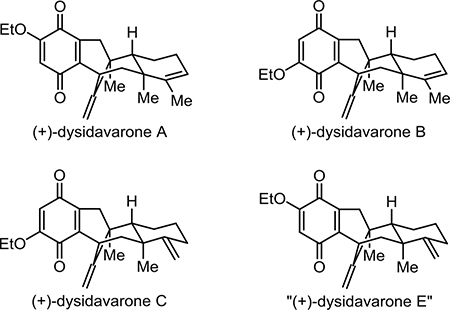
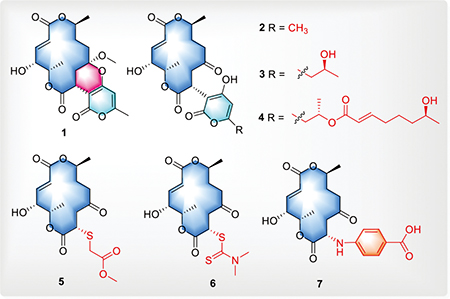
    Here, we report a concise and divergent enantioselective total synthesis of marine sesquiterpene quinone meroterpenoids (+)-dysidavarones A-C (1-3) using predysidavarone 6 as a key common intermediate. The highly strained and bridged eight-membered carbocycle of predysidavarone 6 was constructed by a one-pot intermolecular alkylation and intramolecular arylation of Wieland-Miescher ketone derivative 11 and benzyl bromide 12. The total synthesis of (+)-dysidavarones A-C (1-3) was achieved from predysidavarone 6 in a divergent manner by a late-stage introduction of the ethoxy group, which reveals the possible source of the ethoxy group within (+)-dysidavarones A-C (1-3) and provides a late-stage modifiable route for the synthesis of dysidavarone analogs for further anti-cancer activity evaluation.
  • Bin Fu, Yue Zhao, Xiuping Yuan, Yanfei Li, Jianjun Yin, Simin Wang, Tao Xiong, Qian Zhang
    中国化学快报. 2024, 35(03): 108372. https://doi.org/10.1016/j.cclet.2023.108372
    摘要 ( ) PDF全文 ( ) HTML 可视化 收藏
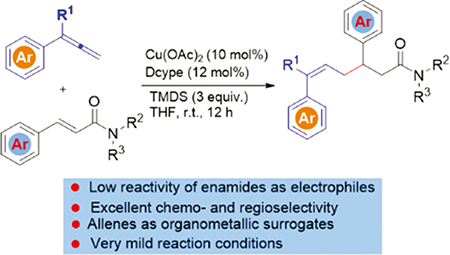
    Catalytic Michael addition reaction represents a fundamental importance in organic synthetic chemistry. Whereas corresponding conversions toward intrinsically low reactive enamide remains an ongoing challenging. We herein report a copper-catalyzed conjugate addition of allenes to β-substituted alkenyl amides, one of the most challenging Michael acceptors. The present method utilizes readily available allenes as the latent carbon-based nucleophiles and simple, common β-substituted alkenyl amides as starting materials, unlike previous methods that usually preinstall an activating group to improve the reactivity of amide or uses highly reactive stoichiometric quantities of organometallics. Hence, this approach shows good functional group compatibility and can be implemented under mild reaction conditions with excellent level of chemo- and regioselectivities.
  • Lihong Liu, Rui Chen, Gang Xue, Chenzhou Hao, Weizhi Weng, Zhengying Pan
    中国化学快报. 2024, 35(03): 108455. https://doi.org/10.1016/j.cclet.2023.108455
    摘要 ( ) PDF全文 ( ) HTML 可视化 收藏
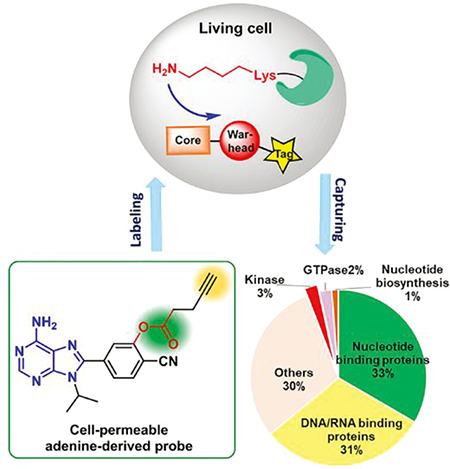
    Adenine is an essential building block of genetic material and a range of coenzymes. Chemical probes containing an adenine moiety have been used in kinase profiling studies in cell lysates. Here we report that adenine-derived small-molecule probes with an activated ester reactive group can covalently modify a conserved lysine residue of protein kinases and capture a number of nucleotide-binding proteins within living cells.
  • Pengfei Sun, Fang Wei, Chen-Ho Tung, Zhenghu Xu
    中国化学快报. 2024, 35(03): 108478. https://doi.org/10.1016/j.cclet.2023.108478
    摘要 ( ) PDF全文 ( ) HTML 可视化 收藏
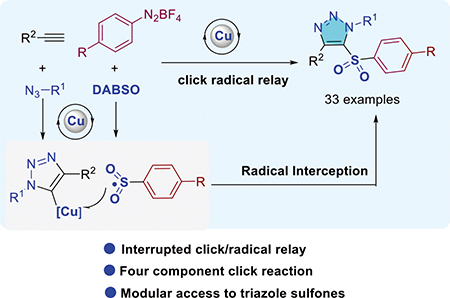
    A new, four component copper(I)-catalyzed interrupted click/radical relay cascade has been developed. This unprecedented interrupted click reaction provides a rapid modular synthesis of triazole sulfones, important privileged heterocyclic pharmacophores which cannot be accessed by a traditional click reaction. Radical interception of cuprate-triazole, the key reaction intermediate formed in situ, is an important feature of this process.
  • Yu Zhang, De-Rui Han, Dan Ye, Hong Lu, Hao Wei
    中国化学快报. 2024, 35(03): 108529. https://doi.org/10.1016/j.cclet.2023.108529
    摘要 ( ) PDF全文 ( ) HTML 可视化 收藏
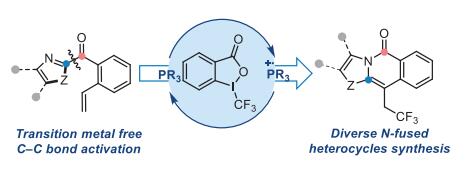
    An inexpensive phosphine catalyst was used effectively for a transition-metal-free acyl-transfer of N-containing heteroaryl ketones for the rapid synthesis of N-fused heterocycles. The key pre-aromatic spirocyclic intermediate initialized by the single electron transfer (SET) process of Togni's reagent II promoted by the tertiary phosphine resulted in an intriguing and alternative tactic for the cleavage of C-C bonds. By using inexpensive tertiary phosphine as the catalyst, this skeleton-reorganizing approach of N-containing heteroaryl ketones allows a streamlined assembly of complex N-fused heterocycles with broad functional group tolerance.
  • Jian-Hao Zhao, Wen-Xing Xu, Bin Li, Wei Xu, Wu-Kun Zhang, Ming-Shuai Yuan, Hui-Zi Li, Qing-Guo He, Xiang Ma, Jian-Gong Cheng, Yan-Yan Fu
    中国化学快报. 2024, 35(03): 108579. https://doi.org/10.1016/j.cclet.2023.108579
    摘要 ( ) PDF全文 ( ) HTML 可视化 收藏
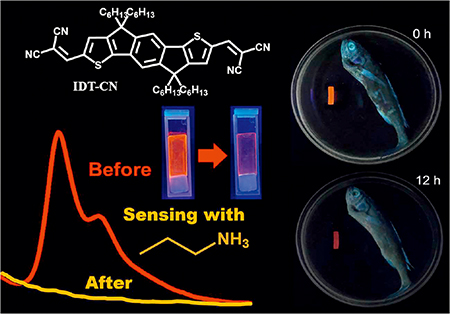
    There are urgent needs of volatile amine gas sensors with high-performance in food quality control, disease monitoring and environmental pollution. Thin-film fluorescent probe is suitable for amine vapour sensing due to its high sensitivity, high selectivity, and no polluting analyte. Herein, a novel fluorescent probe based on indacenodithiophene structure with π conjugated system was designed and synthesized. The experimental results show that the films prepared by this material exhibit rapid and distinct fluorescence quenching after being exposed to saturated vapours of primary amine, secondary amine and tertiary amine represented by n-propylamine, diethylamine and trimethylamine, respectively. The quenching of fluorescence is 84%, 87% and 96%, respectively, within 10 s. The detection mechanism of probe for primary amine is based on specific chemical reaction, while the detection mechanism for secondary amine and tertiary amine is intramolecular charge transfer. Further experiments show that the detection limit of the fluorescent probe for trimethylamine, an important marker of food spoilage, could reach 4.610 ppt. On-site detection based on spoilage of small yellow croaker suggests the material possesses the potential for food freshness detection. This simple fluorogenic probe is an original approach to simplify real-time visual monitoring of volatile amine vapour.
  • Jun Yan, Xing Liang, Qian Zhang, Luolin Wang, Weiying Lin
    中国化学快报. 2024, 35(03): 108408. https://doi.org/10.1016/j.cclet.2023.108408
    摘要 ( ) PDF全文 ( ) HTML 可视化 收藏
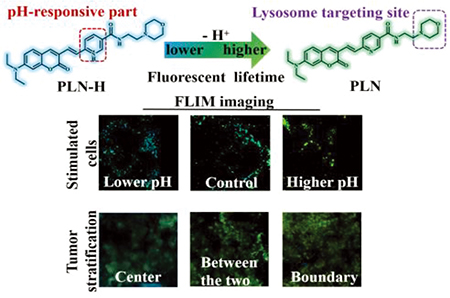
    Owing to the anaerobic metabolism in the tumor, abundant acidic metabolites are produced and accumulated in the cells. Therefore, the cells in different tumor layers are directly linked to the pH micro-environment. Nevertheless, due to the lack of robust tools, the high-efficient evaluation of the acidic micro-environment of tumor stratification faces the challenge of accurate diagnosis. We designed a new pH sensitive fluorescent lifetime probe target to lysosomes. As we expected, the fluorescence lifetime of PLN possesses a good linear fit to the pH value, which could detect the pH change at a single lysosome level in real time, and then evaluate the different acidity of tumor stratification. The probe PLN is successfully used to evaluate the tumor stratification by fluorescence lifetime imaging microscopy (FLIM) for the first time, which is of great significance in the preoperative diagnosis of clinical tumor treatment or evaluation of drug delivery effect.
  • Shao-Ping Zheng, Yao-Wei Xu, Pei-Yang Su, Chen-Hui Liu, Yin-Hui Huang, Yu-Lin Lu, Zhang-Wen Wei, Zhiwei Jiao, Hai-Sen Xu, Cheng-Yong Su
    中国化学快报. 2024, 35(03): 108477. https://doi.org/10.1016/j.cclet.2023.108477
    摘要 ( ) PDF全文 ( ) HTML 可视化 收藏
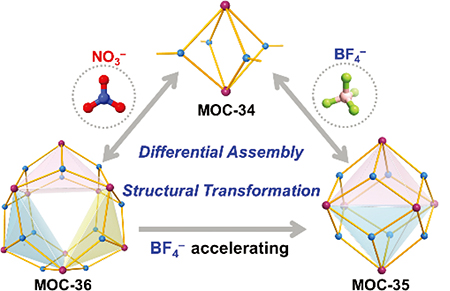
    The intimate host-anion interactions will regulate thermodynamics and kinetics in the self-assembly of cationic cages mimicking biological counterparts. Herein, we report construction and transformation of three Pd(II)-based metal-organic cages (MOCs) depending on different anions. Stoichiometric conversions of the lantern-shaped MOC-34 into either octahedral MOC-35 or tricapped trigonal prism MOC-36 are induced by BF4- or NO3-, respectively. MOC-36 is kinetically favored and can undergo quantitative conversion to the thermodynamically preferred MOC-35 upon heating, accelerated by excess BF4- to motivate dissociative dynamics of Pd-vertices and lower activation barrier of cage transformation. The guest encapsulation behaviors of MOC-35 and MOC-36 have also been tested. These results manifest a significance of host-anion dynamics beyond complementary anion template, shedding light on the understanding of intricate anion recognition in nature.
  • Yu Zhou, Guilin Zhuang, Pingwu Du
    中国化学快报. 2024, 35(03): 108593. https://doi.org/10.1016/j.cclet.2023.108593
    摘要 ( ) PDF全文 ( ) HTML 可视化 收藏
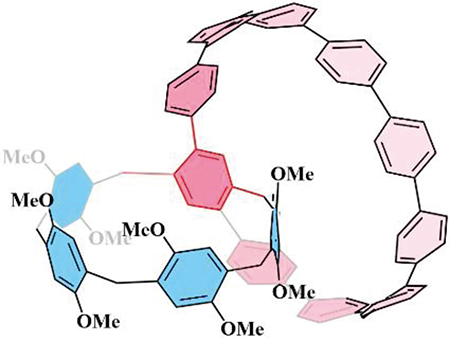
    Macrocyclic materials have attracted much attention due to their particular chemical and physical properties. Herein we report the precise synthesis and characterization of a new bismacrocycle structure base on cycloparaphenylene (CPP) and pillar[5]arene, named cycloparaphenylene-pillar[5]arenes (CPPn[5]). The bismacrocycle was fully characterized by NMR and HR-MS. The photophysical properties of CPPn[5] were investigated by UV-vis, and the maximum absorption peak was located at 331 nm, which was consistent with density functional theory (DFT) calculations. The fluorescence spectrum was further studied and the emission peak was maximized at 458 nm. The computational results indicate the strain energy of CPPn[5] is 27.80 kcal/mol and the HOMO-LUMO gap is 3.39 eV Notably, CPPn[5] showed interesting supramolecular properties.
  • Longqing Liu, Bing Zhang, Yu Liu, Jinbo Zhao, Tao Li, Wanxiang Zhao
    中国化学快报. 2024, 35(03): 108631. https://doi.org/10.1016/j.cclet.2023.108631
    摘要 ( ) PDF全文 ( ) HTML 可视化 收藏
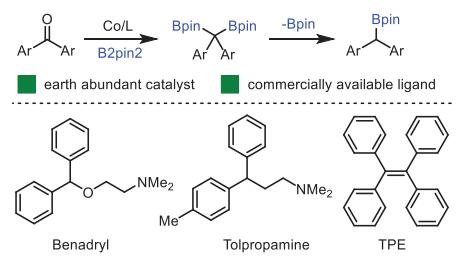
    Geminal diboronates and diarylmethyl boronates are versatile building blocks in synthetic chemistry. We here reported a highly efficient approach for the synthesis of gem-bisborylalkanes and diarylmethyl boronates via cobalt-catalyzed deoxygenative borylation of diaryl ketones. This borylation protocol is compatible with a broad range of functionalized aryl groups, providing access to a wide array of boronic esters. The resulting boronic esters can be further transformed to various cross-coupling products and TPEs that represent important structural motifs in organic chemistry and materials science.
  • Jin Huang, Jinwen Li, Rui Yan, Yuanyuan Qu, Fengzhen Guo, Lei Shen, Can-liang Ma, Jie Sun, Zhenjiang Li, Kai Guo
    中国化学快报. 2024, 35(03): 108643. https://doi.org/10.1016/j.cclet.2023.108643
    摘要 ( ) PDF全文 ( ) HTML 可视化 收藏
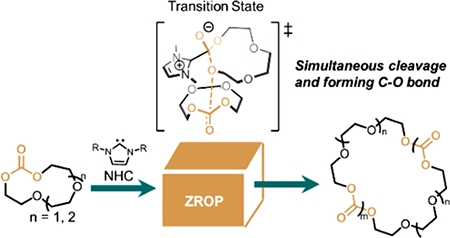
    The innovation in polymer design to rival conventional polyethylene glycol (PEG) is an important approach to achieving a more sustainable society. Here, cyclic PEG-like polycarbonates having high molecular weight (4.4-49.5 kg/mol) were enabled through zwitterionic ring-opening polymerization (ZROP) of macrocyclic carbonates (MCs) mediated by N-heterocyclic carbene (NHC). The thermodynamic behavior of polymerization depends on the ring size of monomers. During this process, the ZROP of 11-membered MC was driven by the change of enthalpy (ΔHp) which differed from the ZROP of 14-membered MC driven by the entropic change (ΔSp). Cyclic polycarbonates depicted improved thermostability (Td5% ≥ 204 ℃) and higher glass transition temperatures (Tg > -40 ℃) in comparison to their linear analogues (Td5% ≤ 185 ℃, Tg ~-50 ℃). In addition, the mechanism of ZROP of MC was addressed through computational study. A distinct mechanism of polymerization distinguishable from the well-known NHC-mediated ZROP of cyclic esters was revealed, where the zwitterion from nucleophilic addition to MC, i.e. tetrahedral intermediate, cannot be ring-opened probably due to the delocalization of negative charge on the carbonate group, but serves as an active center for the polymerization. In comparison to PEG, the attained polymer demonstrated comparable hydrophilic and biocompatible properties, as revealed by the results of contact angle and in vitro cytotoxicity studies, suggesting that cyclic polycarbonate hold the promise as the alternative of PEG.
  • Yuntong Li, Hang Shi
    中国化学快报. 2024, 35(03): 108650. https://doi.org/10.1016/j.cclet.2023.108650
    摘要 ( ) PDF全文 ( ) HTML 可视化 收藏
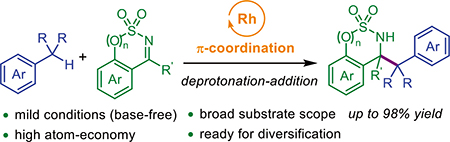
    Mannich-type reactions are a widely used method for the synthesis of amines due to the readily availability of nucleophiles and electrophiles. However, the inclusion of alkylarenes instead of active carbon pronucleophiles such as aldehydes and ketones in these addition reactions has been a challenge due to the inherent difficulty of benzylic deprotonation. In this study, we present a novel approach for the construction of N-sulfonyl amines via rhodium-catalyzed addition of unbiased benzylic CH bonds to cyclic N-sulfonyl ketamines through π-coordination. This strategy enables the synthesis of a diverse range of N-sulfonyl amines, and subsequent diversification of the addition products showcases the synthetic potential of this protocol.
  • Lan Zhou, Dongyang Wang, Chengbo Yang, Liang Deng
    中国化学快报. 2024, 35(03): 108682. https://doi.org/10.1016/j.cclet.2023.108682
    摘要 ( ) PDF全文 ( ) HTML 可视化 收藏
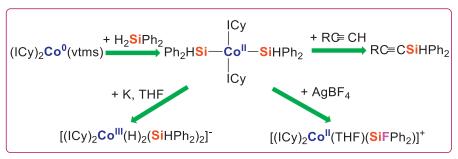
    Silyl cobalt species are putative intermediates in cobalt-catalyzed transformations of hydrosilanes. However, their reactivity has remained poorly understood. Reported here is the investigation on four-coordinate disilyl Co(II) complexes with N-hetereocyclic carbene ligation. The reactions of [(ICy)2Co(vtms)] (ICy = 1,3-dicyclohexylimidazol-2-ylidene, vtms = vinyltrimethylsilane) with primary and secondary hydrosilanes (3 equiv.) furnish the four-coordinate disilyl complexes [trans-(ICy)2Co(SiHRR')2] (SiHRR' = SiH2Mes, 1; SiH2Ph, 2; SiH2Cy, 3; SiHPh2, 4; SiHEt2, 5) in moderate to good yields. The structures of 1, 2 and 4 were established by single-crystal X-ray diffraction. Solution magnetic susceptibility measurement and EPR spectroscopy indicate their low-spin nature (S = 1/2). Reactivity studies on 4 led to the establishment of the conversions of 4 to the disilyl dihydride Co(III) complex [K(THF)][(ICy)2Co(H)2(SiHPh2)2]n (6) and the fluorosilyl Co(II) complex [(ICy)2Co(THF)(SiFPh2)][BF4] (7) when 4 was treated with excess amount of K and AgBF4, respectively, in THF. These conversions hint at the high activity of low-valent and high-valent disilyl cobalt species [trans-(ICy)2Co(SiHPh2)2]1- and [trans-(ICy)2Co(SiHPh2)2]2+. Complex 4 is reactive toward terminal alkynes, but inert toward alkenes and internal alkynes. The reactions of 4 with terminal alkynes CyCCH and Me3SiCCH (3 equiv.) yield the Co(II) complexes [(ICy)2Co(CCCy)2] (8) and [(ICy)2Co(CCSiMe3)((SiMe3)CCH2)] (9), respectively, along with H2SiPh2 and alkynylsilanes RCCSiHPh2 (R = Cy, SiMe3), whereas the reaction with 4-CF3C6H4CCH (3 equiv.) produce [(ICy)2Co(CCAr)((Ar)CCH(SiHPh2)CCHAr)] (Ar = 4-CF3C6H4) (10) and H2SiPh2. These reactions are proposed to involve σ-bond metathesis reactions between alkyne C(sp)-H bonds and Co-Si bonds in 4. Complexes 6-10 have been characterized by NMR spectroscopy, X-ray diffraction study, and elemental analysis.
  • Xuelei Deng, Meng Fan, Miao Wu, Xiaoyan Zhang, Ya Cheng, Jianye Xia, Yingping Zhuang, Weiping Zhu, Xuhong Qian, Yunpeng Bai
    中国化学快报. 2024, 35(03): 108684. https://doi.org/10.1016/j.cclet.2023.108684
    摘要 ( ) PDF全文 ( ) HTML 可视化 收藏
    A new continuous-flow process for the enzymatic synthesis of optically pure γ-lactones, which are used as flavors and fragrances in the food and cosmetic industries, was developed in a three-dimensional microfluidic reactor. The microchannels (175 mm in length, 0.9 mm in depth, and 1.72 mL in volume) were carved precisely inside a single borosilicate glass (90 mm × 75 mm × 12 mm) with ultrafast femtosecond laser micromachining. The flow field analysis and reaction simulation showed that the mixing of substrates and enzymes was enhanced, allowing the adjustment of residence time in a wide window. SmCRV4, a carbonyl reductase with excellent catalytic activity and enantioselectivity toward γ/δ-keto acids, was employed for the asymmetric synthesis of various chiral lactones. 30 mmol/L (R)-γ-decalactone (3g) can be obtained in 26 s with a space-time yield (STY) up to 16,877 g L-1 d-1, which is 14.4 times higher than the highest STY of batch reaction reported previously. This continuous-flow process was applied to the synthesis of 6 chiral lactones. In addition, the scaled-up synthesis of 3g was carried out in 6 cascade microreactors continuously for 6 h, demonstrating the feasibility and stability of the 3D continuous-flow process in enzymatic synthesis of optically pure compounds.
  • Yingying Qin, Yongmei Kang, Lei Zhang, Jianping Sun, Zhijing Zhang, Jialei Xu, Fanlong Zeng, Anyang Li, Wenyuan Wang, Weiqun Shi
    中国化学快报. 2024, 35(03): 108691. https://doi.org/10.1016/j.cclet.2023.108691
    摘要 ( ) PDF全文 ( ) HTML 可视化 收藏
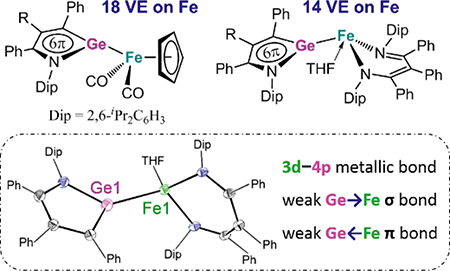
    The interpretation of heterometallic bonding nature is a basic work of inorganic chemistry. By means of intermetallic substitution of germylene anions with iron halide complexes CpFe(CO)2I and β-diketiminato FeII chloride, the ferrogermylene complexes 3a, 3b and 4a were synthesized and structurally characterized. The structural and IR characterizations show the presence of the Ge←Fe π backbonding in molecules 3a, 3b and 4a. The computational works on frontier molecular orbitals and their comparison of energy states confirmed that σ donation and π backbonding are both weak in these molecules, despite three complexes have longer Ge-Fe bonds, whose strength decreases slightly with the degressive electron density around Fe environment in a sequence from 3a, 3b to 4a.
  • Yu Yao, Peiling Zhang, Dan Zhou, Zhinan Lai, Shijun Li, Feihe Huang, Zibin Zhang
    中国化学快报. 2024, 35(03): 108712. https://doi.org/10.1016/j.cclet.2023.108712
    摘要 ( ) PDF全文 ( ) HTML 可视化 收藏
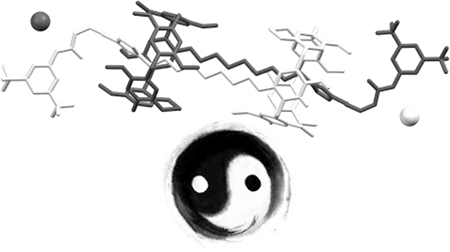
    A meso-molecular muscle was prepared by capping the [c2]daisy chain based on a mono-functionalized copillar[5]arene with an imidazolium group in its axle. From its crystal structure, we observed that it was a cyclic dimer composed of two mirror image subcomponents, a pR- and a pS-copillar[5]arene. Their conformations were fixed by the doubly interlocked mechanical bond. By comparison of the 1H NMR and COSY spectra, we found that the length of this meso-molecular muscle could be controlled not only by the solvents, but also by the counter anions.
  • Lijuan He, Hongxia Du, Yi Yang, Zhihua Guan, Jinjin Li, Honglin Li, Xudong Lin, Lili Zhu
    中国化学快报. 2024, 35(03): 109013. https://doi.org/10.1016/j.cclet.2023.109013
    摘要 ( ) PDF全文 ( ) HTML 可视化 收藏
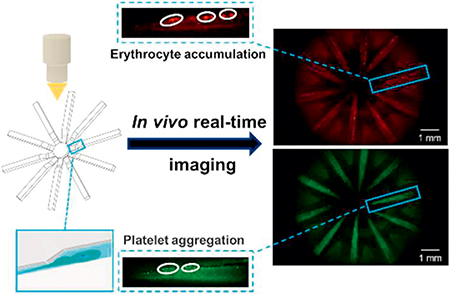
    Thrombosis remains a major global health concern mainly characterized by high rates of morbidity and mortality. Animal models serve as an indispensable tool to understand the underlying pathogenesis of thrombosis and assess the efficacy of novel antithrombotic drugs. Currently, zebrafish has emerged as a valuable model organism for thrombosis research. However, the traditional method of studying zebrafish thrombosis requires a laborious and time-consuming procedure, including anesthesia and manual immobilization of zebrafish. In this study, based on hydrodynamic force, a lateral-immobilization zebrafish microfluidic chip (LIZMC) was designed to evaluate the cardiovascular system of multiple larvae within a single microscope field of view. Specifically, coupling with microscope imaging, real-time monitoring of the peripheral blood circulation in the tail of phenylhydrazine (PHZ)-induced zebrafish thrombosis was enabled. Furthermore, the reliability of LIZMC for in vivo evaluation of antithrombotic agents in zebrafish was verified using aspirin. Collectively, this novel LIZMC-based system can be used for in vivo zebrafish thrombosis studies and rapid screening of antithrombotic agents.
  • Wei Yuan, Gui-Zhi Dong, Hui Ning, Xiang-Xiang Guan, Jia-Feng Cheng, Zi-Wei Shi, Xiu-Ji Du, Si-Wen Meng, Dong-Sheng Liu, Yuan-Chen Dong
    中国化学快报. 2024, 35(03): 108384. https://doi.org/10.1016/j.cclet.2023.108384
    摘要 ( ) PDF全文 ( ) HTML 可视化 收藏
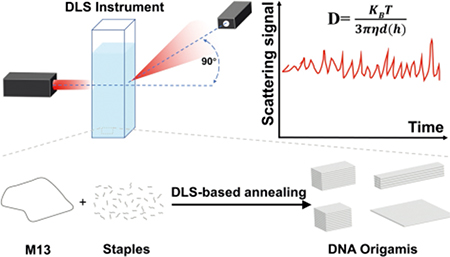
    Understanding the dynamic assembly process of DNA nanostructures is important for developing novel strategy to design and construct functional devices. In this work, temperature-controlled dynamic light scattering (DLS) strategy has been applied to study the global assembly process of DNA origami and DNA bricks. Through the temperature dependent size and intensity profiles, the self-assembly process of various DNA nanostructures with different morphologies have been well-studied and the temperature transition ranges could be observed. Taking advantage of the DLS information, rapid preparation of the DNA origami and the brick assembly has been realized through a constant temperature annealing. Our results demonstrate that the DLS-based strategy provides a convenient and robust tool to study the dynamic process of forming hieratical DNA structures, which will benefit understanding the mechanism of self-assembly of DNA nanostructures.
  • Jin-Hui Shi, Bei Zhao, Li-Lin Song, Yu-Qing Song, Meng-Ru Sun, Tian Tian, Hong-Yu Chen, Yun-Qing Song, Jian-Ming Sun, Guang-Bo Ge
    中国化学快报. 2024, 35(03): 108405. https://doi.org/10.1016/j.cclet.2023.108405
    摘要 ( ) PDF全文 ( ) HTML 可视化 收藏
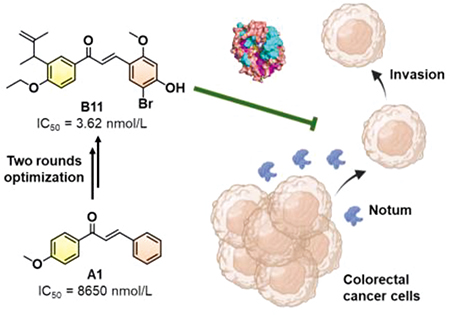
    Human Notum (hNotum) inhibitors could be used for treating Wnt signalling-associated diseases including colorectal cancer. Herein, two series of chalcone derivatives were designed and synthesized aiming to find selective and potent hNotum inhibitors. Structure-activity relationship (SAR) studies showed that 2-methoxyl and 5-bromine substitutions on A-ring significantly enhanced anti-hNotum effect, while 4'-ethoxyl and 3'-alkyl substitutions on B-ring were beneficial for hNotum inhibition. Among all tested chalcones, B11 displayed the most potent anti-Notum effect (IC50 = 3.6 nmol/L), good selectivity, excellent chemical stability and suitable metabolic stability. Further investigations showed that B11 acted as a competitive inhibitor of hNotum, while this agent (5 μmol/L) significantly weaken the migration abilities of colorectal cancer cells. Collectively, this study deciphers the SARs of chalcones as hNotum inhibitors and reports a novel and potent hNotum inhibitor with the anti-migration effect on colorectal cancer cells, which offers a promising lead compound to develop novel anti-cancer agents.
  • Yu Wen, Shichun Lun, Yuxue Jiao, Wei Zhang, Tianyu Hu, Ting Liu, Fan Yang, Jie Tang, Bing Zhang, William R. Bishai, Li-Fang Yu
    中国化学快报. 2024, 35(03): 108464. https://doi.org/10.1016/j.cclet.2023.108464
    摘要 ( ) PDF全文 ( ) HTML 可视化 收藏
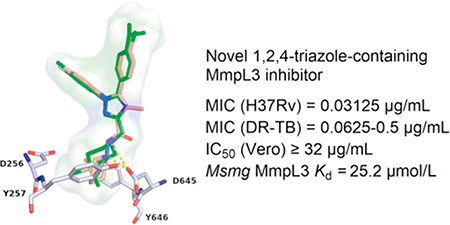
    Inhibition of mycobacterial membrane protein large 3 (MmpL3) thereby affecting the mycolic acid biosynthetic pathway has been proven to be an effective strategy for developing antitubercular drugs. Based on the X-ray crystal structure of MmpL3 inhibitor complexes, a series of novel 1,2,4-triazole derivatives were designed, synthesized and evaluated antitubercular activity against Mtb strain H37Rv. Comprehensive structure-activity relationship exploration resulted in the identification of compounds 21 and 28, which possess potent antitubercular activity against Mtb strain H37Rv [minimum inhibitory concentration (MIC) = 0.03-0.13 μg/mL] and the clinical isolates of multidrug resistance (MDR) and extensive drug resistance (XDR) tuberculosis (MIC = 0.06-1.0 μg/mL). Moreover, compounds 21 and 28 showed neglectable cytotoxicity (IC50 ≥ 32 μg/mL) to the mammalian Vero cells and favorable physicochemical and pharmacokinetic properties according to the in silico absorption, distribution, metabolism and excretion (ADME) prediction. Finally, the potential target of representative 1,2,4-triazole 28 was identified to be MmpL3 using a microscale thermophoresis (MST) assay.
  • Dequan Zeng, Zhongkai Ma, Xin Zan, Ting Luo, Xiang Wang, Xiang Gao, Xianghui Fu
    中国化学快报. 2024, 35(03): 108433. https://doi.org/10.1016/j.cclet.2023.108433
    摘要 ( ) PDF全文 ( ) HTML 可视化 收藏
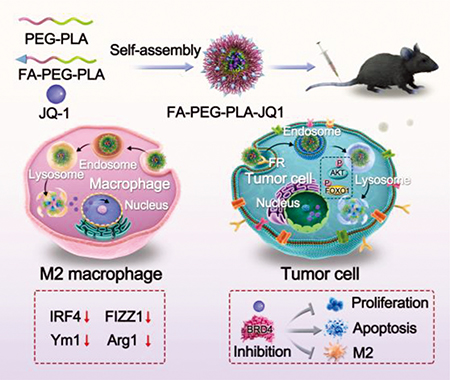
    Oral squamous cell carcinoma (OSCC) is known as one of the most malignant tumors with high recurrence and fatality rate. The poor tumor-targeting ability of traditional chemotherapeutic drugs has been a grand challenge for anti-OSCC therapy. Beyond that, a large quantity of tumor associated macrophages in OSCC tissues further diminish the anti-tumor effects of these drugs. Therefore, we produced a therapeutic nano drug delivery system (FA-PEG-PLA-JQ1) through encapsulating JQ1 [a small-molecule inhibitor of bromodomain containing protein 4 (BRD4)] into the folic acid (FA)-modified nanoparticle (PEG-PLA), which could prolong the half-life of JQ1 and target the tumor tissues. And then, JQ1 released from this nanoparticle could prevent OSCC growth inducing tumor cell apoptosis, inhibiting tumor angiogenesis and the polarization of M2 type macrophages. In conclusion, our date demonstrated the therapeutic benefits of FA-PEG-PLA-JQ1 against OSCC in vivo or in vitro, which could be a novel treatment strategy for OSCC in coming days.
  • Jingwen Zhang, Jiahui Yan, Yanan Wang, Hong Liu, Xueping Sun, Yuchao Gu, Liangmin Yu, Changcheng Li, Jun Wu, Zhiyu He
    中国化学快报. 2024, 35(03): 108434. https://doi.org/10.1016/j.cclet.2023.108434
    摘要 ( ) PDF全文 ( ) HTML 可视化 收藏
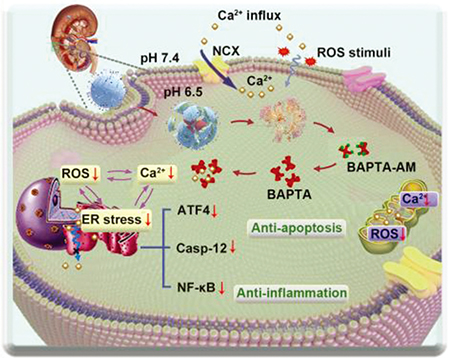
    Early pathogenesis of ischemia-reperfusion (I/R)-induced acute kidney injury (AKI) is dominated by intracellular calcium overload, which induces oxidative stress, intracellular energy metabolism disorder, inflammatory activation, and a series of pathologic cascaded reactions that are closely intertwined with self-amplifying and interactive feedback loops, ultimately resulting in cell damage and kidney failure. Currently, most nanomedicines originate from the perspective of antioxidant stress, which can only quench existing reactive oxide species (ROS) but cannot prevent the continuous production of ROS, resulting in insufficient efficacy. As a safe and promising drug, BAPTA-AM is hydrolyzed into BAPTA by intracellular esterase upon entering cells, which can rapidly chelate with overloaded Ca2+, restoring intracellular calcium homeostasis, thus inhibiting ROS regeneration at the source. Here, we designed a KTP-targeting peptide-modified yolk-shell structure of liposome-poly(ethylene glycol)methyl ether-block-poly (l-lactide-co-glycolic) (mPLGA) hybrid nanoparticles (<100 nm), with the characteristics of high encapsulation rate, high colloid stability, facile modification, and prolonged blood circulation time. Once the BA/mPLGA@Lipo-KTP was targeted to the site of kidney injury, the cholesteryl hemisuccinate (CHEMS) in the phospholipid bilayer, as an acidic cholesterol ester, was protonated in the simulated inflammatory slightly acidic environment (pH 6.5), causing the liposomes to rupture and release the BA/mPLGA nanoparticles, which were then depolymerized by intracellular esterase. The BAPTA-AM was diffused and hydrolyzed to produce BAPTA, which can rapidly cut off the malignant loop of calcium overload/ROS generation at its source, blocking the endoplasmic reticulum (ER) apoptosis pathway (ATF4-CHOP-Bax/Bcl-2, Casp-12-Casp-3) and the inflammatory pathway (TNF-α-NF-κB-IL-6 axes), thus alleviating pathological changes in kidney tissue, thereby inhibiting the expression of renal tubular marker kidney injury molecule 1 (Kim-1) (reduced by 82.9%) and also exhibiting prominent anti-apoptotic capability (TUNEL-positive ratio decreased from 40.2% to 8.3%), significantly restoring renal function. Overall, this research holds huge potential in the treatment of I/R injury-related diseases.
  • Lilin Fan, Yanwen Feng, Jiang Bian, Anhong Chen, Donglin Xie, Zheng Cao, Jun Yue
    中国化学快报. 2024, 35(03): 108443. https://doi.org/10.1016/j.cclet.2023.108443
    摘要 ( ) PDF全文 ( ) HTML 可视化 收藏
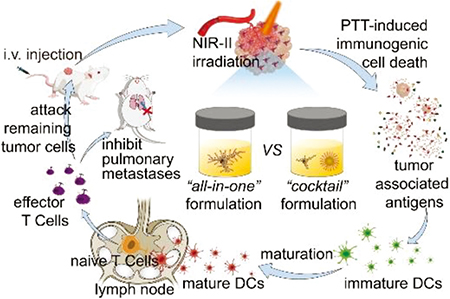
    Second near-infrared (NIR-II) light triggered in-situ tumor vaccination (ISTV) represents one of the most promising strategies in boosting the whole-body antitumor immunity. While most of previously developed nano-adjuvants for NIR-II-triggered ISTV are “all-in-one” formulations, which may indiscriminately damage both the tumor cells and the immune cells, limiting the overall effect of immune response. To overcome this obstacle, we designed a “cocktail” nano-adjuvant by physically mixing hyaluronidases (HAase)-decorated gold nanostars (HA) for NIR-II light triggered in situ production of tumor-associated antigens and CpG functionalized gold nanospheres (CA) for immune cells activation. Compared to “all-in-one” formulation, the “cocktail” nano-adjuvants displayed a significantly stronger immune response on NIR-II light induced dendritic cells (DCs) mutation and T cells differentiation, greater effect on tumor-growth inhibition, and higher efficacy in inhibition of pulmonary metastases. What is more, increasing the molar ratio of HA to CA led to an enhanced anticancer immune responses. This study highlight the nano-adjuvant formulation effects on the treatment of tumors with multiple targets.
  • Xuejian Xing, E Pang, Shaojing Zhao, Tangna Pan, Qiuxia Tan, Benhua Wang, Xiangzhi Song, Minhuan Lan
    中国化学快报. 2024, 35(03): 108467. https://doi.org/10.1016/j.cclet.2023.108467
    摘要 ( ) PDF全文 ( ) HTML 可视化 收藏
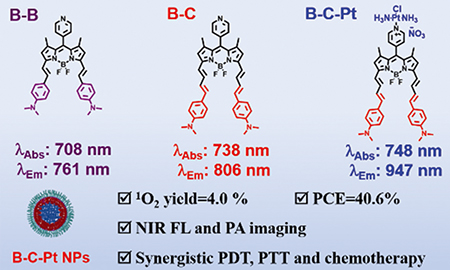
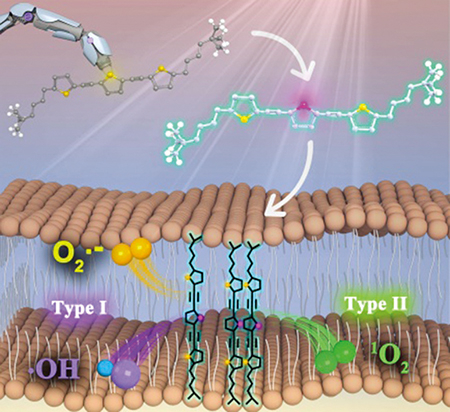
    Combining phototherapy and chemotherapy has been considered a promising modality for cancer therapy due to their synergistic effect. Herein, we developed three D-π-A-structured boron dipyrromethenes (BODIPYs) (named as B-B, B-C, and B-C-Pt). Due to their enlarged π-conjugated structure and high intramolecular charge transfer effect, the synthesized BODIPYs had photothermal conversion capability, and their absorption and fluorescence spectra were red-shifted. The cisplatin-appended BODIPY (B-C-Pt) exhibited good singlet oxygen (1O2) generation ability and near infrared (NIR) absorption and fluorescence (λAbs = 748 nm, λEm = 947 nm). After being encapsulated by distearoyl phosphoethanolamine polyethyleneglycol 2000 (DSPE-PEG-2000), which could inhibit the H-aggregation of B-C-Pt, the absorption and fluorescence of the obtained B-C-Pt nanoparticles (NPs) were red-shifted to 762 and 985 nm, respectively. The 1O2 quantum yield and photothermal conversion efficiency of the B-C-Pt NPs were 4.0% and 40.6%, respectively. Moreover, B-C-Pt NPs had chemotherapeutic efficacy due to the presence of cisplatin. In vitro and in vivo studies further demonstrated that B-C-Pt NPs had synergistic therapeutic efficacy. Together, B-C-Pt NPs could be employed in NIR II fluorescent and photoacoustic imaging-guided synergistic phototherapy and chemotherapy for cancer treatment.
  • Fei Yan, Xin Zhao, Ruibo Li, Xiuyan Han, Qiulong Yan, Lei Feng, Xiulan Xin, Jingnan Cui, Xiaochi Ma
    中国化学快报. 2024, 35(03): 108504. https://doi.org/10.1016/j.cclet.2023.108504
    摘要 ( ) PDF全文 ( ) HTML 可视化 收藏
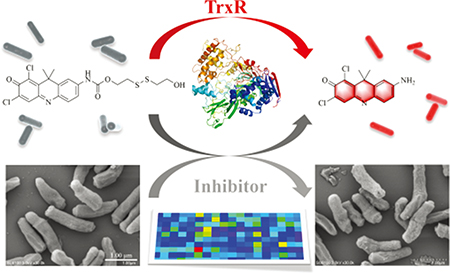
    Tuberculosis (TB) is a chronic infectious disease, which is caused by the pathogen Mycobacterium tuberculosis (Mtb) and reemerged as a global health risk with a significant proportion of multi-drug resistant and extensively drug resistant TB cases. It is very urgent to find some novel high-confidence drug targets in Mtb for discovering the effective anti-TB agents. Thioredoxin reductase (TrxR) has been identified to be a highly viable target for anti-TB drugs for its important role in protecting the pathogen from thiol-specific oxidizing stress, regulating intracellular dithiol/disulfide homeostasis and DNA replication and repair. In the present work, a near-infrared (NIR) fluorescent probe DDAT was developed for the detection of TrxR activity and used to high-throughput screen the TrxR inhibitors from natural products. Two screened TrxR inhibitors from Sappan Lignum and microbial metabolites that were further used to inhibit Mycobacterium tuberculosis. All the results indicate that DDAT is a practical fluorescent molecular tool for the discovery of potential anti-TB drugs.
  • Tianping Xia, Yanxian Hou, Zhuoran Xia, Gengwen Chen, Peichen Tang, Jiangli Fan, Xiaojun Peng
    中国化学快报. 2024, 35(03): 108577. https://doi.org/10.1016/j.cclet.2023.108577
    摘要 ( ) PDF全文 ( ) HTML 可视化 收藏
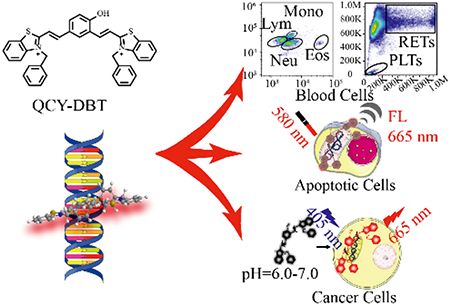
    Developing fluorescence probes with multiple responses has vital significance but remains challenging. Herein, for the first time, we present a mitochondrial DNA (mtDNA)-triggered pH response signal-amplified fluorescent probe (QCY-DBT) for multiple cell detection. The probe exhibited a large stokes shift (229 nm), excellent DNA selectivity over RNA, and ultrasensitivity of detection limit (DL; 74.0 ng/mL). Thus, QCY-DBT was successfully applied to analyze multiple human peripheral blood cells and visualize mtDNA in healthy and apoptotic cells. In the tumor acidic environment (pH 6.0-7.0), the absorbance of QCY-DBT at 436 nm increased, and the fluorescence signal (665 nm) was amplified by mtDNA, which enabled the direct observation of tumor cells. Our study provides help in designing smart probes with multiple responses for efficient abnormal cell detection.
  • Huiyu Si, Dongjuan Wang, Xianfa Du, Xin Zhou
    中国化学快报. 2024, 35(03): 108595. https://doi.org/10.1016/j.cclet.2023.108595
    摘要 ( ) PDF全文 ( ) HTML 可视化 收藏
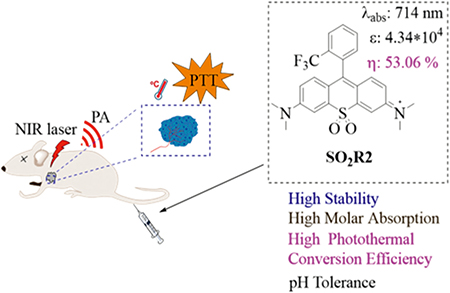
    Photothermal therapy (PTT) is a cutting-edge cancer treatment that can kill cancer cells in hypoxic environments without relying on oxygen. Seeking of the ideal photothermal agents with a high absorption coefficient in the near-infrared region, and a high excellent photothermal conversion efficiency is of great significance. Sulfone-Rhodanmine dye has showed an impressive absorption wavelength over 700 nm, but suffered from a stability issue. In this study, we synthesized five sulfone rhodamines and investigated the substitution effects on stability. showed high stability and strong absorbance at 714 nm with an excellent photothermal conversion efficiency of 53.06%, making it suitable for accurate photoacoustic imaging-guided photothermal therapy in vivo.
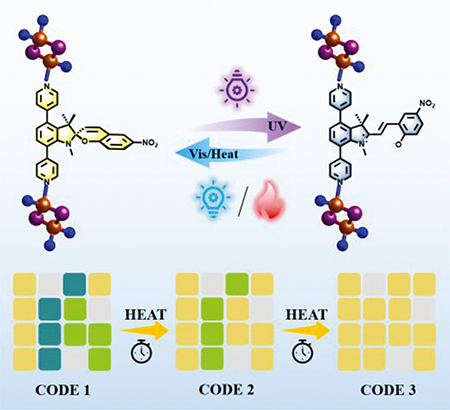
  • Jiazhuang Guo, Yifeng Chen, Pan Zhang, Ge Li, Xiaoning Yang, Cai-Feng Wang, Su Chen
    中国化学快报. 2024, 35(03): 108481. https://doi.org/10.1016/j.cclet.2023.108481
    摘要 ( ) PDF全文 ( ) HTML 可视化 收藏
    Carbon dots (CDs) have been extensively studied owing to their fascinating optical properties and wide potential applications. Here, we report an easy-to-perform and organic-solvent-free synthesis strategy for green-emissive CDs (G-CDs) possessing high photoluminescence (PL) quantum yield (QY). The G-CDs are synthesized by heating the homogeneous precursors of citric acid and cyanamide in an open vessel, circumventing the use of organic solvents, complex operations, high-pressure reactors, and expensive instruments in the synthesis process. The effect of various reaction variables on the formation and the optical properties of G-CDs are systematically investigated. The resultant G-CDs show bright PL emission at 521 nm with PL QY up to 73%. Then a white light-emitting diode (LED) with Commission Internationable de L'Eclairage (CIE) coordinates of (0.33, 0.34) and color rendering index (CRI) of 92 is constructed based on G-CDs/thermoplastic polyurethane (TPU) composite. Moreover, a visual microfluidic detection platform is designed by using G-CDs as fluorescent probes for rapid quantitative detection of Fe3+, Cu2+, and Mn2+ metal ions, which can realize synchronized testing of multiple samples. This study might promote the development and preparation methods of high-performance CDs with various optical applications.
  • Zhi-Wu Tong, Ting-Ting Wang, Pei Yang, Jia-Lin Sun, Chen-Peng Zhang, Salman Khan, Xin-Cun Wang, Rui-Hua Jiao, Hui-Ming Ge, Wen-Ying Zhuang, Gang Hu, Ren Xiang Tan
    中国化学快报. 2024, 35(03): 108488. https://doi.org/10.1016/j.cclet.2023.108488
    摘要 ( ) PDF全文 ( ) HTML 可视化 收藏
    Fungal symbionts co-evolve with hosts and microbial co-inhabitants to acquire an unpredictable potential for producing novel bioactive metabolites, but the knowledge about the topic remains patchy and superficial. Here we present the chemical characterization of acatulides A-G (1-7) as architecturally unprecedented macrolides from the solid-state culture of Acaulium album H-JQSF, an arthropod-associated fungus. The acatulide structures were elucidated by spectroscopic analysis, modified Mosher's method and single-crystal X-ray diffraction. The plausible biosynthetic pathways for compounds 1-4 are proposed. Interestingly, acatulides B-D (2-4) and G (7) were demonstrated to be neuroprotective against the 1-methyl-4-phenylpyridinium (MPP+)-induced damage to SH-SY5Y cells and nematode Caenorhabditis elegans (C. elegans).
  • Yi-Jing Li, Lingze Zhang, Ming-Hao Pang, Pei-Pei Yang, Lu-Ming Guo, Kuo Zhang, Da-Yong Hou, Lei Wang, Hao Wang, Hui Cao
    中国化学快报. 2024, 35(03): 108530. https://doi.org/10.1016/j.cclet.2023.108530
    摘要 ( ) PDF全文 ( ) HTML 可视化 收藏
    Peptide drugs are known for their high biological safety. However, compared with small molecule drugs, peptide drugs are easily oxidized and hydrolyzed as well as short in half-life. Herein, inspired by the long circulation of albumin in blood, we screened albumin binding peptides (ABPs) from a one-bead one-compound (OBOC) peptide library to increase the half-life of peptide drugs. Beads displaying random peptides were screened using fluorescent labeled human serum albumin. Fluorescent beads with specific binding to albumin were isolated for sequencing. The selected ABPs can effectively bind to albumin, thus possessing the long circulation of albumin. The dissociation constant (KD) of ABPs to albumin is up to 1 × 10⁻⁸ mol/L. Once one of ABPs (ABP2) was coupled to triptorelin, the circulation half-life of triptorelin in mice was significantly prolonged to 263.50 h much longer than that of triptorelin alone (179.07 h). In addition, the combination therapy using ABP-conjugated triptorelin and doxorubicin (DOX) can effectively inhibit the proliferation of tumor cells in mice. The OBOC screening strategy and resulting ABPs showed great potential for enhancing the delivery efficiency of peptide drugs.
  • Qi Zhao, Guangchao Qing, Jie Yu, Ying Liu, Jianliang Shen, Yang Luo, Xingjie Zan, Shengliang Li
    中国化学快报. 2024, 35(03): 108535. https://doi.org/10.1016/j.cclet.2023.108535
    摘要 ( ) PDF全文 ( ) HTML 可视化 收藏
    Traditional photosensitizers show limited singlet oxygen generation in hypoxic infection lesions, which greatly suppress their performance in antibacterial therapy. Meanwhile, there still is lack of feasible design strategy for developing hypoxia-overcoming photosensitizers agents. Herein, radical generation of π-conjugated small molecules is efficiently manipulated by an individual selenium (Se) substituent. With this strategy, the first proof-of-concept study of a Se-anchored oligo (thienyl ethynylene) (OT-Se) with high-performance superoxide radical (O2·-) and hydroxyl radical (·OH) generation capability is present, and achieves efficient antibacterial activities towards the clinically extracted multidrug-resistant bacteria methicillin-resistant S. aureus (MRSA) and carbapenem-resistant E. coli (CREC) at sub-micromolar concentration under a low white light irradiation (30 mW/cm2). The water-dispersible OT-Se shows a good bacteria-anchoring capability, biocompatibility, and complete elimination of multidrug-resistant bacteria wound infection in vivo. This work offers a strategy to boost type-I photodynamic therapy (PDT) performance for efficient antibacterial treatments, advancing the development of antibacterial agents.
  • Hongyao Liu, Yan Yu, Taixiong Xue, Cailing Gan, Yuting Xie, Doudou Wang, Peilin Li, Zhiyong Qian, Tinghong Ye
    中国化学快报. 2024, 35(03): 108574. https://doi.org/10.1016/j.cclet.2023.108574
    摘要 ( ) PDF全文 ( ) HTML 可视化 收藏
    Fibrosis occurs due to the excessive deposition of extracellular matrix caused by cell injury. After various types of tissue injury, the dysregulation of the internal response can eventually lead to the destruction of organ structure and dysfunction. There is increasing evidence that oxidative stress, which is characterized by excessive production of hydrogen peroxide (H2O2), is an important cause of fibrosis. Therefore, we synthesized a biosensitive and efficient electrochemical H2O2 sensor based on PtNi nanoparticle-doped N-reduced graphene oxide (PtNi-N-rGO) to detect H2O2 released from transforming growth factor β1 (TGFβ1)-induced myofibroblast. In addition, the sensor could easily detect changes in H2O2 in the lung and bronchoalveolar lavage fluid (BALF) of mice with pulmonary fibrosis. Furthermore, the sensor could also detect H2O2 in activated hepatic stellate cells and the liver of carbon tetrachloride (CCl4)-induced liver fibrosis. Moreover, the alterations in H2O2 detected by the sensor were consistent with nicotinamide adenine dinucleotide phosphate oxidase 4 (NOX4) protein expression and the staining results of pathological sections. Taken together, these results highlight the use of H2O2 sensors for the rapid detection of fibrosis and facilitate the rapid evaluation of antifibrotic drug candidates.
  • Hengfei Wang, Song Chen, Zihan He, Junyu Chen, Zhou Zhu, Qianbing Wan, Jian Wang, Xibo Pei
    中国化学快报. 2024, 35(03): 108597. https://doi.org/10.1016/j.cclet.2023.108597
    摘要 ( ) PDF全文 ( ) HTML 可视化 收藏
    The Wnt signaling pathway plays a critical role in bone homeostasis, and the related protein therapy strategies have been reported to have great potential in osseointegration; however, they face formidable challenges such as complex external environments and unavoidable protein denaturation. In this work, we report a novel approach combining the synthesis of metal-organic frameworks (MOFs) and protein encapsulation in a one-pot process based on zeolitic imidazolate framework-8 (ZIF-8) and Wnt3a protein, with improved biomechanical behavior and enhanced protein biological response. This combination was designed to enhance the Wnt3a protein function through the improved chemical stability provided by the ZIF-8 crystals. Additionally, the zinc ions contained in the ZIF-8 crystals induced bone homeostasis, further favoring the osteogenesis. The results showed that the Wnt3a protein-loaded ZIF-8 crystals served as efficient drug delivery vehicles to promote osteogenesis, preventing protein denaturation. In particular, Wnt3a-loaded ZIF-8 nanoparticles (Wnt3a@ZIF-8 NPs) had higher efficacy on bone marrow mesenchymal stem cells (BMSCs) than ZIF-8 NPs or Wnt3a proteins, contributing to the osteogenesis through ZIF-8 crystals and intracellular Wnt3a proteins released from Wnt3a@ZIF-8 NPs. Furthermore, polymerase chain reaction (PCR) analysis showed that the osteogenic pathways were upregulated. Overall, the present one-pot process can open up new avenues to develop signaling protein-delivery systems for applications in protein therapy strategies.
  • Haili Hu, Weiwei Zhang, Lei Lei, Fan Tong, Huilin Zhang, Yiwei Zhang, Wenqin Yang, Yilu Tang, Ruyi Lin, Xue Xia, Jiamei Li, Shiyong Song, Huile Gao
    中国化学快报. 2024, 35(03): 108765. https://doi.org/10.1016/j.cclet.2023.108765
    摘要 ( ) PDF全文 ( ) HTML 可视化 收藏
    The application of photothermal therapy (PTT) is greatly limited by the low accumulation of photothermal agents, uneven photothermal distribution, and heat endurance of cancer cells. Worse still, despite PTT enhances immunogenicity, the anti-tumor immune efficacy is still unsatisfactory due to the inefficient immunogenic cell death (ICD) induction and poor infiltration of immune cells. To solve the above problems of PTT, we developed hyaluronic acid (HA) modified hollow copper sulfide nanoparticles encapsulating diethyldithiocarbamate (DDTC) to construct a breast tumor targeting and near infrared (NIR) photo-responsive drug delivery system (D-HCuS@HA), which further combined with losartan to improve the accumulation and penetration in the tumor site. Upon irradiation, D-HCuS@HA realized enhanced PTT and released cytotoxic Cu(DDTC)2 to eliminate heat endurance tumor cells, thereby enhancing anti-tumor effect and inducing effective ICD. Moreover, the combination with losartan could remodel the tumor microenvironment, allowing more T cells to infiltrate into the tumor, and significantly inhibiting the occurrence and development of metastatic tumors. In vitro/vivo results revealed the great potential of D-HCuS@HA combined with losartan, which provides a new paradigm for anti-tumor and anti-metastases.
  • Chunyang Zhang, Yuelan Li, Zhaojun Chu, Shuangzhi Yuan, Yanan Qiao, Jiaozhen Zhang, Lin Li, Yueqing Zhang, Ruifeng Tian, Yajie Tang, Hongxiang Lou
    中国化学快报. 2024, 35(03): 108206. https://doi.org/10.1016/j.cclet.2023.108206
    摘要 ( ) PDF全文 ( ) HTML 可视化 收藏
    Two distinctive rearranged 19-nor-7,8-seco-labdane diterpenoids (1 and 2) with a novel tetracyclo[5.2.1.02,5.04,10]decane skeleton, a derivative of the open tetrahydrofuran ring (7), three dimeric compounds (8-10), and four revised homologs (3-6) were obtained from Chinese liverwort Pallavicinia ambigua. Their structures were identified via combined analysis of their spectroscopic data, single-crystal X-ray diffraction patterns, and ECD calculations. The light-driven conversion of compound 5 to compounds 1-4 demonstrated that photochemically induced postmodification involved in biosynthesis is an important way to diversify natural structures. A preliminary cytotoxicity assay revealed that compound 5 showed significant inhibition in the human prostate cancer (PC-3) cell line via an apoptotic pathway.
  • Cheng Wu, Yixuan Liu, Chunsheng Xiao, Chenyang Hu, Xuan Pang, Xuesi Chen
    中国化学快报. 2024, 35(03): 109163. https://doi.org/10.1016/j.cclet.2023.109163
    摘要 ( ) PDF全文 ( ) HTML 可视化 收藏
    A new strategy for the metal-free coordination-insertion ring-opening polymerization of tetrahydrofuran by the central metalloid Boron has been first identified. Bis(pentafluorophenyl)(phenoxy)borane was used as a catalyst for the polymerization reaction system. And polytetrahydrofuran with high molecular weight and narrow molecular weight distribution could be obtained. The proposed mechanism was studied by MALDI-TOF, ESI-MS and O-18 isotope labeling analyses as a metal-free coordination insertion mechanism.
  • Yushan Gao, Junyao Zhang, Dapeng Liu, Tongrui Sun, Jun Wang, Li Li, Shilei Dai, Jianhua Zhang, Zhenglong Yang, Jia Huang
    中国化学快报. 2024, 35(03): 108582. https://doi.org/10.1016/j.cclet.2023.108582
    摘要 ( ) PDF全文 ( ) HTML 可视化 收藏
    Organic electrochemical transistors (OECTs) have emerged as one type of promising building block for neuromorphic systems owing to their capability of mimicking the morphology and functions of biological neurons and synapses. Currently, numerous kinds of OECTs have been developed, while self-healing performance has been neglected in most reported OECTs. In this work, the OECTs using self-healing polymer electrolytes as dielectric layers are proposed. Several important synaptic behaviors are simulated in the OECTs by doping the channel layers with ions from the electrolytes. Benefitting from the dynamic hydrogen bonds in the self-healing polymer electrolytes, the OECTs can successfully maintain their electrical performance and the ability of emulating synaptic behaviors after self-healing compared with the initial state. More significantly, the sublinear spatial summation function is demonstrated in the OECTs and their potential in flexible electronics is also validated. These results suggest that our devices are expected to be a vital component in the development of future wearable and bioimplantable neuromorphic systems.
  • Xiaoying Ma, Xiaojuan Dai, Lanyi Xiang, Jiajun Chang, Danfeng Zhi, Haozhen Zhao, Zhenjie Ni, Ye Zou, Xike Gao, Fengjiao Zhang
    中国化学快报. 2024, 35(03): 108734. https://doi.org/10.1016/j.cclet.2023.108734
    摘要 ( ) PDF全文 ( ) HTML 可视化 收藏
    Molecular structure of organic semiconductor plays a critical role in determining the performance and functionality of organic electronic devices, by optimizing the electrical, optical and physicochemical properties. Substituted alkyl chains are fundamental units in tailering the solubility and assemblability, among which the asymmetric properties have been reported as key element for controlling the packing motifs and intrinsic charge transport. Here, we expanded the scope of molecular asymmetry dependent sensing features based on a new series of naphthalene diimides (NDI)-based derivatives substituted with a same branching alkyl chain but various linear-shaped alkyl chains (Cn-). A clear molecular stacking change, from head-to-head bilayer to head-to-tail monolayer packing model, is observed based on the features of anisotropic molecular interactions with the change in the chain length. Most importantly, a unique LUMO level shift of 0.17 eV is validated for NDI-PhC4, providing a record sensitivity up to 150% to 0.01 ppb ammonia, due to the desired molecular reactivity and device amplification properties. These results indicate that asymmetric side-chain engineering opens a route for breath healthcare.
  • Yue Liu, Yongshuang Huang, Chao Li, Guifu Si, Min Chen
    中国化学快报. 2024, 35(03): 108874. https://doi.org/10.1016/j.cclet.2023.108874
    摘要 ( ) PDF全文 ( ) HTML 可视化 收藏
    Introducing covalently crosslinked network to polymer matrix can merge the advantages in reprocessing and durability of polymers. In this contribution, a series of high-performance vitrimeric elastomers were achieved via polycondensation. The topological structures of polymers were tuned by varying the feeding ratios of bisacetoacetate, hex-substituted bisacetoacetate, bisamine and tris(2-aminoethyl)amine. With these structural manipulations, the vitrimeric elastomers presented great elastic recovery properties (strain recovery value up to 80%) benefiting from the introduction of long chain branch. Furthermore, the elastomers exhibited excellent reprocessing property, water vapor/oxygen barrier and adhesive properties. Specially, the elastomers could be degraded into monomer under acid conditions which enabled the elastomer synthesis again in closed loop recycling system. The ease of the polycondensation in this work to prepare highly elastic and recyclable vitrimeric elastomers demonstrated exciting opportunities for the synthesis of sustainable polymers.
  • Qiaoyu Zhang, Guiwen Luo, Jinping Chen, Tianjun Yu, Rui Hu, Guoqiang Yang, Yi Zeng, Yi Li
    中国化学快报. 2024, 35(03): 109009. https://doi.org/10.1016/j.cclet.2023.109009
    摘要 ( ) PDF全文 ( ) HTML 可视化 收藏
    Luminescent materials that can be reversibly switched by electric field stimulation are attractive since the potential application for optoelectronic devices. Here we report a triplet-triplet annihilation upconversion (TTA-UC) system with electrophoretic response which is developed as the electrophoretic ink. The TTA-UC system consists of an ionic derivative of 9,10-diphenyl anthracene (DPA) as the annihilator and Pt(II) octaethylporphyrin (PtOEP) as the sensitizer. Upon applying an electric field, migration and enrichment of positively charged DPA derivatives towards the cathode results in a 20% enhancement of TTA-UC. A quasi-solid film for electrically writing is made using the electrophoretic TTA system as the ink and a platinum electrode as a pen. The prototype of TTA-UC ink demonstrates unique luminescence functions upon electrically writing and erasing, providing a promising strategy to develop electronic devices for display, information storage and encryption.
  • Linhe Xu, Xueshan Hu, Shuang Zhou, Ze Zhang, Junxian Zhang, Chao Li, Daxian Zuo, Hao Liu, Gang Chen, Jiayu Wan, Jinsong Tao
    中国化学快报. 2024, 35(03): 109103. https://doi.org/10.1016/j.cclet.2023.109103
    摘要 ( ) PDF全文 ( ) HTML 可视化 收藏
    Accurate detection of uric acid (UA) is crucial for diagnosing gout, yet traditional sweat-based UA sensors continue to face challenges posed by complex and costly electrode fabrication methods, as well as weakly hydrophilic substrates. Here, we designed and developed simple, low-cost, and hydrophilic sweat UA detection sensors constructed by carbon electrodes and cellulose paper substrates. The carbon electrodes were made by carbonized polyimide films through a simple, one-step laser engraving method. Our electrodes are porous, possess a large specific surface area, and are flexible and conductive. The substrates were composed of highly hydrophilic cellulose paper that can effectively collect, store, and transport sweat. The constructed electrodes demonstrate high sensitivity of 0.4 μA L μmol-1 cm-2, wide linear range of 2-100 μmol/L. In addition, our electrodes demonstrate high selectivity, excellent reproducibility, high flexibility, and outstanding stability against mechanical bending, temperature variations, and extended storage periods. Furthermore, our sensors have been proven to provide reliable results when detecting UA levels in real sweat and on real human skin. We envision that these sensors hold enormous potential for use in the prognosis, diagnosis, and treatment of gout.
  • Guiru Sun, Yan Wang, Daming Yang, Zexu Zhang, Wei Lu, Ming Feng
    中国化学快报. 2024, 35(03): 108469. https://doi.org/10.1016/j.cclet.2023.108469
    摘要 ( ) PDF全文 ( ) HTML 可视化 收藏
    LiBr as a promising redox mediator (RM) has been applied in Li-O2 batteries to improve oxygen evolution reaction kinetics and reduce overpotentials. However, the redox shuttle of Br3- can induce the unexpected reactions and thus cause the degradation of LiBr and the corrosion of Li anode, resulting in the poor cyclability and the low round-trip efficiency. Herein, MgBr2 is firstly employed with dual functions for Li-O2 batteries, which can serve as a RM and a SEI film-forming agent. The Br- is beneficial to facilitating the decomposition of Li2O2 and thus decreasing the overpotential. Additionally, a uniform SEI film containing Mg and MgO generates on Li anode surface by the in-situ spontaneous reactions of Mg2+ and Li anode in an O2 environment, which can suppress the redox shuttle of Br3- and improve the interface stability of Li anode and electrolyte. Benefiting from these advantages, the cycle life of Li-O2 battery with MgBr2 electrolyte is significantly extended.
  • Kang Yang, Long Li, Yuanbin Xiao, Qiaoli Zhang, Chenpeng Xi, Borong Li, Yan Yu, Chengkai Yang
    中国化学快报. 2024, 35(03): 108451. https://doi.org/10.1016/j.cclet.2023.108451
    摘要 ( ) PDF全文 ( ) HTML 可视化 收藏
    The development of lithium-metal batteries (LMBs) is seriously restricted by the out-of-control dendrites growth and infinite volume expansion. Herein, a pervasive organic-inorganic layer construction strategy is reported for the composite lithium metal anode with congener-derived organic-inorganic solid electrolyte interphase (SEI). In this strategy, the organic-inorganic Ag@polydopamine (Ag@PDA) layer is coated on the arbitrary substrates by a simple two-step method. The thin and stable congener-derived SEI is in-situ formed with fewer inorganic components and more organic components during charging/discharging. The polydopamine with sufficient adhesion groups and lithiophilic Ag layer realize near-zero nucleation overpotential during lithium deposition. The low interface resistance and stable lithium deposition are achieved. Moreover, the practical areal and volumetric capacities of the composite anode with three-dimensional copper (3DCu) as the substrate are 10 mAh/cm2 and 1538 mAh/cm3 (vs. the mass of anode). The symmetrical cell shows very low polarization voltage (10 mV) and more than 2500 h cycles life at 1 mA/cm2 (1 mAh/cm2). The LiNi0.8Co0.1Mn0.1O2 (NCM811)-based full cells show improved capacity retention (82%) after 100 cycles at 0.5 C. The modified lithiophilic anode with congener-derived interphase provides a promising strategy to realize the next-generation dendrite-free LMBs.
  • Yue Guo, Xinxin Qu, Zhen Li, Ruiyuan Tian, Xiaokong Liu
    中国化学快报. 2024, 35(03): 108482. https://doi.org/10.1016/j.cclet.2023.108482
    摘要 ( ) PDF全文 ( ) HTML 可视化 收藏
    Poly(ethylene oxide) (PEO) polymer electrolytes (PEs) have been commercially applied in LiFePO4||Li solid-state lithium batteries (SSLBs). However, it remains challenging to develop PEO-based PEs applicable to the high-voltage SSLBs with higher energy density, owing to the poor electrochemical stability of PEO. Herein, we report a scalable strategy for fabricating PEO-based PEs with high-voltage compatibility, by exploiting a new mechanism to stabilize the cathode-electrolyte interface in the high-voltage SSLBs. The protocol only involves a one-pot synthesis procedure to covalently crosslink the PEO chains, in the presence of high-content lithium bis(trifluoromethylsulphonyl)imide (LiTFSI) salts and N,N-dimethylformamide (DMF). LiTFSI-DMF supramolecular aggregates are formed and firmly embedded in the polymer network, endowing the PE with high room-temperature ionic conductivity. The dissociated and highly concentrated TFSI- anions can enter the Helmholtz layer close to the high-voltage cathode, leading to the formation of a thin and homogeneous cathode electrolyte interface (CEI), mainly composed of LiF, on the cathode. The CEI with high electrochemical stability can effectively stabilize the cathode-electrolyte interface, enabling long-term stable cycling of the high-voltage LiCoO2||Li and nickel-rich NCM622||Li batteries at room temperature. The simplicity and scalability of the strategy makes the reported PEO-based PE potentially applicable in high-voltage SSLBs in practice.
  • Xiaojuan Chen, Haoqi Su, Baozhu Yang, Xiaocen Liu, Xiuting Song, Lixin Su, Gui Yin, Qi Liu
    中国化学快报. 2024, 35(03): 108487. https://doi.org/10.1016/j.cclet.2023.108487
    摘要 ( ) PDF全文 ( ) HTML 可视化 收藏
    Flexible aqueous zinc-ion batteries (AZIBs) with air-recharging capability are a promising self-powered system applied in future wearable electronics. It is desired to develop high-capacity air-rechargeable AZIBs. Herein, we developed a flexible AZIB with air-recharging capability based on trinitrohexaazatrinaphthylene (TNHATN) cathode and a ZnSO4 electrolyte. The flexible Zn//TNHATN battery exhibits high volumetric energy density (21.36 mWh/cm3) and excellent mechanical flexibility. Impressing, the discharged flexible Zn//TNHATN battery can be chemical self-charged via the redox reaction between TNHATN cathode and O2 from the air. After oxidation in air for 15 h, such flexible Zn//TNHATN battery can deliver a high specific capacity of 320 mAh/g at 0.5 A/g, displaying excellent air-recharging capability. Notably, this flexible Zn//TNHATN battery also works well in chemical or/and galvanostatic charging mixed modes, showing reusability. This work provides a new insight for designing flexible aqueous self-powered systems.
  • Yao Wang, Juncheng Wang, Jianwei Nai, Jianmin Luo, Xinyong Tao, Yujing Liu
    中国化学快报. 2024, 35(03): 108510. https://doi.org/10.1016/j.cclet.2023.108510
    摘要 ( ) PDF全文 ( ) HTML 可视化 收藏
    The lithium (Li) metal batteries (LMBs) are considered one of the most promising next-generation batteries due to its extremely high theoretical specific capacity. However, there are a couple of issues, e.g., the serious side reactions that occurred at the solid-liquid interface between the electrolyte and Li metal anode, hindering the broad commercialization of LMBs. Thus, a comprehensive understanding of the mechanisms underlying the decomposition of electrolytes is crucial to the design of LMBs. Herein, we utilize density functional theory simulations to explore the decomposition mechanism of electrolytes. The most commonly used ether electrolyte solvents, i.e., 1,2-dimethoxyethane (DME) and 1,3-dioxalane (DOL), based on suitable lithium salts, namely bis(trifluoromethanesulfonyl)imide (LiTFSI), are chosen to model the actual situations. We explicitly demonstrate that an electron-rich environment near the interface accelerates the decomposition of electrolytes. For ether electrolytes, we show that the LiTFSI degradation path is depending on the ratio of DOL to DME. In addition, the solvation structures of lithium-ion undergo a series of transformations upon electrolyte degradation, becoming thermodynamically more favorable and having a higher reduction potential in an electron-rich environment. Our finding provides new insights into the decomposition mechanisms of electrolytes and paves the way for the rational design of high-performance LMBs.
  • Chaohui Wei, Zeyu Yao, Jin Ruan, Zhicui Song, Aijun Zhou, Yingze Song, Donghuang Wang, Jicheng Jiang, Xin Wang, Jingze Li
    中国化学快报. 2024, 35(03): 109330. https://doi.org/10.1016/j.cclet.2023.109330
    摘要 ( ) PDF全文 ( ) HTML 可视化 收藏
    The high specific capacity and low negative electrochemical potential of lithium metal anodes (LMAs), may allow the energy density threshold of Li metal batteries (LMBs) to be pushed higher. However, the existing detrimental issues, such as dendritic growth and volume expansion, have hindered the practical implementation of LMBs. Introducing three-dimensional frameworks (e.g., copper and nickel foam), have been regarded as one of the fundamental strategies to reduce the local current density, aiming to extend the Sand’ time. Nevertheless, the local environment far from the skeleton is almost the same as the typical plane Li, due to macroporous space of metal foam. Herein, we built a double-layered 3D current collector of Li alloy anchored on the metal foam, with micropores interconnected macropores, via a viable thermal infiltration and cooling strategy. Due to the excellent electronic and ionic conductivity coupled with favorable lithiophilicity, the Li alloy can effectively reduce the nucleation barrier and enhance the Li+ transportation rate, while the metal foam can role as the primary promotor to enlarge the surface area and buffer the dimensional variation. Synergistically, the Li composite anode with hierarchical structure of primary and secondary scaffolds realized the even deposition behavior and minimum volume expansion, outputting preeminent prolonged cycling performances under high rate.
  • Yu Xue, Yuqi Chen, Guixian Li, Weixi Xia, Qinan Mao, Lang Pei, Meijiao Liu, Liang Chu, Jiasong Zhong
    中国化学快报. 2024, 35(03): 108447. https://doi.org/10.1016/j.cclet.2023.108447
    摘要 ( ) PDF全文 ( ) HTML 可视化 收藏
    Optical thermometry as an important local temperature-sensing technique, has received increasing attention in scientific and industrial areas. However, it is still a big challenge to develop luminescent materials with self-activated dual-wavelength emissions toward high-sensitivity optical thermometers. Herein, a novel ratiometric thermometric strategy of Bi3+-activated dual-wavelength emission band was realized in the same lattice position with two local electronic states of La3Sb1-xTaxO7:Bi3+(0 ≤ x ≤ 1.0) materials based on the different temperature-dependent emission behaviors, benefiting from the highly-sensitive and regulable emission to the coordination environment of Bi3+. The structural and spectral results demonstrate that the emission tremendously shifted from green to blue with 68 nm and the intensity was enhanced 2.6 times. Especially, the visual dual-wavelength emitting from two emission centers was presented by increasing the Ta5+substitution concentration to 20% or 25%, mainly originating from the two local electronic states around the Bi3+ emission center. Significantly, the dual-wavelength with different thermal-quenching performance provided high-temperature sensitivity and good discrimination signals for optical thermometry in the range between 303 and 493 K. The maximum relative sensitivity reached 2.64%/K (La3Sb0.8Ta0.2O7:0.04Bi3+@383 K) and 1.91%/K (La3Sb0.75Ta0.25O7:0.04Bi3+@388 K). This work reveals a rational design strategy of different local electronic states around the single-doping multiple emission centers towards practical applications, such as luminescence thermometry and white LED lighting.
  • Xiang Chu, Lingling Zhang, Ke Wang, Rui Zhang, Xiao Wang, Shuyan Song, Hongjie Zhang
    中国化学快报. 2024, 35(03): 108461. https://doi.org/10.1016/j.cclet.2023.108461
    摘要 ( ) PDF全文 ( ) HTML 可视化 收藏
    Bare Pd metal nanoparticles invariably suffer from poor selectivity in furfural hydrogenation by forming flat configurations, with the aromatic ring of the substrate molecules parallel to the metal surface. Herein, we put forward a promising solution by using CeO2 as promoters to modify Pd nanoparticles for modulating the adsorption behaviors of furfural molecules. To achieve the highly-desired ultra-small Pd@CeO2 core@shell nanostructure, a “constrained auto-redox” synthesis is developed, in which silicalite-1 supports play the key role of providing their surface as the landing place of PdOx precursors for inhibiting the overgrowth and the deformation. To the best of our knowledge, this is one of the smallest core@shell materials obtained from aqueous synthesis. When evaluated as catalysts, Pd@CeO2/S-1 gives 98.9% conversion of furfural with 94.3% selectivity for furfural alcohol in 15 h, which is much better than that of Pd/S-1 (88.6% conversion with 44.3% selectively). The DFT simulation reveals a strong interaction between the defects of CeO2 and the oxygen atom of the -CHO group in furfural molecules, which benefits the selective hydrogenation occurred in the -CHO group rather than the furan ring.
  • Meng Liu, Guocheng Lv, Hao Liu, Tianming Liu, Lingchang Kong, Libing Liao
    中国化学快报. 2024, 35(03): 108459. https://doi.org/10.1016/j.cclet.2023.108459
    摘要 ( ) PDF全文 ( ) HTML 可视化 收藏
    Highly efficient catalysts for electrolysis of water are crucial to the development of hydrogen energy which is helpful to carbon neutralization. Recently, high temperature shock (HTS), with advantage of rapid speed, universality and scalable production, has been a promising method in synthesis of nanomaterials. In this paper, HST was used to treat low Pt loading Mo6S8 for enhanced water splitting performance. Impressively, the optimized MoS2/MoO2/Mo6S8 nano-composite with low Pt mass loading (~4%) displays well hydrogen evolution reaction (HER) electrochemical performance. The overpotential is 124 mV to reach 10 mA/cm2 and the corresponding Tafel slope is 88 mV/dec in acidic electrolyte. Its mass activity is 6.2 mA/μgPt at -124 mV vs. RHE, which is almost 2 times relative to 20% Pt/C. Moreover, it presents distinguished stability even after 2000 cycles. This work will broaden the way of catalysts preparation and the application of hydrogen evolution.
  • Zhe Wang, Qingling Hong, Boqiang Miao, Tianjiao Wang, Yu Ding, Pujun Jin, Pei Chen, Yu Chen
    中国化学快报. 2024, 35(03): 108458. https://doi.org/10.1016/j.cclet.2023.108458
    摘要 ( ) PDF全文 ( ) HTML 可视化 收藏
    The selective electrochemical conversion of glycerol into value-added products is a green and sustainable strategy for the biomass utilization. In this work, Au nanowires (Au-NW) modified with polyethyleneimine (PEI) molecule (Au-NW@PEI) is obtained by an up-bottom post-modification approach. Physical characterization, molecular dynamics simulation and density functional theory demonstrate that the loose-packed PEI monolayer firmly and uniformly distribute on the Au-NW surface due to the strong Au-N interaction. Electrochemical experiments and product analysis display that PEI modification significantly enhance the electro-activity of Au-NW for the glycerol electro-oxidation reaction (GEOR) due to the electronic effect. Meanwhile, the steric hindrance and electrostatic effect of PEI layer make the optimizing adsorption of intermediates possible. Therefore, the selectivity of C3 product glyceric acid over Au-NW@PEI is increased by nearly 20%. The work thus indicates that the rational design of metal-organic interface can effectively elevate the electro-activity and selectivity of Au nanostructures, which may have wide application in biomass development.
  • Xiaohui Cui, Jia Lv, Chao Ma, Yujiao Wang, Zhenghao Jia, Daliang Zhang, Peng Guo, Zhongmin Liu
    中国化学快报. 2024, 35(03): 108470. https://doi.org/10.1016/j.cclet.2023.108470
    摘要 ( ) PDF全文 ( ) HTML 可视化 收藏
    Aluminosilicate small pore zeolites belonging to ABC-6 family play crucially important roles in the high methanol conversion with the high selectivity of light olefins, gas separation and storage, and selective catalytic reduction of NOx. In this work, we report a general method, called the epitaxial growth approach, for designing ABC-6 family small pore zeolites. It is mainly realized through the epitaxial growth on the nonporous SOD-type zeolite in the presence of inorganic cations (Na+ and K+) combined with a variety of organic structure directing agents (OSDAs). In this case, a series of ABC-6 family small pore zeolites such as ERI-, SWY-, LEV-, AFX-, and PTT-type zeolites have been successfully synthesized within a few hours. More importantly, the advanced focused ion beam (FIB) and the low-dose high-resolution transmission electron microscopy (HRTEM) imaging technique have been utilized for unraveling the zeolite heterojunction at the atomic level during the epitaxial growth process. It turns out (222) crystallographic planes of the SOD-type zeolite substrate provide unique pre-building units, which facilitate the growth of targeted ABC-6 family small pore zeolites along its c-axis. Moreover, the morphologies of ERI-type zeolite can also be tuned through the epitaxial growth approach, achieving a longer lifetime in the methanol conversion.
  • Xiao-Min Li, Junchao Jia, Danting Yang, Jiali Jin, Junkuo Gao
    中国化学快报. 2024, 35(03): 108474. https://doi.org/10.1016/j.cclet.2023.108474
    摘要 ( ) PDF全文 ( ) HTML 可视化 收藏
    Construction of proton transport channels in metal-organic frameworks (MOFs) with simple synthesis processes, high proton conductivities and good performance stabilities has been of great interest for proton exchange membrane fuel cell (PEMFC). Herein, we mimic the proton transport behavior of amino acid residues in bacteriorhodopsin, select UiO-66-COOH as the host, glycine and aspartic acid as the functional guest molecules, and then functionalize the MOF framework with amino acids to obtain biomimetic proton transport channels. This strategy endows UiO-66-COOH-Asp a high proton conductivity of 1.19 ×10⁻² S/cm at 70 ℃ and 98% RH, excellent cycle stability of performances and performance durability, which can be comparable to the reported MOFs-based proton conductors. Moreover, the proton conduction mechanism in UiO-66-COOH-Asp is elaborated in detail due to its visual structure, which is also one of the advantages of adopting MOFs as research platform, making it possible to optimize the structure-activity relationship of advanced materials. Notably, this strategy has clear objectives and simple synthesis, which has made certain contributions to both theoretical research and future industrial production of proton conductors.
  • Xu Yu, Zhiqiang Pan, Chengang Pei, Longjie Lin, Yanhui Lu, Ho Seok Park, Huan Pang
    中国化学快报. 2024, 35(03): 108484. https://doi.org/10.1016/j.cclet.2023.108484
    摘要 ( ) PDF全文 ( ) HTML 可视化 收藏
    The controllable morphology and composition of catalysts are crucial to improving the electrocatalytic activity of oxygen evolution reaction (OER). Herein, we construct a bimetallic heterostructure by sulfidation and hydrothermal methods, and the layered ReS2 is vertically aligned on Prussian blue-derived hollow Co9S8 nanocubes (Co9S8@ReS2). The core-shell structure of Co9S8@ReS2 can effectively prevent the restacking of layered ReS2, expose the abundant surface area and improve the utilization of electrocatalytic sites, resulting in fast electrolyte diffusion and charge transfer during OER. Due to the synergistic effect of the core-shell morphology and the formed bimetallic heterostructure, Co9S8@ReS2 exhibits excellent catalytic OER performance. At 10 mA/cm2, only 288 mV of overpotential is required with the Tafel slope of 73.3 mV/dec for Co9S8@ReS2, which are both lower than that of Co9S8 and ReS2. Meanwhile, Co9S8@ReS2 exhibits high catalytic stability and low charge transfer resistance and the boosted active sites are confirmed by density functional theory. This work provides a rational design of the OER catalysts by constructing the bimetallic heterostructure.
  • Pengfei Tan, Chuanhui Zhu, Jinjin Yang, Shuang Zhao, Tao Xia, Mei-Huan Zhao, Tao Han, Zheng Deng, Man-Rong Li
    中国化学快报. 2024, 35(03): 108485. https://doi.org/10.1016/j.cclet.2023.108485
    摘要 ( ) PDF全文 ( ) HTML 可视化 收藏
    The intricate correlation between multiple degrees of freedom and physical properties is a fascinating area in solid state chemistry and condensed matter physics. Here, we report a quantum-magnetic system BaNi2V2O8 (BNVO), in which the spin correlation was modulated by unusual oxidation state, leading to different magnetic behavior. The BNVO was modified with topochemical reduction (TR) to yield TR-BNVO with partially reduced valance state of Ni+ in the two-dimensional NiO6-honeycomb lattice. Accordingly, the antiferromagnetic order is suppressed by the introduction of locally interposed Ni+ and oxygen vacancies, resulting in a ferromagnetic ground state with the transition temperature up to 710 K. A positive magnetoresistance (7.5%) was observed in the TR-BNVO at 40 K under 7 T. These findings show that topological reduction is a powerful approach to engineer low-dimensional materials and accelerate the discovery of new quantum magnetism.
  • Haiying Wang, Han Xu, Chaolong Chen, Yingjie Zhu, Yikang Zhang, Dongdi Zhang, Jingyang Niu
    中国化学快报. 2024, 35(03): 108486. https://doi.org/10.1016/j.cclet.2023.108486
    摘要 ( ) PDF全文 ( ) HTML 可视化 收藏
    Two 3d-4f-5d heterometallic cluster-containing polyoxometalates, formulated as Na22{(SbW9O33)4[La3W6MO18(H2O)8(CH3COO)4]2}·nH2O (abbreviated as La6M2, M = Co/Mn) were synthesized and structurally characterized. Single-crystal X-ray diffraction analyses reveal that the polyanions of La6Co2 and La6Mn2 consist of the uncommon 3d-4f-5d clusters {La6W12Co2} and {La6W12Mn2}, which are encapsulated by four trilacunary Keggin tungstoantimonates to form the parallelogram-shaped title compounds. Additionally, the polyanions can be extended into a two-dimensional (2D) frame by the linkage of peripheral Na+ ions. The inner space of the 2D layer was filled with water molecules and thus an H-bonded network was formed, which is expected to exhibit a fascinating proton conductivity. The study of water-assisted proton conduction demonstrated that La6Co2 and La6Mn2 were temperature- and humidity-dependent proton conductors, respectively, and the proton conductivities could reach 1.3 × 10⁻² and 2.3 × 10⁻² S/cm at 65 ℃ and 90% RH conditions.
  • Meng-Juan Wang, Bo Li, Yong-Li Wei, Shu-Na Zhao, Shuang-Quan Zang
    中国化学快报. 2024, 35(03): 108491. https://doi.org/10.1016/j.cclet.2023.108491
    摘要 ( ) PDF全文 ( ) HTML 可视化 收藏
    It remains a big challenge to develop solid-state stimuli-responsive materials for time-dependent information encryption and inkless erasable printing with long retention times. Herein, a 2D Cu2I2-based MOF with photoresponsive spiropyran (SP) groups orderly installed on its skeleton is developed. The structural isomerization from SP to colored merocyanine (MC) form can be triggered by removing the CH3CN guests. Besides, the degree of structural isomerization and the retention time can be adjusted by controlling the amount of CH3CN guests, exhibiting dynamic photochromic behavior with multicolor states and tunable retention time. Based on these advantages, time-dependent information encryption is successfully achieved. Furthermore, the long retention time (>72 h) of the MC form under daylight conditions in the CH3CN-removed Cu2I2-based MOF and good repeatability make it promising in various applications, such as temporary calendars, price-cards, billboards, and reusable identity cards. This work provides a novel design strategy to fabricate multi-functional MOF-based smart materials for challenging applications of time-dependent information encryption and inkless erasable printing.
  • Yini Mao, Yong Jiang, Hao Liu, Yimin Jiang, Ming Li, Wei Su, Rongxing He
    中国化学快报. 2024, 35(03): 108540. https://doi.org/10.1016/j.cclet.2023.108540
    摘要 ( ) PDF全文 ( ) HTML 可视化 收藏
    Urea plays a vital role in the sustainable development of mankind as it is one of the most important nitrogen fertilizers. Conventional synthesis of urea is accompanied by a high level of energy consumption while electrocatalytic methods suffer from low yields and poor selectivity. Our work achieves efficient synthesis of urea by designing the graphene-In2O3 electrocatalysts for the co-activated reduction of nitrate and carbon dioxide, where the formation rate of urea, Faraday efficiency (FE) and carbon selectivity at -0.35 V vs. RHE can reach 357.47 μg mg-1 h-1, 10.46% and ~100%, respectively. Herein, the key intermediates in the CN coupling reaction are demonstrated to be *NH2 and *CO2, which is of novelty compared to previous reports. This work may provide inspiration for subsequent studies on the reaction mechanism of the electrochemical synthesis of urea, as well as theoretical guidance for the sustainable synthesis of some other important chemical substances.
  • Hui-Min Guo, Xiao-Yu Dong, Shan Wang, Qian-You Wang, Shuang-Quan Zang
    中国化学快报. 2024, 35(03): 108537. https://doi.org/10.1016/j.cclet.2023.108537
    摘要 ( ) PDF全文 ( ) HTML 可视化 收藏
    Developing new functional explosives that display high stability, good energy performance, and low sensitivity are one of the key directions of energetic materials research. In this work, two-dimensional (2D) Schiff-based energetic covalent organic frameworks (COFs) are prepared based on triaminoguanidine salts with different anions as building blocks. Benefiting from the robust covalent bond in 2D extended polygons and strong π-π interactions in the eclipsed interlayers, the synthesized energetic COFs showed higher thermal stability and lower mechanical sensitivity than their precursor salts. More importantly, incorporating triaminoguanidine salts into COFs effectively increase the corrosion resistance to metal under high humidity conditions, which is due to the imine moieties in COFs functioning as π acceptors and offering strong bonding with metallic ions. This work provides a new pathway for the development of high-performance energetic materials.
  • Song Wang, Ying Xie, Wenchao Jiang, Binghang Liu, Keying Shi, Kai Pan
    中国化学快报. 2024, 35(03): 108521. https://doi.org/10.1016/j.cclet.2023.108521
    摘要 ( ) PDF全文 ( ) HTML 可视化 收藏
    Lead-free double perovskite nanocrystals (NCs) have emerged as a promising candidate in the optical field, owing to their non-toxic, good moist heat and chemical stability. However, their poor optical properties limited their application. To improve the optical properties of lead-free double perovskite NCs, metal ion doping or alloying had been suggested as a promising strategy. Here, we prepared monodisperse, uniformly sized, cubic morphology of Cs2AgBiCl6 NCs with different Na+ incorporation amounts via a simple hot-injection method. The Na+ incorporation broke the parity-forbidden transition by reducing the inversion symmetry of the electron wave function at the Ag site, which changed the parity of the self-trapped exciton wave function and thus allowed radiative recombination. As a result, the photoluminescence quantum yield (PLQY) of Na+-alloyed Cs2AgBiCl6 NCs (12.1%) was higher than that of Cs2AgBiCl6 NCs (2.4%), and the exciton lifetime of Na+-alloyed Cs2AgBiCl6 NCs increased to 36.98 ns from 17.58 ns for Cs2AgBiCl6 NCs. By adjusting the amount of Na+ incorporation, the band gap of Cs2AgBiCl6 NCs can be significantly tuned from ~2.90 eV to ~3.50 eV. Furthermore, the temperature-dependent photoluminescence spectra indicated that the Na+-alloyed Cs2AgBiCl6 NCs possessed higher longitudinal optical phonon energy and exciton binding energy compared to Cs2AgBiCl6 NCs. This suggested that there were strong exciton-phonon interactions during exciton recombination, a reduced probability of non-radiative processes, and excellent thermal stability. It offers a promising strategy for improving the optical properties of lead-free double perovskite NCs, and have the potential to replace traditional lead halide perovskite NCs in future optoelectronic applications.
  • Hao Jiang, Qihao Chen, Hongyu Wang, Tingting Wu, Jianwei Gong, Zhenzhen Zhang, Qiushui Chen, Huanghao Yang, Lili Xie
    中国化学快报. 2024, 35(03): 108899. https://doi.org/10.1016/j.cclet.2023.108899
    摘要 ( ) PDF全文 ( ) HTML 可视化 收藏
    The efficient production of high-quality scintillators with long radioluminescence afterglow is crucial for high-performance X-ray luminescence extension imaging. However, scaling-up the synthesis of ligand-free scintillators to fabricate large-area X-ray imaging screens for industrial applications remains a challenge. In this study, we report an efficient method to synthesize ligand-free, lanthanide-doped microscintillators by a one-pot reaction via the concentrated hydrothermal method. The as-synthesized microscintillators exhibit prolonged persistent radioluminescence for up to 30 days after X-ray exposure and remain high stability in air or water for more than 18 months without deterioration. Monte Carlo simulations indicate that the size effect is responsible for the excellent afterglow performance of the microscintillators. We employ these high-quality lanthanide-doped microscintillators to fabricate a large-area X-ray imaging detector using a blade-coating method, a spatial resolution of 24.9 lp/mm for X-ray imaging. Our study offers a solution for scaling-up the synthesis of low-cost microscintillators for practical applications.