本期目录

2023年, 第34卷, 第04期 刊出日期:2023-04-22
  

  • 全选
    |
  • Ming Cheng, Juli Jiang, Jean-Claude Chambron, Leyong Wang
    中国化学快报. 2023, 34(04): 107991. https://doi.org/10.1016/j.cclet.2022.107991
    摘要 ( ) PDF全文 ( ) HTML 可视化 收藏
  • Qiang Shi, Liping Cao, Yong Chen, Huanfang Guo, Yu Liu, Tao Tu, Feng Wang, Junli Wang, Leyong Wang, Yongshu Xie, Cheng Yang, Xin Zhao
    中国化学快报. 2023, 34(04): 108138. https://doi.org/10.1016/j.cclet.2023.108138
    摘要 ( ) PDF全文 ( ) HTML 可视化 收藏
  • 评论
  • Zhong-Di Tang, Xiao-Mei Sun, Ting-Ting Huang, Juan Liu, Bingbing Shi, Hong Yao, You-Ming Zhang, Tai-Bao Wei, Qi Lin
    中国化学快报. 2023, 34(04): 107698. https://doi.org/10.1016/j.cclet.2022.07.041
    摘要 ( ) PDF全文 ( ) HTML 可视化 收藏
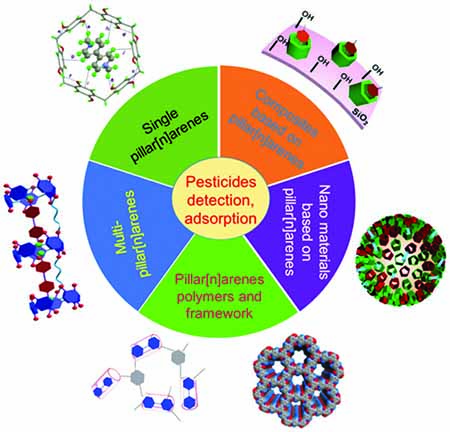
    The effective materials and methods for detection and separation of pesticides are urgently needed because most of pesticides show very harmful influence on life and environment. As a new kind of macrocyclic host compound, pillar[n]arenes show very good performance in the detection and separation of pesticides, especially for paraquat (PQ). For the pesticide detection and separation materials, their structures determine performance. Therefore, this review summarizes the recent progress of pillar[n]arenes-based materials for detection and separation of pesticides covering single/multi-pillar[n]arenes, pillar[n]arenes-based polymers, frameworks, composites, nanomaterials, etc. The structure-performance relationships of these materials have been discussed according to the cavity size, the synergistic or collaboration effect, the structure of the polymer or framework, the substrate of the composites and the size of nanomaterials and so on. Based on these, we also look forward to the future and point out the possible way for improving the pesticides detection sensitivity and separation efficiency of this kind of materials.
  • Jinming Xu, Jiao Ma, Yi Peng, Shuai Cao, Songtao Zhang, Huan Pang
    中国化学快报. 2023, 34(04): 107527. https://doi.org/10.1016/j.cclet.2022.05.041
    摘要 ( ) PDF全文 ( ) HTML 可视化 收藏
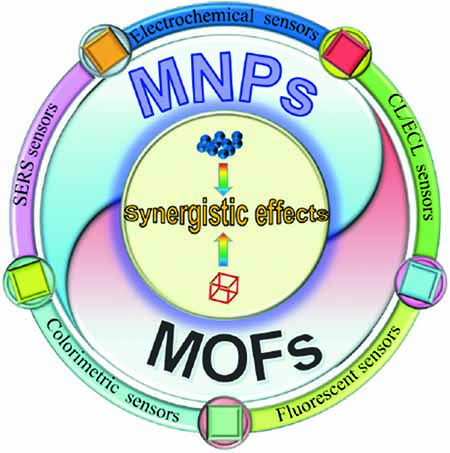
    Metal nanoparticles (MNPs) possess size-dependent desirable electronic and optical properties while metal-organic frameworks (MOFs) have an edge over extremely large specific surface areas, homogeneous structure, high porosity and remarkable chemical stability. Their combination (MNPs/MOFs) is a novel nanomaterial with broad application prospect in sensing field. To improve performance in sensing applications, we have paid great attention to synergistic effects between the two compositions above. Because of the synergistic effects between MNPs and MOFs, sensors on the basis of MNPs/MOFs composites show significant sensing enhancement with respect to stability, selectivity and sensitivity. In this review, various applications for MNPs/MOFs composites in electrochemical sensing, fluorescent sensing, colorimetric sensing, surface-enhanced Raman scattering sensing and chemiluminescence/electrochemiluminescence sensing are focused and summarized. Besides, the synergistic interactions between MNPs and MOFs was investigated. Finally, based on theoretical information from the reports as well as experimental experience, this review offers the challenges and opportunities for future research on MNPs/MOFs composites.
  • Li Ma, Xianang Gao, Xin Liu, Xiaojun Gu, Baoying Li, Beibei Mao, Zeyuan Sun, Wei Gao, Xiaofei Jia, Jianbin Chen
    中国化学快报. 2023, 34(04): 107735. https://doi.org/10.1016/j.cclet.2022.08.015
    摘要 ( ) PDF全文 ( ) HTML 可视化 收藏
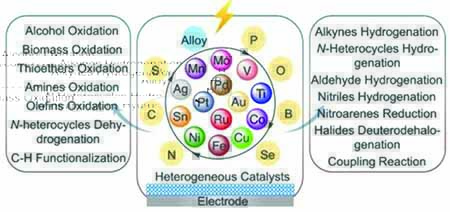
    Organic electrosynthesis as an emerging green and advantageous alternative to traditional synthetic methods has achieved remarkable progress in recent years because sustainable electricity can be employed as traceless redox agents. To surmount the over-oxidation/reduction issues of direct electrolysis, mediated or indirect electrochemical processes are attaining remarkable significance and promoting the selectivity of products. Molecular electrocatalysts, benefiting from the easily electronic and steric modulation, suffers from readily degradation issue in most cases. Remarkably, heterogeneous catalysts have drawn more attention due to their high activity, stability, and recyclability. Hence, in this review, the most recent growth of heterogeneous catalysts modified electrodes for organic electrosynthesis were summarized, highlighting structural optimization and electrochemical performance of these materials as well as reaction mechanism. Furthermore, key challenges and future directions in this area were also discussed.
  • Xin Wang, Jianping Meng, Dongyang Zhao, Shi Tang, Kai Sun
    中国化学快报. 2023, 34(04): 107736. https://doi.org/10.1016/j.cclet.2022.08.016
    摘要 ( ) PDF全文 ( ) HTML 可视化 收藏
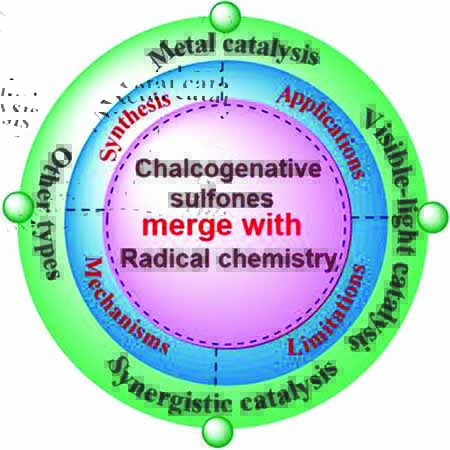
    Chalcogenative sulfones (thiosulfonates and selenosulfonates), as reactants for organic transformations, are widely used and interesting because of their potential to react with nucleophiles, electrophiles, and free radicals. As stable radical reagents, the synthesis and applications of chalcogenative sulfones have opened up a novel pathway to synthesize many kinds of compounds containing sulfur or selenium motifs. However, despite the numerous recent works on the synthesis and applications of thiosulfonates and selenosulfonates as radical reagents, no review has yet provided a summary of the literature. In this paper, we aim to review the synthesis and applications strategies of chalcogenative sulfones as radical reagents reported over the past several decades. Different types of catalysis are discussed in this review: (i) metal catalysis; (ii) visible-light catalysis; (iii) synergistic catalysis; and (iiii) other types. Concurrently, in visible-light catalysis and metallaphotoredox catalysis sections, we highlight that developing relatively environmentally friendly synthetic methods in this area is always a great challenge, but also a persistent pursuit. Finally, the scopes, limitations, mechanisms, and existing problems of some reactions are described briefly.
  • Yangwode Jing, Chong Zuo, Yun-Xiang Du, Junxiong Mao, Ruichao Ding, Jiachen Zhang, Lu-Jun Liang, Qian Qu
    中国化学快报. 2023, 34(04): 107781. https://doi.org/10.1016/j.cclet.2022.107781
    摘要 ( ) PDF全文 ( ) HTML 可视化 收藏
    E3 ubiquitin ligases catalyze the final step of ubiquitylation, a crucial post-translational modification involved in almost every process in eukaryotic cells. E3 ubiquitin ligases are key regulators of cellular events, and the investigation into their functions and functioning mechanisms are research areas with great importance. Synthetic or semi-synthetic tools have greatly facilitated the research about the enzyme activity, distribution in different physiological events, and catalytic mechanism of E3 ubiquitin ligase. In this review, we summarize the development of chemical tools for E3 ubiquitin ligases with an emphasis on the synthetic routes. We show the utility of these chemical tools by briefly discussing their applications in biological research.
  • Meiru Hou, Xiaodie Li, Yu Fu, Lingli Wang, Dagang Lin, Zhaohui Wang
    中国化学快报. 2023, 34(04): 107723. https://doi.org/10.1016/j.cclet.2022.08.003
    摘要 ( ) PDF全文 ( ) HTML 可视化 收藏
    Available online Iodinated X-ray contrast media (ICMs) are clinical drugs used to enhance the imaging effect. Triiodobenzene ring structures of ICMs lead to its extremely high chemical stability, biological inertness, which makes it difficult to be completely removed by traditional water treatment processes. Hence, considerable concentration of ICMs can be frequently detected in aquatic environment. Relying on the strong oxidation capacity of HO· or SO4·-, various advanced oxidation processes (AOPs) have demonstrated substantial removal efficiency for ICMs. It is evident that ICMs can be decomposed mainly through (1) deiodination, (2) dehydration, (3) decarboxylation, (4) H-abstraction, (5) hydroxyl addition, (6) hydroxyl substitution, (7) oxidation of alcohol groups, (8) cleavage of amide bond, and (9) amino oxidation. However, during the ICMs removal process, the C-I bonds of ICMs molecules are broken, giving rise to the formation of cytotoxic iodination disinfection by-products (I-DBPs) that are potentially more harmful to the ecosystem and human health than their parent compounds. To better understand the technology gaps, this review elaborates the major AOPs which are effective for ICMs removal and emphasizes on the main degradation routes of ICMs in different oxidation system. Some prevailing concerns and challenges are discussed for optimizing the ICMs treatment process.
  • Chuanxiang Zhang, Jie Zhou, Tingting Ma, Wenfei Guo, Dan Wei, Yimin Tan, Yan Deng
    中国化学快报. 2023, 34(04): 107670. https://doi.org/10.1016/j.cclet.2022.07.013
    摘要 ( ) PDF全文 ( ) HTML 可视化 收藏
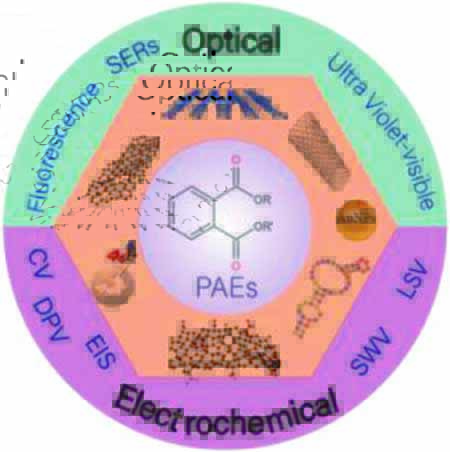
    Phthalates esters (PAEs) are extensively used as additives for polymers in plastic, particularly in polyvinyl chloride (PVC) and polyethylene terephthalate (PET). These compounds are not part of the polymer chains and can be released easily from products and migrate into beverages and foods that come into direct contact, causing environmental and human health impacts. Simple and rapid detection of such substances is of great significance for ensuring environmental food safety and consumer health. At present, optical sensor and electrochemical sensor detection technologies have been applied to PAEs detection due to their advantages, such as simple, rapid, low cost, high sensitivity, simple operation, portability and high specificity. They can make up for the shortcomings of chromatographic detection technology, such as expensive equipment, cumbersome operation, the need for professional and technical personnel, and difficulty in achieving a large number of sample screening objectives. In this paper, research progress on optical sensors and electrochemical sensors for the detection of phthalates in recent ten years is reviewed and discussed. This is helpful to better understand preparation methods for sensors and their detection mechanisms for phthalates. The review will also be used in developing a more effective trace detection sensor for phthalates.
  • Ping Wang, Yue Wang, Ping Li, Chen Chen, Siman Ma, Linxuan Zhao, Haibing He, Tian Yin, Yu Zhang, Xing Tang, Jingxin Gou
    中国化学快报. 2023, 34(04): 107691. https://doi.org/10.1016/j.cclet.2022.07.034
    摘要 ( ) PDF全文 ( ) HTML 可视化 收藏
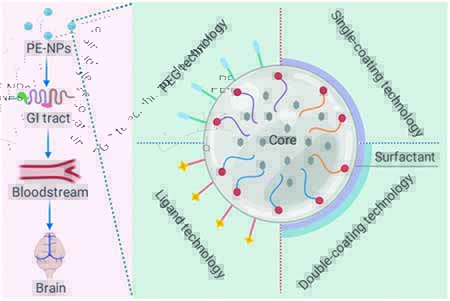
    Efficient oral delivery of drugs treating brain diseases has long been a challenging topic faced by the drug delivery community. Fortunately, polyester nanoparticles offer certain solutions to this problem. This review article firstly describes the main obstacles faced by oral administered brain targeting, including: (1) instability in the gastrointestinal tract; (2) poor penetration of the intestinal mucosa and epithelium; (3) blood clearance; and (4) restriction by the BBB. Then the key factors influencing brain-targeting efficiency of orally administered polyester nanoparticles are also discussed, such as size, shape and surface properties. Finally, recent brain-targeting delivery strategies using oral polyester nanoparticles as carriers and their effects on brain drugs transport are reviewed, and the delivery ‘as a whole’ strategy of polyester nanoparticles will provide new insight for oral brain-targeting delivery. And by combination of multiple strategies, both the stability and permeability of polyester nanoparticles can be greatly improved for oral brain drug delivery.
  • 通信
  • Shuangling Luo, Chao Liang, Qianling Zhang, Pingyu Zhang
    中国化学快报. 2023, 34(04): 107666. https://doi.org/10.1016/j.cclet.2022.07.009
    摘要 ( ) PDF全文 ( ) HTML 可视化 收藏
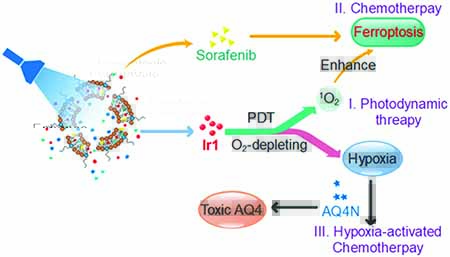
    Hypoxic tumor microenvironment is a major challenge for photodynamic therapy (PDT). To overcome this problem, PDT combined hypoxia-activated chemotherapy is a promising strategy for hypoxic cancer therapy. Herein, a multifunctional liposome (AQ4N-Ir1-sorafenib-liposome) is prepared by encapsulating a hypoxia-activated prodrug AQ4N, a photosensitizer iridium(III) complex and hepatocellular carcinoma (HCC) targeting drug sorafenib, for synergistic therapy of HCC. Ir1-mediated PDT upon irradiation induces ROS generation and hypoxic environment, which leads to the disassembly of the liposome and activates the antitumor activity of AQ4N. Meantime, the co-delivered sorafenib could effectively target therapy of HCC. It is noted that ferroptosis mechanism is proved during the treatment. This work contributes to the design of hypoxia-responsive multifunctional liposome for combination of chemotherapy, targeting therapy and PDT. It is a promising strategy for hypoxic HCC therapy.
  • Xueyan Zhen, Linhao Li, Lanlan Jia, Aihong Zhu, Yixuan Yang, Sicen Wang, Xiaoyu Xie
    中国化学快报. 2023, 34(04): 107680. https://doi.org/10.1016/j.cclet.2022.07.023
    摘要 ( ) PDF全文 ( ) HTML 可视化 收藏
    Erythrocyte membrane (EM)-camouflaged chemotherapeutic delivery nanovehicles hold promise for solid tumor therapy because of their excellent biostability and biocompatibility. However, it is accompanied with insufficient targeting effect and deficient pharmacokinetic behavior due to the lack of a regulated biointerface to navigate and overcome biological transportation obstacles in solid tumor therapy. Herein, an anti-epidermal growth factor receptor (EGFR) aptamer (EApt) modified and EM-cloaked chemotherapeutic nanomissile delivery system was constructed. The anchored-EApt acting as a specific EGFR suppressor promotes to inhibit the overexpression of EGFR and initiate the cell apoptosis. Importantly, the resulting PLGA-DOX@EM-EApt orchestrated the bioactivity of each component and provided synergistic cell apoptosis and antitumor effects by precisely suppressing EGFR expression levels and delivering DOX. The in vitro and in vivo experimental results confirmed that the immune escape and active targeting behaviors of PLGA-DOX@EM-EApt could significantly promote its drug retention and tumor inhibition abilities. Our findings propose a novel strategy using the biointerface functionalization technique, demonstrating a promising therapeutic platform via a biomimetic drug delivery system for precise solid tumor recognition and synergistic therapy.
  • Guiting Liu, Yuan Zhou, Zejun Xu, Ziting Bao, Li Zheng, Jun Wu
    中国化学快报. 2023, 34(04): 107705. https://doi.org/10.1016/j.cclet.2022.07.048
    摘要 ( ) PDF全文 ( ) HTML 可视化 收藏
    Anti-infection and neovascularization at the wound site are two vital factors that accelerate diabetic wound healing. However, for a wound healing dressing, the two functions need to work at different sites (inner and outer), giving big challenges for dressing design. In this study, we fabricated a novel sodium alginate/chitosan (SA/CS) Janus hydrogel dressing by the assembly of SA hydrogel loaded with silver nanoparticles (AgNPs) and CS hydrogel impregnated with l-arginine loaded sodium alginate microspheres (ArgMSs) based on electrostatic interactions to combine the two functions. The outer SA-AgNP hydrogel could prevent infection while avoiding the deposition of AgNPs in the wound site, and the inner CS-ArgMS hydrogel on the wound surface could realize the sustained release of l-arginine and promote vascular regeneration. The composition, morphology and swelling/degradation of the SA-AgNP/CS-ArgMS hydrogel were characterized systematically. l-Arginine release behavior has been tested and SA-AgNP/CS-ArgMS hydrogel has been confirmed for excellent biocompatibility. Antibacterial and angiogenesis assays demonstrated the antibacterial and angiogenesis characteristics of the SA-AgNP/CS-ArgMS hydrogel. Finally, in vivo diabetic wound healing assay demonstrated that the SA-AgNP/CS-ArgMS hydrogel could significantly accelerate re-epithelialization, granulation tissue formation, collagen deposition and angiogenesis, thereby resulting in enhanced diabetic wound healing
  • Yuan Xu, Liling Huang, Yuyang Bi, Qi Song, Mengmeng Zhang, Lingfeng Zhang, Tianjiao Zhou, Lei Xing, Hulin Jiang
    中国化学快报. 2023, 34(04): 107719. https://doi.org/10.1016/j.cclet.2022.07.062
    摘要 ( ) PDF全文 ( ) HTML 可视化 收藏
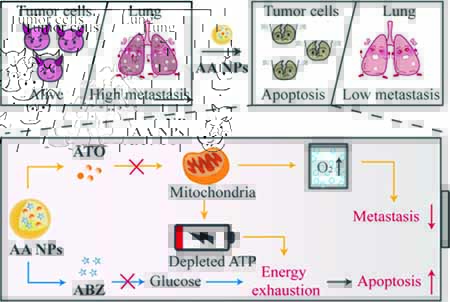
    Metastatic breast cancer (MBC) is one of the most common and knotty diseases in female population which could place them in a life-threatening condition. For malignant proliferation and migration, cancer cells require a large amount of glucose and energy to meet the demand of rapid metabolism. Hence, efficiently diminishing the utilization of energy substances by cancer cells is emerging as validated therapeutic strategies for cancer therapy. Herein, a nanoplatform with dual-inhibition of glucose uptake and oxidative phosphorylation (OXPHOS) was designed, which consisted of albendazole (ABZ) and atovaquone (ATO) by simple carrier-free self-assembling. The introduction of ABZ could evidently decrease glucose uptake to reduce the main “energy fuel” of cancer cells. Meanwhile, as a blocker of OXPHOS, ATO would reduce adenosine triphosphate (ATP) production and ameliorate hypoxia microenvironment by suppressing mitochondrial respiratory chain. Under such dual inhibition of energy metabolism, AA NPs exerted synergistic energy exhaustion effect and outstanding hypoxia improvement function, efficiently inhibiting tumor growth and metastasis. This research not only illustrates the feasibility of energy metabolism therapy by co-inhibiting glucose uptake and OXPHOS, but also provides an ingenious tactic to diminish metastasis during MBC treatment
  • Xinru You, Liying Wang, Junfu Zhang, Tong Tong, Chunlei Dai, Chun Chen, Jun Wu
    中国化学快报. 2023, 34(04): 107720. https://doi.org/10.1016/j.cclet.2022.07.063
    摘要 ( ) PDF全文 ( ) HTML 可视化 收藏
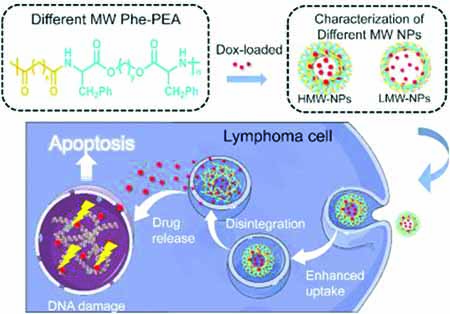
    The clinical efficacy of chemotherapeutic drugs is hindered by their poor aqueous solubility, low bioavailability and severe side effects. In recent years, polymeric nanocarriers have been used for drug delivery to improve the efficacy of many chemotherapeutics. In this study, a series of biodegradable phenylalanine-based poly(ester amide) (Phe-PEA) with tunable molecular weights (MWs) were synthesized to systematically investigate the relationship between the polymer MW and the efficacy of the corresponding polymeric nanoparticles (NPs). The results indicated that a range of polymers with different MWs can be obtained by varying the monomer ratio or reaction time. Doxorubicin (DOX), a classic clinical lymphoma treatment strategy, was selected as a model drug. The loading capacity and stability of the higher MW polymeric NPs were superior to those of the lower MW ones. Moreover, in vitro and in vivo data revealed that high MW polymeric NPs had better anticancer efficacy against lymphoma and higher biosafety than low MW polymeric nanoparticles and DOX. Therefore, this study suggests the importance of polymer MW for drug delivery systems and provides valuable guidance for the design of enhanced polymeric drug carriers for lymphoma treatment.
  • Yangyang Wang, Weiqiang Jia, Jianwei Zhu, Ruxiang Xu, Yunfeng Lin
    中国化学快报. 2023, 34(04): 107746. https://doi.org/10.1016/j.cclet.2022.107746
    摘要 ( ) PDF全文 ( ) HTML 可视化 收藏
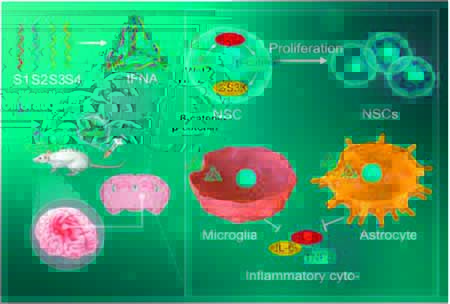
    Cognitive impairment often occurs after post traumatic brain injury. In addition, recovery of cognitive impairment is largely dependent on spontaneous repair and the severity of secondary insult. The tetrahedral framework nucleic acid is a novel nanostructure has been shown to have a positive biological effect in promoting regeneration and anti-inflammation. To explore the treatment effect of tetrahedral framework nucleic acids for cognitive impairment recovery post traumatic brain injury, we established a mouse model of traumatic brain injury and verified the efficacy of tetrahedral framework nucleic acids in promoting cognitive impairment recovery post traumatic brain injury. The results show that the tetrahedral framework nucleic acids promoted the recovery of post-traumatic cognitive function by enhancing the proliferation of endogenous neural stem cells. Besides, tetrahedral framework nucleic acids modulated the neuroinflammatory response in the acute phase by inhibiting excessive astrocyte and microglial activation. Taken together, the results of the study indicate tetrahedral framework nucleic acids for treatment of cognitive impairment post traumatic brain injury.
  • Jianpeng Sheng, Jiangchao Wu, Xianghong Yin, Zhu Sun, Xun Wang, Junlei Zhang, Jianghui Tang, Yongtao Ji, Jinyuan Song, Xiaobao Wei, Lin Wang, Yaxing Zhao, Hui Zhang, Taohong Li, Qi Zhang, Xueli Bai, Li Chen, Dong Chen, Tingbo Liang
    中国化学快报. 2023, 34(04): 107738. https://doi.org/10.1016/j.cclet.2022.08.018
    摘要 ( ) PDF全文 ( ) HTML 可视化 收藏
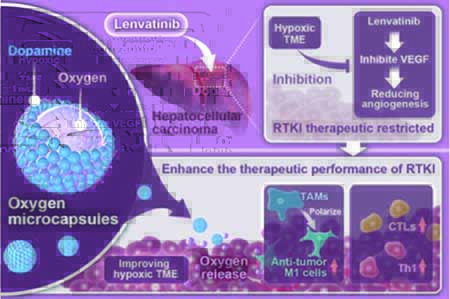
    Hypoxia is a typical characteristic of hepatocellular carcinoma (HCC), which causes tremendous obstacles to tumor treatments. Current first-line treatment may further deteriorate tumor hypoxia. For example, Lenvatinib, a receptor tyrosine kinase inhibitor (RTKI), suppresses tumor growth via blocking vascular endothelial growth factor (VEGF) signaling, and can also inhibit angiogenesis, thus limiting oxygen supply to tumor sites. Therefore, alleviating tumor microenvironment (TME) hypoxia holds great potential for enhancing the therapeutic effect of RTKI. Here, nanoparticle-stabilized oxygen microcapsules, a stable and biocompatible oxygen-loaded delivery system, are successfully prepared through interfacial polymerization of polydopamine nanoparticles. The microcapsules with a large loading capacity of oxygen in the core show excellent bioavailability and dispersity, which could effectively improve the hypoxic TME when they serve as oxygen delivery vehicles. Synergetic treatments of Lenvatinib and oxygen microcapsules could induce the transition of “cold tumor” in an immune-suppressed state to “hot tumor” in an immune-activated state by improving tumor hypoxic TME and reducing angiogenesis in HCC. It is revealed that combined treatments of oxygen microcapsules and Lenvatinib could polarize tumor-associated macrophages (TAMs) to anti-tumor M1 cells and activate T cell-mediated anti-tumor immune responses. The results suggest that synergetic therapy using oxygen microcapsules and Lenvatinib could alleviate the hypoxic TME and enhance the therapeutic performance of RTKI, demonstrating a promising anti-tumor strategy for enhanced therapy of HCC.
  • Chao Yang, Dan Li, Shaohong Zang, Yingtang Zhou, Lei Zhang, Zhangfeng Zhong
    中国化学快报. 2023, 34(04): 107733. https://doi.org/10.1016/j.cclet.2022.08.013
    摘要 ( ) PDF全文 ( ) HTML 可视化 收藏
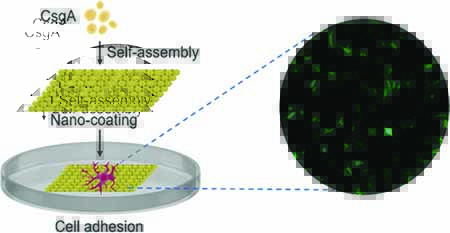
    Immune rejection, poor biocompatibility and cytotoxicity have seriously stalled the widespread application of biometallic materials. To overcome these problems, biometallic materials with fast and sufficient osseointegration, antibacterial properties and long-term stability have attracted the attention of researchers worldwide. Surface modification is currently used as a general strategy to develop material coatings that will overcome these challenging requirements and achieve the successful performance of implants. In this study, we proposed a substrate surface-modification strategy based on biofilm CsgA proteins that promote rapid cell attachment, proliferation, and stabilization of the cytoskeleton. CsgA-based nano-coating is easy to fabricate and has superior performance, which is expected to expand the application of medical implants.
  • Jingmei Yuan, Mengran Guo, Shengnan Zhao, Jinhua Li, Xinchun Wang, Jian Yang, Zhaohui Jin, Xiangrong Song
    中国化学快报. 2023, 34(04): 107943. https://doi.org/10.1016/j.cclet.2022.107943
    摘要 ( ) PDF全文 ( ) HTML 可视化 收藏
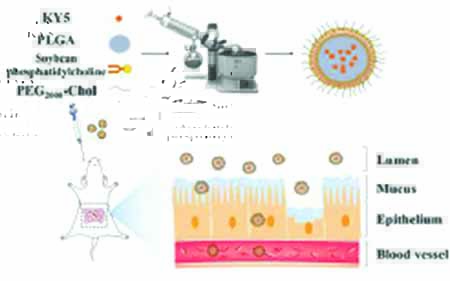
    Hypertension is the leading risk factor for death and disability, and hypertensive patients always need long-term oral antihypertensive drugs. Some bioactive peptides that extracted from animals or plants have shown excellent advantages on antihypertension. However, the oral delivery of these peptides is always failure on account of instability and poor absorption in the gastrointestinal tract. Herein, we developed a core-shell lipid-polymeric nanoparticle for oral delivery of a highly efficient antihypertensive peptide KY5 (KY5-CSs). KY5-CSs had a particle size of 216.7 ±2.5 nm, with a narrow PDI of 0.07 ±0.01. The zeta potential was -4.1 ±0.1 mV. It exhibited good stability in 4 ℃ and possessed a controlled release behavior in gastrointestinal tract. The cellular uptake study proved that the lipid shell imparted unique capability of permeation across the mucus layer and internalization by Caco-2/HT-29 cells. In addition, KY5-CSs enhanced in situ intestinal absorption in SD rats. The pharmacokinetic studies and antihypertensive efficacy showed a superior oral absorption and antihypertensive effect of KY5-CSs than KY5-NPs. In conclusion, the core-shell lipid-polymeric nanoparticles will provide attractive potential for oral delivery of antihypertensive peptides.
  • Umer Shahzad Malik, Qixiang Duan, Muhammad Bilal K. Niazi, Zaib Jahan, Usman Liaqat, Farooq Sher, Yanchang Gan, Honghao Hou
    中国化学快报. 2023, 34(04): 108071. https://doi.org/10.1016/j.cclet.2022.108071
    摘要 ( ) PDF全文 ( ) HTML 可视化 收藏
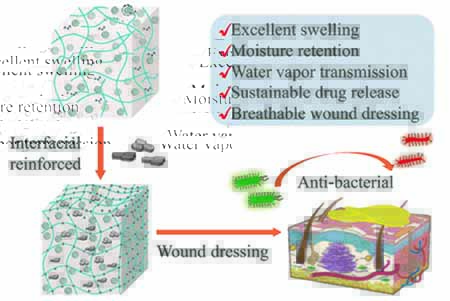
    Biopolymer based hydrogels are highly adaptable, compatible and have shown great potential in biological tissues in biomedical applications. However, the development of bio-based hydrogels with high strength and effective antibacterial activity remains challenging. Herein, a series of vanillin-cross-linked chitosan nanocomposite hydrogel interfacially reinforced by g-C3N4 nanosheet carrying starch-caped Ag NPs were prepared for wound healing applications. The study aimed to enhance the strength, sustainability and control release ability of the fabricated membranes. Starch-caped silver nanoparticles were incorporated to enhance the anti-bacterial activities The fabricated membranes were assessed using various characterization techniques such as FT-IR, XRD, SEM, mechanical testing, Gel fraction and porosity alongside traditional biomedical tests i.e., swelling percentage, moisture retention ability, water vapor transmission rate, oxygen permeability, anti-bacterial activity and drug-release of the fabricated membranes. The mechanical strength reached as high as 25.9 ±0.24 MPa for the best optimized sample. The moisture retention lied between 87%–89%, gel fraction 80%–85%, and water vapor transmission up to 104 ±1.9 g m–2 h–1 showing great properties of the fabricated membrane. Swelling percentage surged to 225% for blood while porosity fluctuated between 44% ±2.1% and 52.5% ±2.3%. Oxygen permeability reached up to 8.02 mg/L showing the breathable nature of fabricated membranes. The nanocomposite membrane shown excellent antibacterial activity for both gram-positive and gram-negative bacteria with a maximum zone of inhibition 30 ±0.25 mm and 36.23 ±0.23 mm respectively. Furthermore, nanoparticles maintained sustainable release following non-fickian diffusion. The fabricated membrane demonstrated the application of inorganic filler to enhance the strength of biopolymer hydrogel with superior properties. These results envisage the potential of synthesized membrane to be used as wound dressing, artificial skin and load-bearing scaffolds.
  • Shuaiyang Zhang, Yan Yang, Yunpu Zhai, Jiaqi Wen, Meng Zhang, Jingkun Yu, Siyu Lu
    中国化学快报. 2023, 34(04): 107652. https://doi.org/10.1016/j.cclet.2022.06.075
    摘要 ( ) PDF全文 ( ) HTML 可视化 收藏
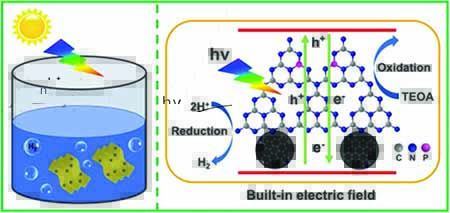
    Graphite carbon nitride (g-C3N4) is a promising non-metal photocatalyst for photocatalytic hydrogen production, but its performance is still limited due to sluggish charges separation and low utilization of light. In this work, P-doped and N-doped carbon dots (NCDs) supported g-C3N4 were successfully prepared via hydrothermal and polymerization reactions. The sub-bandgap formed by P-doping enhances the utilization of visible light, and the high electron density of P sites is conducive to the trapping of holes. NCDs also improve light utilization and, more importantly, act as electron acceptors and transporters to promote electron transport. The built-in electric field formed by the synergy of P-doping and NCDs-loading greatly promotes the separation of charges. The PCN/NCDs showed a significantly improved hydrogen evolution activity of 3731 μmol h-1 g-1, which was 6.7 times that of pure carbon nitride (560 μmol h-1 g-1). This strategy may be generalized to the design of g-C3N4 -based photocatalysts, facilitating the separation of charges for enhanced catalytic activity.
  • Jianjun Zhao, Shuzong Du, Kun Hu, Yali Hu, Fan Xia, Yansong Ye, Jian Yang, Yin Nian, Gang Xu
    中国化学快报. 2023, 34(04): 107737. https://doi.org/10.1016/j.cclet.2022.08.017
    摘要 ( ) PDF全文 ( ) HTML 可视化 收藏
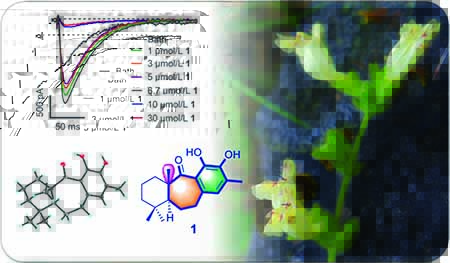
    Nineteen diterpenoids, including saldigitin A (1) bearing an unprecedented 10-methylated 6/7/6 carbon ring system, two new icetexanes (2, 3), and two new nor-abietanes (5, 6) were characterized from the roots of Salvia digitaloides. Their structures were elucidated by the analysis of the spectroscopic data, X-ray crystallography, and TDDFT calculations of ECD spectra. The novel architecture of 1 should be biogenetically derived through the cleavage and re-cyclization of the B/C rings from the normal abietane skeleton. Biologically, 15 exhibited noticeable inhibitions on Cav3.1 low voltage-gated Ca2+ channel (LVGCC), with IC50 values in the range of 3.43–11.70 μmol/L. They are the first example of diterpenoids with 6/7/6 carbon rings system as Cav3.1 antagonists.
  • Yuanyuan Feng, Suqin Zha, Hanqi Zhang, Biao Gao, Guijuan Zheng, Pengfei Jin, Yingyi Chen, Guangmin Yao
    中国化学快报. 2023, 34(04): 107742. https://doi.org/10.1016/j.cclet.2022.107742
    摘要 ( ) PDF全文 ( ) HTML 可视化 收藏
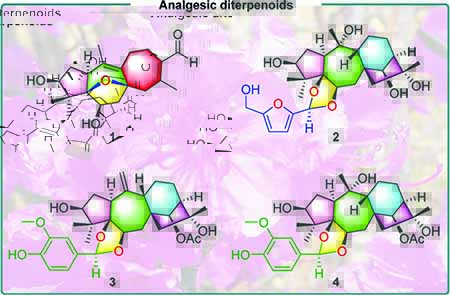
    A novel diterpenoid with an unprecedented 5/6/5/7 tetracyclic system, rhodauricanol A (1), five new grayanane-derived diterpenoids, dauricanols A-E (2-6), and five known ones (7-11) were isolated from the flowers of Rhododendron dauricum. Rhodauricanol A (1) possesses a unique 5/6/5/7 tetracyclic ring system featuring a 16-oxa-tetracyclo[11.2.1.01,5.07,13]hexadecane core. Dauricanols A-C (2-4) are the first 1,3-dioxolane conjugates of grayanane diterpenoids and 5-hydroxymethylfurfural and vanillin, respectively, and dauricanols D (5) and E (6) represent the first examples of 6-deoxy-1,5-seco-grayanane diterpenoids. Their structures were determined by spectroscopic methods, quantum chemical calculation including 13C NMR-DP4+ analysis and ECD calculation, and single-crystal X-ray diffraction analysis. Plausible biosynthetic pathways for 1-4 were proposed. All the isolates showed significant analgesic activities, and dauricanols B (3) and C (4) showed more potent analgesic activities than the positive control, morphine.
  • Qingqing Hao, Xu Ling, Christophe Pannecouque, Erik De Clercq, Fener Chen
    中国化学快报. 2023, 34(04): 107663. https://doi.org/10.1016/j.cclet.2022.07.006
    摘要 ( ) PDF全文 ( ) HTML 可视化 收藏
    A novel series of CHOR-HEPT non-nucleoside HIV-1 reverse transcriptase inhibitors were developed by means of structure-based design strategy based on compound 6 reported previously by our group. Most of these compounds showed moderate to good activity toward wild-type HIV-1 strain with EC50 values in the range of 0.18–51.88 μmol/L and SI values in the range of 4–907. The compound 14aj with a CHOH linker and compound 13i with a CHOTMS linker in this series exhibited improved anti-HIV-1 activity (EC50 = 0.18 μmol/L, and 0.20 μmol/L) with higher selectivity (SI = 907, and 665) as comparison with the lead compound 6 (EC50 = 0.59 μmol/L, SI = 9). These two compounds 14aj and 13i were more sensitive than 6 toward clinically relevant mutant L100I, K103N and E138K viruses, which were further evaluated for their activity against wild-type reverse transcriptase and displayed a good correlation with the cell-based activity. Preliminary molecular modeling investigations provided insight for further structural optimization of HEPT.
  • Peng Shen, Han Lin, Yikai Bao, Haofei Hong, Zhimeng Wu
    中国化学快报. 2023, 34(04): 107679. https://doi.org/10.1016/j.cclet.2022.07.022
    摘要 ( ) PDF全文 ( ) HTML 可视化 收藏
    Staphylococcus aureus wall teichoic acids (WTAs) are attractive targets for antibacterial vaccine development. In this study, three core glycosylated WTA structure, including α-1,4-GlcNAc, β-1,4-GlcNAc and β-1,3-GlcNAc modified ribitol phosphates containing a linker are chemically synthesized and conjugated with tetanus toxin (TT) carrier protein as vaccine candidates. In vivo immunological studies demonstrate that the synthesized glycosylated WTAs display high immunogenicity and all conjugates provoke strong immune responses and elicit high levels of specific IgG antibodies against the GlcNAc-modified WTA. Furthermore, antibodies elicited by the vaccine candidates remain the capability to recognize S. aureus cells and display significant opsonophagocytic activity to clear S. aureus. This study demonstrates that the core structure of glycosylated WTAs are effective antigens for constructing anti-S. aureus vaccines to prevent and control S. aureus infections.
  • Qi-Long Hu, Jia-Tian Liu, Guangjin Fan, Jian Li, Yixian Li, Albert S.C. Chan, Xiao-Feng Xiong
    中国化学快报. 2023, 34(04): 107730. https://doi.org/10.1016/j.cclet.2022.08.010
    摘要 ( ) PDF全文 ( ) HTML 可视化 收藏
    On-resin peptide modification renders an easy-to-operate method that combines solid-phase peptide synthesis efficiency and avoids tedious purification procedures. Herein, we report the transition-metal-free and redox-neutral approach for solid-phase Met diversification with substrate diversity, which could be applied to synthesize cyclic peptides of different sizes.
  • Haibo Wang, Xuexin Bai, Yahui Huang, Yueru Chen, Guoqiang Dong, Tianmiao Ou, Shanchao Wu, Defeng Xu, Chunquan Sheng
    中国化学快报. 2023, 34(04): 107671. https://doi.org/10.1016/j.cclet.2022.07.014
    摘要 ( ) PDF全文 ( ) HTML 可视化 收藏
    Inspired by the indolopyridoquinazoline scaffold of natural products evodiamine and rutaecarpine, novel triple G4 and Top1/2 ligands were rationally designed and synthesized. Systematic structure–activity relationship (SAR) studies led to the discovery of compound 15g, which effectively induced and stabilized G4 and inhibited Top1/2 with potent antitumor activity. Compound 15g represents a valuable chemical tool or lead compound for antitumor drug discovery. This proof-of-concept study also validated the feasibility of using planar natural products scaffold as templates to design new G4 ligands.
  • Jinpeng Wang, Min Zhang, Susheng Liu, Zhipeng He, Rui Wang, Minchan Liang, Yuhao An, Chenran Jiang, Chunli Song, Zigong Ning, Feng Yin, Hao Huang, Zigang Li, Yuxin Ye
    中国化学快报. 2023, 34(04): 107732. https://doi.org/10.1016/j.cclet.2022.08.012
    摘要 ( ) PDF全文 ( ) HTML 可视化 收藏
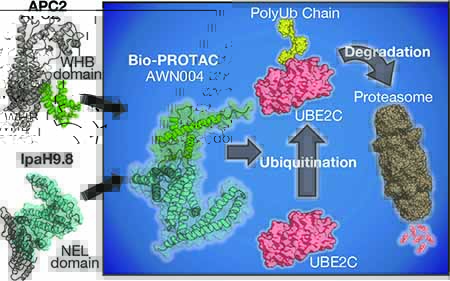
    UBE2C (Ubiquitin conjugating enzyme E2 C), a key regulator of cell cycle progression, is a promising target for discovery of antitumor agents. However, it is challenging to develop inhibitors of UBE2C owing to its lack of “druggable” pockets. BioPROTACs (biological proteolysis targeting chimeras) are a kind of protein-based degraders by fusing an adaptor to a subunit of E3 ligase for ubiquitination and subsequent proteasome-dependent degradation of target protein. We report herein the design and biological evaluation of a UBE2C-targeting bioPROTAC based on the NEL (novel E3 ligase) domain of bacterial E3 ligase IpaH9.8 and the UBE2C-binding WHB (winged-helix B) domain of APC2 (anaphase promoting complex subunit 2). The in vitro ubiquitination test and Mass Spectrometry analysis showed that the bioPROTAC could transfer ubiquitin to surface exposed lysines on UBE2C and catalyzed the formation of polyubiquitin chains. In addition, the transient co-expression experiment showed that the bioPROTAC could promote proteasomal degradation of heterologous UBE2C and rescue its downstream substrates in mammalian cells.
  • Mingtao Ao, Jun Wu, Yin Cao, Yaohui He, Yuxiang Zhang, Xiang Gao, Yuhua Xue, Meijuan Fang, Zhen Wu
    中国化学快报. 2023, 34(04): 107741. https://doi.org/10.1016/j.cclet.2022.107741
    摘要 ( ) PDF全文 ( ) HTML 可视化 收藏
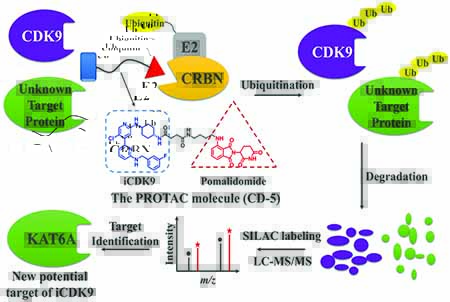
    Cyclin-dependent kinases (CDKs) have become potential targets for treating various diseases, especially cancer. Compound iCDK9 is an excellent and selective CDK9 inhibitor, but its major limitation is the potential toxicity and poor understanding of the underlying mechanism. The PROTAC (proteolysis targeting chimera) degraders of bioactive molecules can significantly induce in vitro and in vivo degradation of their target protein with high selectivity and effectively reduce the dose-limiting toxicity of small molecule drugs. Therefore, we designed and synthesized the bifunctional PROTAC molecules of iCDK9, being used for identifying its previously unknown target and revealing the underlying pharmacological mechanism. The PROTAC bifunctional molecule CD-5 could selectively and significantly degrade CDK9 with low cell toxicity. Therefore, we selected CD-5 as a chemical prober in the SILAC quantitative proteomic analysis, which disclosed that CD-5 could enormously lessen the lysine acetyltransferase KAT6A. Furthermore, KAT6A degradation induced by CD-5 repressed the levels of H3K14Ac and H3K23Ac. Lastly, the streptavidin immunoprecipitation (IP) assay confirmed a direct interaction between KAT6A and iCDK9. Collectively, our results uncover that KAT6A is a potential non-kinase target of iCDK9. Notably, this study also demonstrates that the PROTAC-SILAC strategy is an alternative approach for cellular target identification of bioactive molecules.
  • Junli Wang, Cen Liu, Hongliu Yang, Tao Ma, Yonggang Liu, Fener Chen
    中国化学快报. 2023, 34(04): 107920. https://doi.org/10.1016/j.cclet.2022.107920
    摘要 ( ) PDF全文 ( ) HTML 可视化 收藏
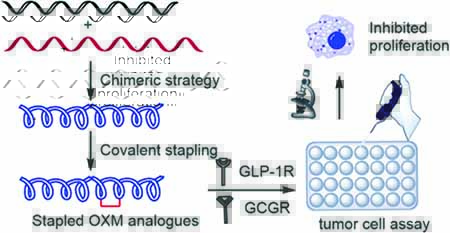
    As a glucagon (GCG) receptor (GCGR) and glucagon-like peptide 1 (GLP-1) receptor (GLP-1R) dual agonist, oxyntomodulin (OXM) has been attracting scientific attentions due to its efficacies of suppressing appetite, increasing energy expenditure, and inducing body weight loss in obese humans. Based on the scaffold of native OXM, specific helix-favoring amino acids substitutions and the consequent salt bridge formations were believed to offer enhanced and balanced GCGR/GLP-1R activations through increasing α-helical conformation. Novel OXM analogues are obtained by intramolecular lactam stapling of positions [Glu16 & Lys20] or [Lys17 & Glu21] to further strengthen conformationally constrained stabilization. Even though the lactam staple does not provide additional dual GCGR/GLP-1R activations in vitro, the stapled OXM analogues are firstly reported to have higher or lower anti-PANC-1 cell proliferation activity, meanwhile which has no obvious inhibitory effect on the proliferation of HeLa cells. Therefore, it is speculated that the stapled analogues may have the potential to inhibit the proliferation of specific cancer cell types. Among the stapled peptides as well as their precursors, analogue 6 has the most prominent anti-PANC-1 proliferation activity with the IC50 value of 115.1 μmol/L. Its mechanism of actions including effective signal pathways should be worth further investigations in future.
  • Minghao Ren, Chengyong Zhou, Linfang Wang, Xin Lv, Wei Guo
    中国化学快报. 2023, 34(04): 107646. https://doi.org/10.1016/j.cclet.2022.06.069
    摘要 ( ) PDF全文 ( ) HTML 可视化 收藏
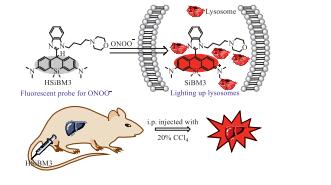
    Fluorescent dyes with fluorescence emission above 700 nm are favorable for bio-imaging due to the higher tissue transparency and lower background fluorescence. In this study, we present a meso-benzimidazole-pyronin platform (SiBMs) with fluorescence emission maxima above 700 nm, which possess good cell permeability, photostability, and lysosomal localization. The great photophysical properties of the SiBMs encouraged us to further exploit their application toward bio-imaging. We synthesized the reduced ‘dihydro’ derivative HSiBM3 for sensing ONOO-, with high selectivity and sensitivity and a fast fluorescence “off-on” response (within 2 s). Then, we confirmed the potential of HSiBM3 for visualizing exogenous and endogenous ONOO- in cells and mice. More importantly, HSiBM3 was successfully employed for visualizing acute-liver-injury-induced peroxynitrite.
  • Yitong Yang, Hao Zhong, Benhua Wang, Xiaojie Ren, Xiangzhi Song
    中国化学快报. 2023, 34(04): 107674. https://doi.org/10.1016/j.cclet.2022.07.017
    摘要 ( ) PDF全文 ( ) HTML 可视化 收藏
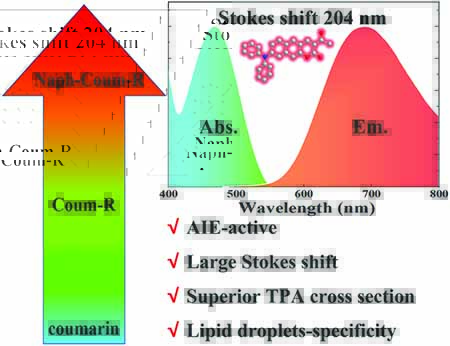
    Based on the coumarin skeleton, we deliberately designed two groups of fluorophores, termed as Coum-R and Naph-Coum-R, using the diphenylamino group as the electron donor, which displayed long-wavelength emissions (red spectral region), large Stokes shift (up to 204 nm), superior AIE performance, and large two-photon absorbance cross-sections (as high as 365 GM). The electron-withdrawing substituents at the 3-position of these dyes could induce a significant red-shift in their emission spectra. Preliminary imaging experiments demonstrated the capability of these dyes as two-photon fluorophores for specifically staining lipid droplets in living cells.
  • Yonghui Yang, Xiayu Shi, Zhuo Chen, Yufang Xu, Xuhong Qian, Weiping Zhu
    中国化学快报. 2023, 34(04): 107696. https://doi.org/10.1016/j.cclet.2022.07.039
    摘要 ( ) PDF全文 ( ) HTML 可视化 收藏
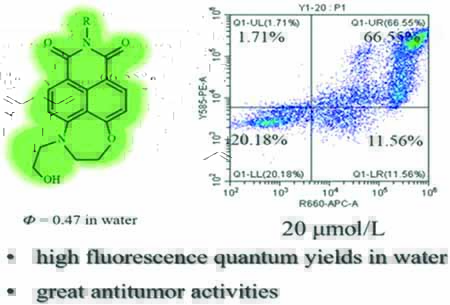
    Naphthalimide derivatives have good planarity and large conjugated structure and therefore possess photophysical properties and biological activities. Previously, our group discovered seven-membered heterocyclic derivatives via modifying 4- and 5-positions of naphthalimide skeleton and found the derivatives had good water solubility and showed large stokes shift and strong fluorescence in water. In this article, we designed and synthesized more seven-membered ring-fused naphthalimide derivatives (Y1-Y16) by introducing different substitutions on the imide group. Among them, Y1, Y5, Y9 were found to show similar cytotoxic activities with Amonafide against A549 and HL60 cells, with IC50 values at 10-6 mol/L. What is more, the asymmetry derivatives (Y1 and Y5) showed high fluorescent quantum yields in the aqueous phase (Ф = 0.47). Considering the great fluorescence quantum yields in water and the potent anti-tumor activities of the representative seven-membered ring-fused naphthalimides, they have potentials to be used as agents for cancer theranostics.
  • Hailing Zhao, Nan Li, Caixia Ma, Zhengwei Wei, Qiya Zeng, Keyi Zhang, Na Zhao, Ben Zhong Tang
    中国化学快报. 2023, 34(04): 107699. https://doi.org/10.1016/j.cclet.2022.07.042
    摘要 ( ) PDF全文 ( ) HTML 可视化 收藏
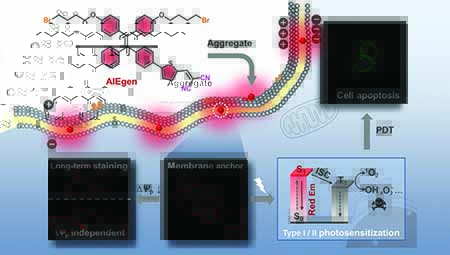
    Two red-emissive luminogens (TPTH and TPTB) with typical aggregation-induced emission characteristics were developed. By introducing the heavy atom of Br at the end of alkyl chain, TPTB exhibited higher reactive oxygen species generation efficiency through both types I and II pathways. Due to its excellent biocompatibility and proper lipophilicity, TPTB could be used for long-term cell membrane staining and this staining ability was independent of the change of plasma membrane potential. Furthermore, TPTB could ablate the cancer cells through cell membrane-targeted photodynamic therapy.
  • Ning Ding, Xueliang Liu, Aixia Meng, Xiuxiu Zhao, Gang Ma, Weina Han, Peng Dong, Jianchun Li, Jin Zhou
    中国化学快报. 2023, 34(04): 107745. https://doi.org/10.1016/j.cclet.2022.107745
    摘要 ( ) PDF全文 ( ) HTML 可视化 收藏
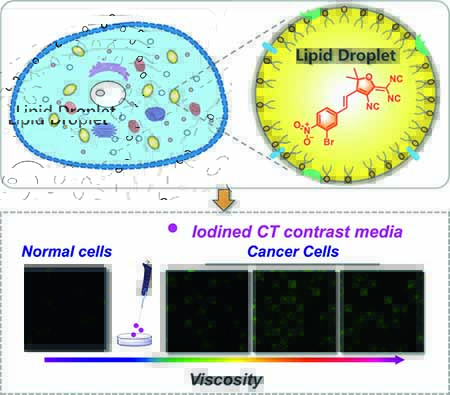
    Computed tomography (CT) is one of the most commonly used non-invasive clinical imaging modalities to predict, diagnose and treat the disease. Iodinated contrast media (ICM) is a form of intravenous radiocontrast agent containing iodine, which enhances the visibility of hollow tissue structures in medical CT imaging. ICM may cause allergic reactions, contrast-induced nephropathy, hyperthyroidism and possibly metformin accumulation. It is significant to find out the risk factors, pathogenesis, diagnosis, prevention, and treatment of adverse reactions caused by ICM. Revealing the changes of the lipid droplets (LDs) viscosity in pathophysiological processes such as cancer and iodined contrast media induced adverse reaction is not only important for monitoring the occurrence and development of some pathophysiological processes but also vital for the deep insight of the biological effects of LDs in these pathophysiological processes. A lipid droplets targeted fluorescent probe DN-1 was devised to sense cellular viscosity alteration with high selectivity and sensitivity, which was applied to distinguish cancer cells and normal cells and reveal viscosity changes during iodined CT contrast media treatment.
  • Jinkang Zhu, Chunhui Li, Xiuqin Li, Qiaochun Wang, Lei Zou
    中国化学快报. 2023, 34(04): 107693. https://doi.org/10.1016/j.cclet.2022.07.036
    摘要 ( ) PDF全文 ( ) HTML 可视化 收藏
    The transformation of a Palladium-based metal-organic cage to a structurally similar one by direct ligand replacement usually leads to unwanted ligand scrambling. In this work, an intermediate ligand with different shape and basicity from the initial/final ones was introduced to avoid ligand scrambling to achieve the efficient indirect cage-to-similar-cage transformation. Compared with the direct transformation, the stepwise conversion has the advantages of high efficiency (93%) and simple workup.
  • Yahan Zhang, Junyi Chen, Longming Chen, Liang Zhao, Mengke Ma, Xinbei Du, Zhao Meng, Han Zhang, Zhibing Zheng, Yongan Wang, Chunju Li, Qingbin Meng
    中国化学快报. 2023, 34(04): 107697. https://doi.org/10.1016/j.cclet.2022.07.040
    摘要 ( ) PDF全文 ( ) HTML 可视化 收藏
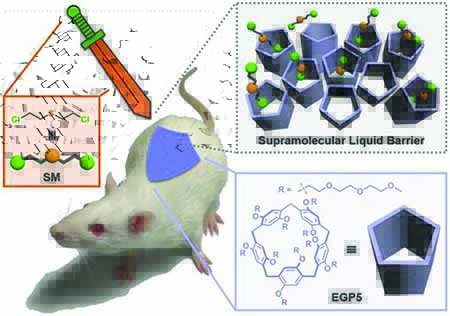
    Sulfur mustard (SM) can be absorbed by skin quickly and cause serious system damage via reacting with nearly all cell constituents. Until now, there is still lack of effective antidotal therapy for SM and skin protection is highly important to defend SM. In this article, supramolecular liquid barrier based on pillar[5]arene with triethylene oxide substituents (EGP5) has been designed to impede the skin permeation of SM and further interaction with the skin tissue. EGP5 could encapsulate SM within its cavity, with a Ka value of (5.10 ± 0.47) × 102 L/mol. In vitro skin absorption test proved that EGP5 was capable to effectively prevent SM from penetrating through skin. This supramolecular liquid barrier was employed on rat models to systematically evaluate protective effect against SM intoxication. Pretreatment of EGP5 could alleviate skin and system damage induced by SM and improve survival rate of poisoned rat models from 10% to 90%. Additionally, EGP5 served as protective materials could be highly reused after recycling several times. Overall, these findings have provided the first insight into the construction of convenient liquid material for SM protection.
  • Shimi Liu, Hao Zhang, Yaqi Wang, Yan Zeng, Sobhan Chatterjee, Feng Liang
    中国化学快报. 2023, 34(04): 107712. https://doi.org/10.1016/j.cclet.2022.07.055
    摘要 ( ) PDF全文 ( ) HTML 可视化 收藏
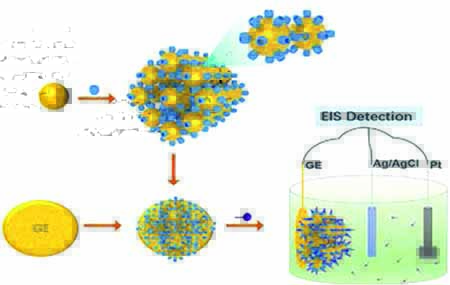
    In this paper, cucurbit[7]uril (CB[7])-mediated three-dimensional gold nanoassemblies were successfully prepared to increase the loaded amount of CB[7] and enhance the electrochemical detection of amino acids. Particle sizes of gold nanoparticles (AuNPs) significantly affect stability and detection sensitivity of nanoassemblies. The volume of gold nanoassemblies first increased and then decreased with the increase of CB[7] concentration. The 3D gold nanoassemblies composed of 16 nm AuNPs and 100 μmol/L CB[7] had excellent stability and maximum volume, exhibiting more sensitive detection for a variety of amino acids. And the detection limits of aromatic amino acids are lower in virtue of the higher binding constant between aromatic amino acids and CB[7]. This study will develop and deepen our understanding of molecular recognition in amino acids detection.
  • Zengming Fan, Wenting Sun, Yue Yang, Jiaxiang Guo, Chuandong Dou, Yue Wang
    中国化学快报. 2023, 34(04): 107729. https://doi.org/10.1016/j.cclet.2022.08.009
    摘要 ( ) PDF全文 ( ) HTML 可视化 收藏
    Stimuli-responsive macrocycles are of importance for synthetic chemistry and smart materials. In this manuscript, we report two novel organoborane cyclophanes, which were successfully synthesized by ruthenium-catalyzed olefin metathesis. They are composed of one/two boron-doped helicene π-skeletons and flexible alkyl chain linkers, thus representing a new kind of non-conjugated organoborane macrocycles. Their cyclic structures and photophysical properties, as well as Lewis acidity were theoretically and experimentally investigated. Notably, two enantiomers in one single crystal are observed for one organoborane cyclophane, owning to the presence of helical π-framework in its cyclic structure. Moreover, their Lewis acid-base adducts may dissociate in the excited state and thus display intriguing photo-responsive fluorescence properties, which can be further modulated by temperature. This study thus provides a novel design strategy for non-conjugated organoborane macrocycles, which may promote the development of stimuli-responsive macrocyclic materials with fascinating properties.
  • Bo Li, Qiangqiang Xu, Xin Shen, Tiezheng Pan, Jie Shang, Yan Ge, Zhenhui Qi
    中国化学快报. 2023, 34(04): 108015. https://doi.org/10.1016/j.cclet.2022.108015
    摘要 ( ) PDF全文 ( ) HTML 可视化 收藏
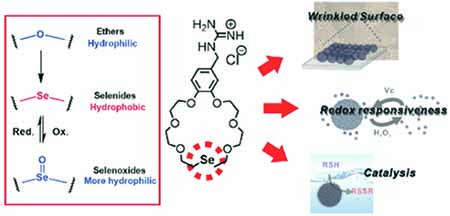
    Control of self-assembly is significant to the preparation of supramolecular materials, but the control of hydration, responsiveness, dimension, catalysis of macrocyclic amphiphiles in an atom-economic manner is still a great challenge. The herein presented 527 Da low-molecular-weight macrocyclic amphiphile was fabricated by utilizing the selenium-containing crown ether as a hydrophobic motif together with guanidinium group as the hydrophilic moiety. The resulting benzo[21]crown-7 based macrocyclic amphiphile readily forms a redox-responsive solid nanoparticles in water, which can further interconnect into wrinkled pattern on-surface, as well as exhibits as a nanozyme for catalyzing disulfid bond formation. The present work highlights the great potential of guanidinium- and selenium-containing crown ethers for the control of functional assemblies.
  • Zhonghua Cheng, Yan He, Chen Yang, Nan Meng, Yaozu Liao
    中国化学快报. 2023, 34(04): 107440. https://doi.org/10.1016/j.cclet.2022.04.038
    摘要 ( ) PDF全文 ( ) HTML 可视化 收藏
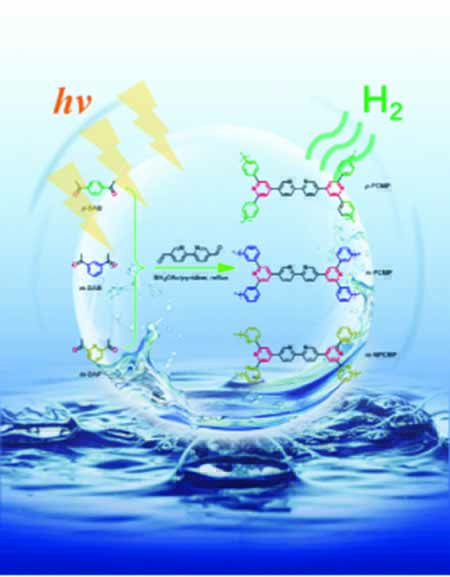
    Conjugated microporous polymers (CMPs) with tunable bandgaps have attracted increasing attention for photocatalytic hydrogen evolution. However, the synthesis of CMPs usually needs expensive metal-based catalysts. Herein, we report a metal-free synthetic route to fabricate pyridyl conjugated microporous polymers (PCMPs) via a condensed polymerization between aldehyde and aryl ketone monomers. The PCMPs show widely tunable specific surface areas (347–418 m2/g), which were controlled via changing the used monomers. The PCMPs synthesized using monomers of dialdehyde and diacetylbenzene (diacetylpyridine) in the presence of pyridine exhibited the highest visible-light driven hydrogen evolution rate (9.56 μmol/h). These novel designed PCMPs provide wide adaptability to current materials designed for high-performance photocatalysts in different applications.
  • Hao Xu, Yujun Liu, Xu-Ming Xie
    中国化学快报. 2023, 34(04): 107470. https://doi.org/10.1016/j.cclet.2022.04.068
    摘要 ( ) PDF全文 ( ) HTML 可视化 收藏
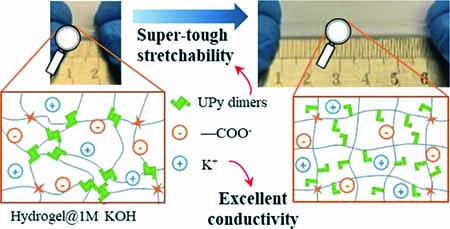
    Hydrogel-based quasi-solid-state electrolytes (Q-SSEs) swollen with electrolyte solutions are important components in stretchable supercapacitors and other wearable devices. This work fabricates a super-tough, fatigue-resistant, and alkali-resistant multi-bond network (MBN) hydrogel aiming to be an alkaline Q-SSE. To synthesize the hydrogel, a 2-ureido-4[1H]-pyrimidone (UPy) motif is introduced into a poly(acrylic acid) polymer chain. The obtained MBN hydrogels with 75 wt% water content exhibit tensile strength as high as 2.47 MPa, which is enabled by the large energy dissipation ability originated from the dissociation of UPy dimers due to their high bond association energy. Owing to the high dimerization constant of UPy motifs, the dissociated UPy motifs are able to partially re-associate soon after being released from external forces, resulting in excellent fatigue-resistance. More importantly, the MBN hydrogels exhibit excellent alkali-resistance ability. The UPyGel-10 swollen with 1 mol/L KOH display a tensile strength as high as ~1.0 MPa with elongation at break of ~550%. At the same time, they show ionic conductivity of ~17 mS/cm, which do not decline even when the hydrogels are stretched to 500% strain. The excellent mechanical property and ionic conductivity of the present hydrogels demonstrate potential application as a stretchable alkaline Q-SSE.
  • Renwei Hu, Mehdi Hassan, Lu Liu, Shuguang Zhang, Weitao Gong
    中国化学快报. 2023, 34(04): 107541. https://doi.org/10.1016/j.cclet.2022.05.055
    摘要 ( ) PDF全文 ( ) HTML 可视化 收藏
    Pyrylium salts are a type of representative and convincing example of versatility and variety not only as a nodal point in organic transformations but also as an attractive building block in functional organic materials. Herein, we report an effective synthetic protocol to fabricate a new pyrylium-containing porous organic polymers (POPs), named TMP-P, via Knoevenagel condensation with 2,4,6-trimethylpyrylium salt (TMP) as the key building block and 1,4-phthalaldehyde as the linker. The resulting ionic polymer TMP-P exhibited efficient visible-light-driven heterogeneous photodegradation of Rhodamine B, owing to the presence of wide visible light absorption and a narrow optical band gap triggered pyrylium core in the framework.
  • Hongbing Zhang, Sijie Wang, Yujie Wang, Shuhan Dong, Wen Chen, De Li, Feng Yu, Yong Chen
    中国化学快报. 2023, 34(04): 108031. https://doi.org/10.1016/j.cclet.2022.108031
    摘要 ( ) PDF全文 ( ) HTML 可视化 收藏
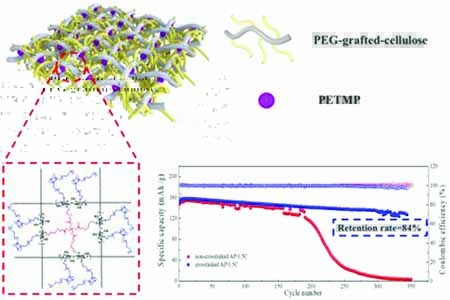
    Gel polymer electrolytes (GPEs) are considered to be one most promising alternative to liquid electrolytes due to their suitability for creating safe and durable solid-state lithium-metal batteries. However, the mechanical properties of GPEs usually deteriorate dramatically when polymer matrices are plasticized by a liquid electrolyte, which leads to significant loss of battery performance. Therefore, the long-term structural integrity and good mechanical strength are critical characteristics of GPEs designed for high-performance batteries. Here, an ecologically compatible cellulose-based GPE with a crosslinked structure is synthesized via a facile and effective thiol-ene click chemistry method. The prepared thiol-ene crosslinked GPE possesses enhanced mechanical strength (10.95 MPa) and rigid structure, which enabled us to fabricate LiFePO4|Li batteries with ultra-long cycling performance. The capacity retention of the crosslinked cellulose-based GPE can be up to 84% at 0.5 C, even after 350 cycles, which is considerably higher than that of non-crosslinked GPE for which rapid decline in capacity occurs after 200 cycles. In addition, a GPE preparation method described in this work compares favorably well with existing commercial electrolytes for lithium metal batteries.
  • Yulu Zhan, Yingshuang Hui, Shuqi Wang, Lou Gao, Yangbin Shen, Zhen-Hua Li, Yahong Zhang, Yi Tang
    中国化学快报. 2023, 34(04): 107677. https://doi.org/10.1016/j.cclet.2022.07.020
    摘要 ( ) PDF全文 ( ) HTML 可视化 收藏
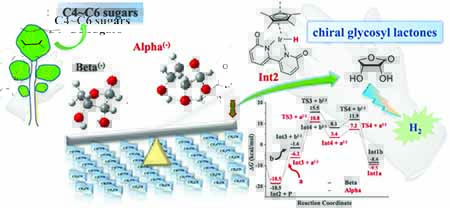
    Chiral glycosyl lactone is an important class of bioactive compound and pharmaceutical intermediate in nature, especially for chiral lactones with 4 carbon atoms, which are very useful building blocks for synthesis of biologically interesting compounds. Herein, a selective dehydrogenation and solvent matched catalytic system under oxygen-free conditions was developed to try to achieve the one-step direct conversion of cyclic hemiacetal sugars toward their chiral glycosyl lactones. During the process, the inherent structural characteristics of sugar was efficiently utilized, and the transfer of its chiral centers was realized. Under the optimum condition, the corresponding lactones were successfully prepared from C4-C6 sugars with cyclic hemiacetal structure in acetonitrile. The reaction mechanism in acetonitrile was explored by the first principle density functional theory calculations and tracking reaction process. It was found that the high lactone yield in acetonitrile was due to the high proportion of α-conformation form among multiple tautomers in it. This selective dehydrogenation process may further extend the possibility of the preparation of chiral synthons from carbohydrates directly.
  • Yali Hou, Ruping Shi, Hongye Yuan, Mingming Zhang
    中国化学快报. 2023, 34(04): 107688. https://doi.org/10.1016/j.cclet.2022.07.031
    摘要 ( ) PDF全文 ( ) HTML 可视化 收藏
    Metallacycles hold great promise for fluorescence-based sensing due to their synthetic advantages and unique physicochemical properties. However, it remains highly challenging to develop a versatile methodology for constructing highly emissive metallacycles with targeted functionalities and therefore sought-after properties. Herein, we report a general strategy to construct a series of highly emissive perylene diimide-based metallacycles via the self-assembly of perylene diimide-based tetrapyridyl ligand with different dicarboxylic ligands featuring fixed angles and cis-Pt(PEt3)2(OTf)2. Single crystal X-ray diffraction analyses verify the formation of bowtie-like metallacycles with two triangular cavities. Notably, the fluorescence quantum yields of most assemblies exceed 98%, amongst the highest values for metallacycles. Additionally, such metallacycles exhibit sensitive fluorescence responses toward picric acid with a detection limit of 2.8 × 10⁻⁶ mol/L. This study not only provides a rational strategy for preparing highly emissive bowtie-shaped metallacycles, but also sheds light on their usage in the detection of picric acid and associated compounds.
  • Jinlin Zhou, Kun Li, Lei Shi, Hong Zhang, Haoyuan Wang, Yimin Shan, Shanyong Chen, Xiao-Qi Yu
    中国化学快报. 2023, 34(04): 107689. https://doi.org/10.1016/j.cclet.2022.07.032
    摘要 ( ) PDF全文 ( ) HTML 可视化 收藏
    Recently, hydrogen-bonding has attracted extensive attention in the design of chromophores. Here, a new class of hydrogen-bond locked purine chromophores (HOPs) were reported by introducing a hydroxyphenyl group into the C(6) position of purine. The intramolecular hydrogen bond plays a dominant role to light up these probes. As a bonus, HOPs show high photostability. Moreover, HOPs exhibit remarkable capability for the specific lipid droplets imaging in living cells with excellent biocompatibility and are also potential for diagnosing fatty liver diseases. These results bring important new insights into the photophysics of the purine-based chromophores and provide a new scaffold with high photostability for bioimaging.
  • Jiaxin Guo, Jun Tang, Hui Xi, Sheng-Yin Zhao, Weiping Liu
    中国化学快报. 2023, 34(04): 107731. https://doi.org/10.1016/j.cclet.2022.08.011
    摘要 ( ) PDF全文 ( ) HTML 可视化 收藏
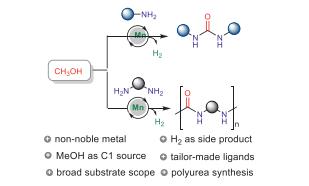
    The manganese-catalyzed dehydrogenative coupling between methanol and amines for the synthesis of ureas and polyureas is described. Importantly, catalytic efficiency can be improved by the newly synthesized MACHO ligands. Furthermore, this highly atom-economical protocol demonstrates a broad substrate scope with good functional group tolerance, producing H2 as the sole byproduct. Mechanistic studies disclose that formamide is formed through manganese-catalyzed formylation of amine with methanol. Subsequent dehydrogenation affords a transient isocyanate, which is attacked by another equivalent of amine to provide the final product.
  • Meng-Fan Li, Shao-Qing Shi, Ting Xu, Qian Zhang, Wen-Juan Hao, Shu-Liang Wang, Jianyi Wang, Shu-Jiang Tu, Bo Jiang
    中国化学快报. 2023, 34(04): 107751. https://doi.org/10.1016/j.cclet.2022.107751
    摘要 ( ) PDF全文 ( ) HTML 可视化 收藏
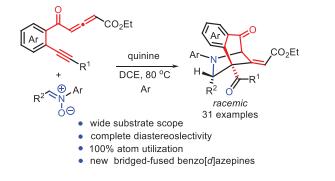
    A new organocatalytic double annulation cascade involving scission/recombination of N-O bonds of nitrones is reported for the first time, and used to produce a range of hitherto unprecedented tricyclic bridged-fused benzo[d]azepines bearing three stereogenic centers with moderate to good yields and complete diastereoselectivity. A quinine-catalyzed reaction of yne-allenone esters with nitrones worked well and provided a convergent and regioselective pathway to access these three-dimensional scaffolds from the planar conjugated system. Density functional theory (DFT) calculations have been applied to understand the key process for forming diradical intermediates.
  • Gefei Li, Yanlong Luo, Juan Mo, Masato Noguchi, Jie Jing, Zhenyang Luo, Shin-ichiro Shoda, Xin-Shan Ye
    中国化学快报. 2023, 34(04): 107754. https://doi.org/10.1016/j.cclet.2022.107754
    摘要 ( ) PDF全文 ( ) HTML 可视化 收藏
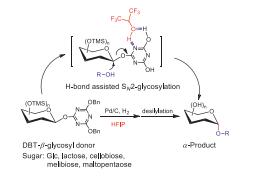
    A hydrogen bond-assisted α-selective glycosylation reaction by using 4,6-dibenzyloxy-1,3,5-triazin-2-yl (DBT) β-glycosyl donors was developed for the efficient construction of 1,2-cis-α-glycosidic bond in natural products. This method was applied successfully to the direct synthesis of complex oligosaccharide-derived glycolipids with simple protecting chemistry. Mechanistic studies using the NMR spectroscopy and DFT calculation provide a proof of concept for hydrogen bond-assisted glycosylation reaction towards α-specific construction of O-glycosidic linkage.
  • Yu Lei, Wenjing Zhu, Yajuan Zhang, Qiong Hu, Jie Dong, Yimin Hu
    中国化学快报. 2023, 34(04): 107778. https://doi.org/10.1016/j.cclet.2022.107778
    摘要 ( ) PDF全文 ( ) HTML 可视化 收藏
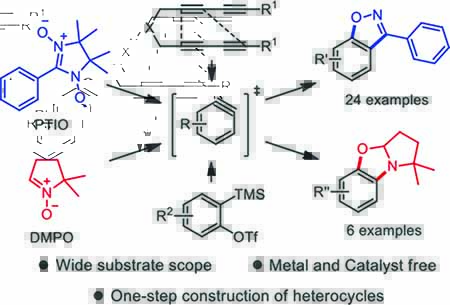
    A novel method for HDDA-derived benzyne trapped by nitrone was developed. This research described a simple and efficient pathway for the synthesis of benzisoxazoles from arynes and PTIO (2-phenyl-4,4,5,5-tetramethylimidazoline-3-oxide-1-oxyl), C-C and C-O bonds were formed in a single step without catalyst under mild conditions. The unexpected cleavage of C-N bond contributed to the formation of isoxazole ring, as indicated by DFT studies. Furthermore, we obtained the structure of benzoxazolopyrrolidine when the trapping agent is DMPO (5,5-dimethyl-1-pyrroline N-oxide).
  • Wei Yang, Zhendong Yang, Long Chen, Yican Lu, Cefei Zhang, Zhishan Su, Xiaohua Liu, Xiaoming Feng
    中国化学快报. 2023, 34(04): 107791. https://doi.org/10.1016/j.cclet.2022.107791
    摘要 ( ) PDF全文 ( ) HTML 可视化 收藏
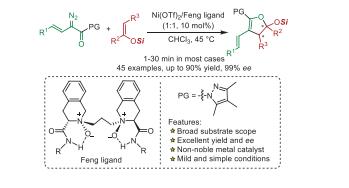
    A highly efficient asymmetric (3 + 2) cycloaddition of α-diazo pyrazoleamides with silyl enol ethers was realized by employing a chiral N,N'-dioxide-Ni(II) complex catalyst. The process includes the formation of chiral nickel carbenoid intermediate and the following enantioselective cycloaddition reaction. The desired dihydrofuran O,O-acetal derivatives were obtained in good yields (up to 90%) with high enantioselectivity (up to 99% ee) under mild reaction conditions within short reaction time. On the basis of the determination of the catalyst structure, a possible transition state mode was proposed.
  • Jing Ren, Miao Wu, Kaiwu Dong, Min Zhang, Ya Cheng, Guoyue Shi
    中国化学快报. 2023, 34(04): 107694. https://doi.org/10.1016/j.cclet.2022.07.037
    摘要 ( ) PDF全文 ( ) HTML 可视化 收藏
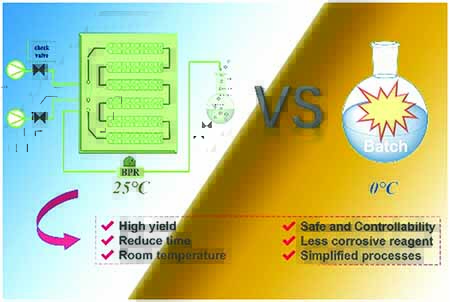
    The first example of the microfluidic chips (MFCs) consisting of centimeter-level 3D channels with high-density and large-volume fabricated by femtosecond laser micromachining were utilized to develop a time-saving, economical and hazardless flow synthesis process, and its advantages have been proved by in situ formation of aryldiazonium salts and subsequent borylation with bis(pinacolato)diboron. There are several important advantages in our 3D MFC-based flow synthesis technology, including the following: (1) the reaction temperature was altered from ice bath to room temperature; (2) the residence time was reduced by 10 times; (3) the yield was greatly improved, that is, several arylboronates were successfully obtained with higher yield compared to traditional batch process. Therefore, it can be envisioned that a novel, simplified flow synthetic protocol will be developed toward green organic synthesis via MFCs.
  • Haicheng Lv, Jundi Wang, Zhongming Shu, Gang Qian, Xuezhi Duan, Zhirong Yang, Xinggui Zhou, Jing Zhang
    中国化学快报. 2023, 34(04): 107710. https://doi.org/10.1016/j.cclet.2022.07.053
    摘要 ( ) PDF全文 ( ) HTML 可视化 收藏
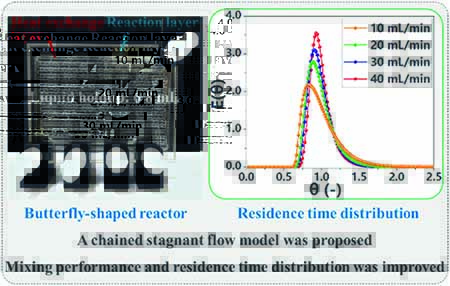
    A millimeter scale butterfly-shaped reactor was proposed based on sizing-up strategy and fabricated via femtosecond laser engraving. An improvement of mixing performance and residence time distribution was realized by means of contraction and expansion of the reaction channel. The liquid holdup was greatly increased through connection of multiple mixing units. Structure optimization of the reactor was carried out by computational fluid dynamics simulation, from which the effect of reactor internals on mixing and the influence of parallel branching structure on heat transfer were discussed. The UV–vis absorption spectroscopy was used to determine the residence time distribution in the reactor, and characteristic parameters such as skewness and dimensionless variance were obtained. Further, a chained stagnant flow model was proposed to precisely describe the trailing phenomenon caused by fluid stagnation and laminar flow in small scale reactors, which enables a better fit for the experimental results of the asymmetric residence time distribution. In addition, the heat transfer performance of the reactor was investigated, and the overall heat transfer coefficient was 110–600 W m-2 K-1 in the flow rate range of 10–40 mL/min.
  • Jing Ren, Kexin Niu, Miao Wu, Ya Cheng, Guoyue Shi
    中国化学快报. 2023, 34(04): 107985. https://doi.org/10.1016/j.cclet.2022.107985
    摘要 ( ) PDF全文 ( ) HTML 可视化 收藏
    Recent developments in the utilization of microfluidic chips (MFCs) have shown their potential utility in multiphase organic synthesis by enabling efficient organic reactions in flow chemistry. However, MFCs technology has been wandering in the laboratory of small dose synthetic routes, which is limited to the level of "tiny" fluid flux. To address this issue, we herein report the first case of the chips with high-throughput 3D channels produced by femtosecond laser being used to create a time-saving, cost-effective and risk-free approach suitable for large-scale flow synthesis. Several multiphase reactions have been successfully prepared on demand in our designed flow synthesis system containing 3D MFCs: 1) benzyl alcohol was converted to benzaldehyde in 3 min with a yield of 97.50% by liquid-liquid two-phase transfer catalytic oxidation; 2) organozinc reagents and α-cyano carbonyl carbon compounds were synthesized by solid-liquid two-phase metal insertion reaction in 7 min, and the yield was up to 100%; 3) benzoic acid was synthesized by gas-liquid two-phase carboxylation reaction in 2.8 s with a yield of 96%. Significant gains in production rate result from the effective scaling of flow reactors from microliters per hour in MFCs to intermediate milliliters per minute without affecting mass transport performance. Meanwhile, our 3D MFCs show excellent mass and heat transfer efficiency in large-scale industrial units, breaking through the bottleneck in this field. As a result, it is possible to imagine the creation of a new, streamlined flow synthetic technique via MFCs for green multiphase organic synthesis.
  • Longjiang Sun, Dongxu Wang, Yuxin Li, Baogang Wu, Qi Li, Cheng Wang, Shuao Wang, Baojiang Jiang
    中国化学快报. 2023, 34(04): 107490. https://doi.org/10.1016/j.cclet.2022.05.004
    摘要 ( ) PDF全文 ( ) HTML 可视化 收藏
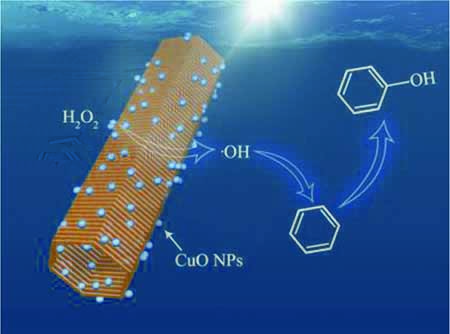
    Developing highly efficient photocatalysts for selective oxidation of benzene to phenol is of great significance. However, it is still challenging to simultaneously achieve high conversion rate and selectivity. Herein, we demonstrate 99.9% of benzene photoconversion and 99.1% of phenol selectivity under the illumination of AM 1.5 for 12 h. For this purpose, an advanced CuO@CN photocatalyst has been fabricated by loading tubular carbon nitride (CN) with CuO nanoparticles thermally polymerized from Cu-based metal-organic frameworks (MOFs). The sluggish photocharge carrier recombination rate and the excellent stability indicate that the as-prepared nanocomposite is an ideal photocatalyst for benzene oxidation application. This work paves a new avenue for designing novel photocatalyst based on MOFs and carbon nitride materials.
  • Xue Wang, Li Zhang, Meiling Xiao, Junjie Ge, Wei Xing, Changpeng Liu, Jianbing Zhu
    中国化学快报. 2023, 34(04): 107455. https://doi.org/10.1016/j.cclet.2022.04.053
    摘要 ( ) PDF全文 ( ) HTML 可视化 收藏
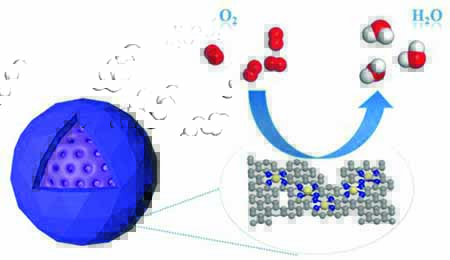
    Pyrolyzed Fe-Nx-C with atomically dispersed Fe-Nx sites are hailed as the most promising alternative to the noble metal Pt-based catalysts towards oxygen reduction reaction (ORR). However, the conventional micropore-confinement synthetic approach usually causes the insufficient utilization of active sites and mass transport resistance as the sites are located inside the micropore. We herein report a polymer-chelation strategy to directly disperse the Fe-Nx active sites onto the carbon surface. The N-rich monomer was in-situ polymerized on the carbon support and then chelated with Fe. The strong Fe-N chelating interaction is crucial to suppress Fe aggregation when undergoing the high-temperature pyrolysis. Due to the enriched surface sites, hierarchically porous structure and excellent conductivity of carbon support, the optimal catalyst (denoted as Fe-Nx-C@C-900) exhibits impressive ORR activity of onset and half-wave potential of 1.02 and 0.87 V, respectively, superior to the Pt/C benchmark.
  • Zhengrong Li, Lulu An, Min Song, Tonghui Zhao, Jingjing Zhang, Chang Zhang, Zhizhan Li, Deli Wang
    中国化学快报. 2023, 34(04): 107622. https://doi.org/10.1016/j.cclet.2022.06.045
    摘要 ( ) PDF全文 ( ) HTML 可视化 收藏
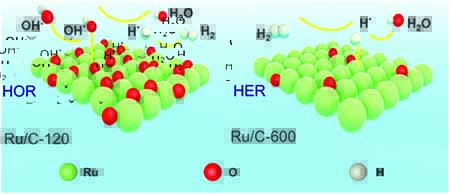
    Controlling the particle size of catalyst to understand the active sites is the key to design efficient electrocatalysts toward hydrogen electrode reactions including hydrogen oxidation and evolution (HOR/HER). Herein, the hydrogen and hydroxyl adsorption on Ru/C could be effectively tuned for HOR/HER by simple controlling the particle sizes. It is found that the metallic Ru (Ru0) is the active site for HOR/HER, while oxidized Ru (Rux+) will hinder the adsorption and desorption of hydrogen on the catalyst. For the HOR, catalyst with small particles is more efficient, due to it is a three-phase interface reaction of gas on the surface of the catalyst. For the HER, the metallic state of Ru is crucial. The deconvolution of hydrogen peaks indicates that the catalytic sites with low hydrogen binding energy (HBE) shoulder the majority of the HOR activity. CO stripping curve further demonstrates that the stronger hydroxyl species (OHad) affinity is beneficial to promote the HOR performance. The results indicate that the design of efficient HOR/HER catalyst should focus on the balance between particle size and metallic states.
  • Jiafeng Zou, Wenwen Fei, Yao Qiao, Ying Yang, Zongbing He, Lei Feng, Man-Bo Li, Zhikun Wu
    中国化学快报. 2023, 34(04): 107660. https://doi.org/10.1016/j.cclet.2022.07.003
    摘要 ( ) PDF全文 ( ) HTML 可视化 收藏
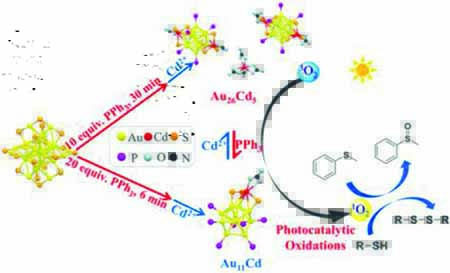
    A novel Au11Cd nanocluster was synthesized by developing a combined method and controlling the kinetics, and another Au26Cd5 nanocluster was also obtained after the conditions were changed in the same reaction, which could transfer to Au11Cd in a two-way style. Both alloy nanoclusters can photocatalyze the production of singlet oxygen (1O2) and exhibit enhanced efficiencies in photocatalyzing two kinds of organic oxidations involving singlet oxygen compared with their non-alloyed mother nanoclusters, indicating that the Cd-doping might be an efficient way to enhance the photocatalysis performance of gold nanoclusters and metal nanoclusters are promising photocatalysts for organic oxidation involving singlet oxygen.
  • Xin Wang, Huiqian Jiang, Mingshan Zhu, Xiaowei Shi
    中国化学快报. 2023, 34(04): 107683. https://doi.org/10.1016/j.cclet.2022.07.026
    摘要 ( ) PDF全文 ( ) HTML 可视化 收藏
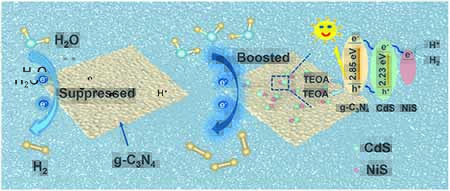
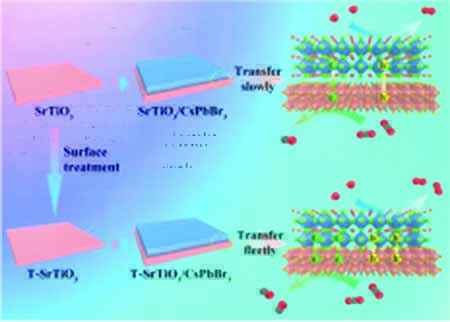
    Regulating flow direction of photo-excited electrons from interior to active sites in surface is critical to enhance the photocatalytic performance. Herein, photoinduced chemical reduction process was utilized to pinpoint deposit CdS and NiS nanodots sequentially onto g-C3N4 nanosheets. The resulted hybrid composite NiS/CdS/g-C3N4 was much more active under visible light, and eventually boosted the hydrogen evolution rate of 3015 μmol g-1 h-1, to be 2.4 folds better than that of g-C3N4. Because of the relative low content of CdS (around 3.0 wt%), the enhanced activity is due to the favoring band overlapping and promoting charge separation rather than increasing light absorption. Femto-second time-resolved transient absorption spectroscopy (fs-TAS) clearly reveals that the photo-excited electrons are from g-C3N4, and then migrate unidirectionally to CdS and finally to NiS, which is caused by the precisely regulate the position of CdS and NiS on g-C3N4 surface. This study elucidates the electron transfer kinetics and processes in multi-component system and affords a new avenue to construct stable photocatalysts with high activity.
  • Yupeng Xing, Na Li, Shipeng Qiu, Gang Zhao, Shuhua Hao, Baojie Zhang
    中国化学快报. 2023, 34(04): 107724. https://doi.org/10.1016/j.cclet.2022.08.004
    摘要 ( ) PDF全文 ( ) HTML 可视化 收藏
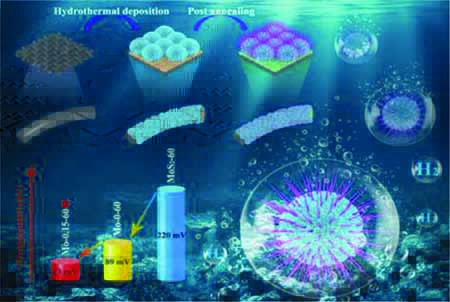
    Developing efficient electrocatalysts for hydrogen evolution reaction (HER) is of great importance in contemporary water electrolysis technology. Here, a novel hierarchically sea urchin-like electrocatalyst (Mo4O11-MoS2-VO2) is synthesized by hydrothermal deposition and post-annealing strategy. The optimized electrocatalyst behaves as a high active hydrogen evolution electrode in 0.5 mol/L H2SO4. This electrode needs overpotential of only 43 mV to achieve 10 mA/cm2 with a Tafel slope of 37 mV/dec and maintains its catalytic activity for at least 36 h. Better than most previously reported non-noble metal electrocatalysts anchored on carbon cloth. It is worth mentioning that the hierarchical sea urchin-like structure promotes the redistribution of electrons and provides more catalytic active sites. This strategy shows a way for the construction of inexpensive non-noble metal electrocatalysts in the future.
  • Xin Lu, Yue Wang, Zhixuan Feng, Liang Fu, Dandan Zhou
    中国化学快报. 2023, 34(04): 107617. https://doi.org/10.1016/j.cclet.2022.06.040
    摘要 ( ) PDF全文 ( ) HTML 可视化 收藏
    The coevolution and coexistence of bacterial–fungal consortium have been widely reported in various natural ecosystems. The transboundary communication mediated by bacterial acyl–homoserine lactone signals probably is the driving force of fungal spore germination. This study aimed to report a functional bacterial signal molecule, C10-acyl homoserine lactone, which could be sensed by Galactomyces geotrichum. The spore germination rates of G. geotrichum increased by 22%. Meanwhile, carbohydrate production improved by 1.0- to 2.5-fold. G. geotrichum signaled to C10-HSL through receptor gene Rho1 and made a response in cell wall assembly and carbohydrate biosynthesis by the upregulated expression (above 1-fold) of functional genes, such as Smi1, Utr2, and Chs2. It contributed to spore germination and morphology transformation together. This study provides a novel perspective for understating the transboundary cooperation between fungi and bacteria by cell-to-cell communication.
  • Run Huang, Chaoting Guan, Qin Guo, Zhen Wang, Hanping Pan, Jin Jiang
    中国化学快报. 2023, 34(04): 107610. https://doi.org/10.1016/j.cclet.2022.06.033
    摘要 ( ) PDF全文 ( ) HTML 可视化 收藏
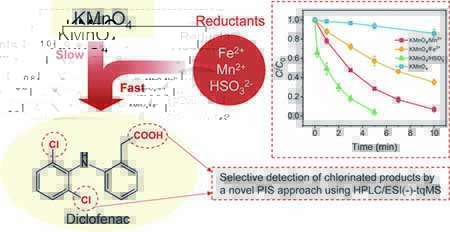
    The large consumption and discharge of diclofenac (DCF) lead to its frequent detection in surface water and groundwater, posing great threats to humans and ecosystems. This study explored the oxidation kinetics of DCF by permanganate (Mn(VII)), and expounded the underlying reason for the unusual pH-dependency that was unclear in previous studies. The kinetics of DCF analogues (i.e., aromatic secondary amines) by Mn(VII) oxidation were comparatively investigated. Then, a tentative kinetic model involving the formation of an intermediate between Mn(VII) and DCF or its analogues was proposed to fit the pH-rate profile. Since DCF contained two chloro groups, and a carboxyl group which could be ionized by negative electrospray ionization, a precursor ionization scanning approach was used for the first time for detection of N-containing chlorinated oxidation products. New degradation pathways of DCF containing ring opening, carboxylation, carbonylation, electrophilic addition, hydroxylation and dehydrogenation were proposed based on the identified oxidation products. Moreover, it was demonstrated that the introduction of various reducing agents such as Mn(II), Fe(II) and bisulfite significantly improved the oxidation kinetics of DCF by Mn(VII). The positive effects of Mn(II) and Fe(II) were mainly attributed to the accelerated formation of MnO2 that acted as a catalyst or co-oxidizer contributing to DCF degradation. The presence of bisulfite caused two-stage kinetics, where a sharp drop of DCF concentration followed by a slowdown of DCF removal. In the first stage, potent reactive manganese species (e.g., Mn(III), Mn(V), and Mn(VI)) and sulfate radical were generated during reaction of bisulfite with Mn(VII), whereas bisulfite was depleted fast due to excess Mn(VII) concentrations and the system became the Mn(VII)/MnO2 system in the second stage. These results provide new insight into reaction mechanism of DCF with Mn(VII) as well as propose a feasible strategy for enhancing the treatment of DCF contaminated water by Mn(VII).
  • Shunlong Pan, Xi Nie, Xinrui Guo, Hao Hu, Biming Liu, Yongjun Zhang
    中国化学快报. 2023, 34(04): 107620. https://doi.org/10.1016/j.cclet.2022.06.043
    摘要 ( ) PDF全文 ( ) HTML 可视化 收藏
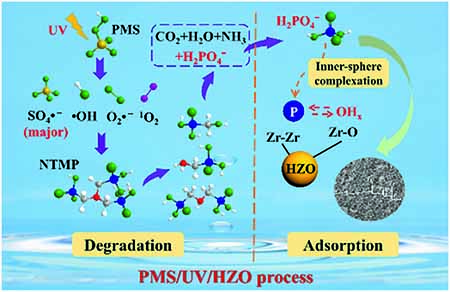
    Traditional treatment processes cannot completely remove phosphonates in circulating cooling water by one-step method. Herein, we designed peroxymonosulfate/UV irradiation/hydrated zirconium oxide (PMS/UV/HZO) coupling process to enhance the phosphonates removal. In particular, nitrilotris-methylenephosphonic acid (NTMP) removal efficiency by PMS/UV/HZO process was much higher than that of PMS/UV process, UV/HZO process and other processes in comparison experiments. Specifically, almost 97.2% NTMP in water was degraded, and the total phosphorous (TP) reduced from 9.3 mg/L to 0.26 mg/L at pH 7 within 180 min. TP removal efficiency still reached above 90% after 5 cycles adsorption-desorption of HZO. Moreover, Cl-, NO3- and SO42- ions all had negligible effect on NTMP removal. During the process, NTMP was first destroyed to form phosphates and other intermediates by the reactive oxygen species (ROS), then phosphates were in situ immobilized via HZO adsorption. Sulfate radical (SO4·-) has been confirmed to be the major ROS in the reaction system by quenching experiment and electron paramagnetic resonance (EPR) characterization. And the excellent selective adsorption capacity of HZO for phosphate produced was attributed to the strong inner-sphere coordination between H2PO4-/HPO42- and Zr-OH on the surface of HZO. These results suggest that PMS/UV/HZO process is a promising technique for enhanced phosphonates decontamination.
  • Qingsong Zhang, Yang Xiao, Liu Yang, Yanjun Wen, Zhu Xiong, Lin Lei, Lin Wang, Qingyi Zeng
    中国化学快报. 2023, 34(04): 107628. https://doi.org/10.1016/j.cclet.2022.06.051
    摘要 ( ) PDF全文 ( ) HTML 可视化 收藏
    A branched core-shell nanosphere composed of an anatase TiO2 (a-TiO2) core and a TiO2 nanobranch shell with gradient-doped N (a-TiO2@N-TiO2) is synthesized by a simple in situ doping method, in which mixed crystal anatase-rutile TiO2 (ar-TiO2) nanosphere is first prepared by oxidizing Ti using H2O2, and then is etched by NH3·H2O to form (NH4)2TiO3 nanobranches, which is converted into a-TiO2@N-TiO2 following an ambient annealing process. The diameter of a-TiO2 core is ~500 nm, and the thickness of N-TiO2 branched shell is ~100 nm with gradually increased N concentration from the bottom to the edge. Ultra-thin amorphous coating layers on the branches are also observed. The morphology of the composites could be further tuned by the amount of NH3·H2O, and its effect on the photocatalytic performance is also investigated. The optimized a-TiO2@N-TiO2 shows an outstanding hydrogen evolution rate of 308.1 μmol g-1 h-1 under air mass (AM) 1.5 illumination, and also exhibits highly active in photocatalytic degradation of various refractory organic pollutants, including organic dyes, phenols, antibiotics, and personal care products, with removal ratios higher than 96% after 2 h operation. This can be due to the gradient-doped N-TiO2 nanobranches, which not only provide bending band structure and defect level derived from the N impurities and O vacancies, resulting the formation of n-n+ heterojunctions to improve the charge separation, but also enhance the charge transfer at the liquid-solid interface due to the numerous nanobranches and amorphous coating layers.
  • Jingyang Luo, Yuxiao Li, Wenxuan Huang, Feng Wang, Shiyu Fang, Xiaoshi Cheng, Qian Feng, Fang Fang, Jiashun Cao, Yang Wu
    中国化学快报. 2023, 34(04): 107661. https://doi.org/10.1016/j.cclet.2022.07.004
    摘要 ( ) PDF全文 ( ) HTML 可视化 收藏
    The distinct influences of cephalosporins (CEPs, i.e., cefamandole nafate and cefpirome sulfate) affiliated to different generations on the volatile fatty acids (VFAs) production and antibiotic resistance genes (ARGs) fates during waste activated sludge (WAS) fermentation were unveiled. The presence of CEPs mainly exhibited negative effects on the total VFAs production (5%–15% reduction), especially the cefamandole nafate, which is quite different to previous understanding. Further investigation revealed that the CEPs contributed to the solubilization and hydrolysis but inhibited the acidification process by affecting the functional microbial populations (i.e., Tissierella) and general microbial metabolic activities (i.e., pyruvate metabolism and VFAs biosynthesis). In addition, CEPs (especially the cefpirome sulfate) caused the propagation of ARGs (i.e., blaTEM, tetX and mexF) during WAS fermentation. CEPs enhanced the cell membrane permeability to promote the antibiotics mechanism of efflux pump and the horizontal transfer of ARGs. Also, the CEPs altered the regulatory systems (i.e., two component system) and microbial populations associated with ARGs, resulting in the proliferation of specific ARGs. Overall, the dissimilarity of different CEPs impacts on the WAS fermentation for VFAs production and ARGs variations enlightened the diverse environmental behaviors of anthropogenic pollutants and evoked the caution of ecological risks.
  • Su-Xian Yuan, Ke Su, You-Xiang Feng, Min Zhang, Tong-Bu Lu
    中国化学快报. 2023, 34(04): 107682. https://doi.org/10.1016/j.cclet.2022.07.025
    摘要 ( ) PDF全文 ( ) HTML 可视化 收藏
    The elaborate regulation of heterostructure interface to accelerate the interfacial charge separation is one of practicable approaches to improve the photocatalytic CO2 reduction performance of halide perovskite (HP) materials. Herein, we report an in-situ growth strategy for the construction of 2D CsPbBr3 based heterostructure with perovskite oxide (SrTiO3) nanosheet as substrate (CsPbBr3/SrTiO3). Lattice matching and matchable energy band structures between CsPbBr3 and SrTiO3 endow CsPbBr3/SrTiO3 heterostructure with an efficient interfacial charge separation. Moreover, the interfacial charge transfer rate can be further accelerated by etching SrTiO3 with NH4F to form flat surface capped with Ti-O bonds. The resultant 2D/2D T-SrTiO3/CsPbBr3 heterostructure exhibits an impressive photocatalytic activity for CO2 conversion with a CO yield of 120.2 ±4.9 μmol g-1 h-1 at the light intensity of 100 mW/cm2 and water as electron source, which is about 10 and 7 times higher than those of the pristine SrTiO3 and CsPbBr3 nanosheets, surpassing the reported halide perovskite-based photocatalysts under the same conditions.
  • Minjun Liu, Ying Liu, Xinru Liu, Chengcheng Chu, Ducheng Yao, Shun Mao
    中国化学快报. 2023, 34(04): 107708. https://doi.org/10.1016/j.cclet.2022.07.051
    摘要 ( ) PDF全文 ( ) HTML 可视化 收藏
    This study reports several modification strategies to optimize and enhance the performance of two-dimensional (2D) metal organic frameworks (MOFs)-derived catalysts in peroxydisulfate (PDS) activation. The raw 2D Ni-MOF and 2D Ni-Fe-MOF without modification show poor catalytic activities for PDS activation and high metal ion leaching. The carbonization of 2D MOF can increase the activity of the catalyst but cannot solve the metal leaching problem. The further acid treatment of carbonization products can further improve the catalytic activity and decrease the metal ion leaching. The in-situ growth of 2D MOF on graphene oxide (GO) support with subsequent carbonization and acid treatment offers the best performance in PDS activation for organic pollutant removal with low metal ion leaching. Compared with other PDS systems, the Ni-Fe-C-acid/GO system displays much lower catalyst and PDS dosages for p-chloroaniline degradation. This study presents new insights in the modification strategies of 2D MOF-based catalysts in PDS activation.
  • Lehui Ren, Jun Xu, Ruobin Dai, Zhiwei Wang
    中国化学快报. 2023, 34(04): 107707. https://doi.org/10.1016/j.cclet.2022.07.050
    摘要 ( ) PDF全文 ( ) HTML 可视化 收藏
    Removal and recovery of phosphorus (P) from wastewater is of great importance to addressing the challenges of eutrophication and phosphorus shortage. The P removal and recovery performance of conventional electrochemical precipitation approach was constrained by the limited mass transfer rate. Herein, a cathodic membrane filtration (CMF) reactor was developed using Ti/SnO2-Sb anode and titanium mesh cathodic membrane module to achieve efficient removal and recovery of P in wastewater. Compared with the flow-by mode, the CMF system in the flow-through mode exhibited excellent P removal performance due to the markedly enhanced mass transfer. At the current density of 4 A/m2, membrane flux of 16.6 L m-2 h-1, and Ca/P molar ratio of 1.67, the removal efficiency of P was 96.2% and the energy consumption was only 45.7 kWh/kg P. The local high pH of cathode surface played a vital role in P removal, which substantially accelerated the nucleation of calcium phosphate (CaP). Based on the crystalline and morphological characterization of the precipitates, the hydroxyapatite was the most stable crystalline phase of CaP, which was transformed from intermediate phases (such as dicalcium phosphate and amorphous calcium phosphate). This study paves the way for applying electrochemical membrane filtration system for P removal and recovery from wastewater.
  • Siying Xiang, Qinglian Wu, Weitong Ren, Wanqian Guo, Nanqi Ren
    中国化学快报. 2023, 34(04): 107714. https://doi.org/10.1016/j.cclet.2022.07.057
    摘要 ( ) PDF全文 ( ) HTML 可视化 收藏
    Caproate, produced by microbial chain elongation process, is potential to replace the diversified fossil-based products, contributing to carbon neutrality. However, its production performance is far from industrial application, so the cost-effective enhancement measures are highly needed. This study confirmed powdered activated carbon (PAC) has a significant effect on enhancing caproate production performance. The production, yield, and selectivity of caproate were improved by more than 1-fold by the optimized PAC dosage of 15 g/L, comparing with control. Mechanism investigation from a new visual angle showed that PAC accelerated ethanol oxidation to generate acetyl-CoA, and simultaneously boosted the efficiency of reverse β oxidation (RBO) by promoting the timely reaction of butyrate and acetyl-CoA to synthesis caproate. The addition of PAC also shifted the microbial community by enriching more caproate-producing bacteria but eliminating irrelevant ones. Furthermore, metagenomic analysis revealed that PAC effectively up-regulated the functional genes encoding key enzymes responsible for ethanol oxidation and RBO pathway, which was the root cause for the improved caproate production. This study presented the intrinsic insights into the mechanism of PAC promoting caproate generation, laying a foundation to the scale production of caproate.
  • Huanhuan Ding, Chenguang Li, Hailing Zhang, Na Lin, Wen-Sheng Ren, Shicheng Li, Weidong Liu, Zhonghua Xiong, Binyuan Xia, Chong-Chen Wang
    中国化学快报. 2023, 34(04): 107725. https://doi.org/10.1016/j.cclet.2022.08.005
    摘要 ( ) PDF全文 ( ) HTML 可视化 收藏
    Extensive application of nuclear energy has caused widespread environmental uranium contamination. New detection approaches without complicated sample pretreatment and precision instruments are in demand for on-site and in-time determination of uranyl ions in environmental monitoring, especially in an emergency situation. In this work, a simple and effective fluorescent sensor (Z)-N'-hydroxy-4-(1,2,2-triphenylvinyl)benzimidamide (TPE-A) with aggregation-induced emission (AIE) character was established and studied. It could realize to detect UO22+ via quenching the fluorescence of its aggregation-induced emission, with good selectivity and sensitivity. Such strategy shows a wide linear range from 5.0 × 10⁻⁸ mol/L to 4.5 × 10⁻⁷ mol/L (R2 = 0.9988) with exceptional sensitivity reaching 4.7 × 10⁻⁹ mol/L, which is far below the limit for uranium in drinking water (30 μg/L, ca. 1.1 × 10⁻⁷ mol/L) stipulated by the WHO. A response time less than four minutes make it rapid for uranyl ion measurement. It was applied for detection of uranyl ion in spiked river water samples with recoveries in the range of 98.7%-104.0%, comparable to those obtained by ICP-MS. With the advantages of portable apparatus, rapid detection process and high sensitivity, TPE-A can serve as a promising fluorescent sensor for the detection of UO22+ in environmental water samples.
  • Yuhao Chu, Chaofan Zhang, Xi Chen, Xue Li, Nanqi Ren, Shih-Hsin Ho
    中国化学快报. 2023, 34(04): 107727. https://doi.org/10.1016/j.cclet.2022.08.007
    摘要 ( ) PDF全文 ( ) HTML 可视化 收藏
    Recently, the use of microalgae for bioremediation of pharmaceuticals (PhAs) has attracted increasing interest. However, most studies focused more on microalgae removal performance, its defensive response to the PhAs during wastewater treatment remains unexplored. Herein, microalgal three defensive systems have been investigated in synthetic wastewater, with six PhAs as the typical drug. Results show that PhAs could bind to EPS, and this action in turn could help to alleviate the direct toxicity of PhAs to microalgae. Subsequently, the physiological analyses revealed the increase of superoxide dismutase (SOD), catalase (CAT), and peroxidase (POD) activities, potentially reducing the oxidative stress induced by PhAs. Furthermore, the enzyme activities of cytochrome P450 (CYP450) and glutathione-S-transferase (GST) were significantly upregulated after exposure to SMX, CIP and BPA, followed by a significant decrease in biodegradation rates after the addition of CYP450 inhibitors, suggesting that the biotransformation and detoxification of PhAs occurred. Meanwhile, molecular docking further revealed that CYP450 could bind with PhAs via hydrogen bond and hydrophobic interaction, which proved their abilities to be metabolized and form transformation products in microalgae. These findings provide an advancing understanding of microalgae technologies to improve the treatment of wastewater contaminated with PhAs.
  • Zhuoga Cirena, Yu Nie, Yanfang Li, Huilin Hu, Xiang Huang, Xin Tan, Tao Yu
    中国化学快报. 2023, 34(04): 107726. https://doi.org/10.1016/j.cclet.2022.08.006
    摘要 ( ) PDF全文 ( ) HTML 可视化 收藏
    30% FeCN/ZIS (30% Fe doped g-C3N4 composited ZnIn2S4) was synthesized by a simple water bath method, via in-situ growth of abundant well-dispersed ZnIn2S4 nanosheets on the Fe doped g-C3N4 surface. Experimental results showed the optimized 30% FeCN/ZIS achieved the best photoreduction of Cr(VI) performance within a wide pH range, which was 9.5 times and 700 times higher than that of pure ZnIn2S4 and 30% FeCN (Fe doped g-C3N4). This is due to the intense synergy between the Fe-Nx bond and close interface contact produces a high-speed charge transfer channel, thus significantly improving the efficiency of optical carrier separation and migration. Meanwhile, UV-vis diffuse reflection spectra and photoluminescence spectroscopy showed that iron doping significantly narrowed the bandgap of g-C3N4, preventing electron-hole pair recombination. Further, the microstructures and charge separation properties were analyzed by scanning electron microscope, Photoluminescence Spectroscopy and time-resolved photoluminescence, which revealed the structure-activity relationship of composite structure and the synergistic mechanism of each functional component. This research should provide a viable technique for creating composites with high photocatalytic activity for the treatment of chromium-containing wastewater.
  • Xiaobo Guo, Ao Xia, Wuyuan Zhang, Feng Li, Yun Huang, Xianqing Zhu, Xun Zhu, Qiang Liao
    中国化学快报. 2023, 34(04): 107875. https://doi.org/10.1016/j.cclet.2022.107875
    摘要 ( ) PDF全文 ( ) HTML 可视化 收藏
    Fatty acid photodecarboxylase of Chlorella variabilis NC64A (CvFAP) is a novel photoenzyme with great potential in the treatment of waste lipids and production of sustainable aviation fuel. However, the fragile nature of CvFAP to blue light is an urgent challenge. Herein, we demonstrated anaerobic environment could significantly improve the photostability of CvFAP for the first time. The decarboxylation of palmitic acid by CvFAP for 3 h under anaerobic environment increased pentadecane yield by 44.7% as compared to that under aerobic environment. The residual activity of CvFAP after blue-light preillumination in the absence of palmitic acid for 0.5 h under anaerobic environment was 80.4%, which was 258.7 times higher than that under aerobic environment. Remarkable accumulation of superoxide radical and singlet oxygen in CvFAP under aerobic environment led to the poor photostability of CvFAP. Anaerobic environment helped to mitigate the production of superoxide radical and singlet oxygen in CvFAP, improving the photostability of CvFAP.
  • Xiao-Xuan Guo, Zhao-Tian Cai, Yaseen Muhammad, Feng-Lei Zhang, Rui-Ping Wei, Li-Jing Gao, Guo-Min Xiao
    中国化学快报. 2023, 34(04): 107740. https://doi.org/10.1016/j.cclet.2022.08.020
    摘要 ( ) PDF全文 ( ) HTML 可视化 收藏
    The conversion of propargylic alcohols and carbon dioxide (CO2) into fine chemicals suffers from issues of harsh reaction conditions and difficult catalyst recovery. To achieve efficient CO2 activation at low energy consumption, a silver-anchored porous aromatic framework catalyst Ag@PAF-DAB with high active phase density and CO2 adsorption capacity was proposed. Since Ag@PAF-DAB has the dual functions of CO2 capture and conversion, propargylic alcohols were completely converted into α-alkylidene cyclic carbonate or α-hydroxy ketone as high value-added product under atmospheric pressure (CO2, 0.1 MPa) and low silver equivalent (0.5 mol%). Notably, Ag@PAF-DAB exhibited broad substrate diversity, high stability, and excellent reusability. By applying FTIR and GC, the key to green synthetic route of α-hydroxy ketone was confirmed to lie in the further hydration of α-alkylidene cyclic carbonate.
  • Yujie Sun, Lei Wen, Huili Ma, Wenlin Ma, Zhenqian Fu, Yinhui Li, Chengwu Zhang, Lin Li, Jinhua Liu
    中国化学快报. 2023, 34(04): 107654. https://doi.org/10.1016/j.cclet.2022.06.077
    摘要 ( ) PDF全文 ( ) HTML 可视化 收藏
    Mulit-enzyme cascades are a major type of chemical transformations and play a crucial role in biological signal transduction and metabolism. Herein, a trienzyme cascade-triggered fluorescent immunosensor platform was constructed by sequentially integrating alkaline phosphatase (ALP), tyrosinase (TYR) and horseradish peroxidase (HRP). The proposed platform was based on HRP-induced a rapid in situ fluorogenic reaction between dopamine (DA) and 1,5-dihydroxynaphthalene (DHA) to produce a strong yellow azamonardine fluorescent compound (AFC). The obtained AFC was clearly characterized by high-resolution mass spectrum, 1H NMR, 13C NMR and theoretical calculations. The integration of the two-enzyme system (TYR and HRP) or three-enzyme system (ALP, TYR and HRP) led to a maximum of 400.0-fold and 250.0-fold fluorescence enhancements, respectively. Using cardiac troponin I (cTnI) as the model antigen, a trienzyme cascade-triggered fluorescent immunosensor platform was developed for quantitative detecting cTnI in a wide linear range from 2 ng/mL to 150 ng/mL with a detection limit of 0.67 ng/mL. In addition, the proposed platform was successfully applied in detection of cTnI in serum of clinical patients. Overall, the developed fluorescent immunosensor performs powerful implications for researching enzyme cascade systems in the field of biomedicine.
  • Cancan Zhang, Yonglong Li, Aonan Zhu, Ling Yang, Xiaomeng Du, Yanfang Hu, Xian Yang, Feng Zhang, Wei Xie
    中国化学快报. 2023, 34(04): 107655. https://doi.org/10.1016/j.cclet.2022.06.078
    摘要 ( ) PDF全文 ( ) HTML 可视化 收藏
    Surface-enhanced Raman spectroscopy (SERS), a powerful surface vibrational spectroscopic technique, is ideally suited for in situ monitoring the chemical transformations occurred at surfaces and/or interfaces. For in situ SERS monitoring, a platform integrated both plasmonic and catalytic activity is a prerequisite. Here, we fabricate a bifunctional Au-Pd nanocoronal film for in situ SERS monitoring Suzuki-Miyaura cross-coupling reaction. This excellent bifunctional substrate leads to the coupling of high catalytic activity with a strong SERS effect at the center of two adjacent Au cores and shows fine reproducibility and stability of SERS signals. During investigating the Suzuki reaction with in situ SERS, we found two distinct catalytic kinetic processes resulted from two disparate catalytic sites on a Au-Pd nanocoronal. Comparing with conventional analytical techniques, this work provides a novel approach for studying Suzuki reactions at surfaces and/or interfaces with in situ SERS.
  • Jingjing Li, Juanjuan Wei, Yixuan Gao, Qi Zhao, Jianghui Sun, Jin Ouyang, Na Na
    中国化学快报. 2023, 34(04): 107662. https://doi.org/10.1016/j.cclet.2022.07.005
    摘要 ( ) PDF全文 ( ) HTML 可视化 收藏
    Chemodynamic therapy (CDT) is a promising therapeutic approach for in situ cancer treatment, but it is still hindered by inefficient single-modality treatment and the weak targeted delivery of reagents into mitochondria (the main site of intracellular ROS production). Herein, to obtain a multimodal strategy, peptide-assembled siRNA nanomicelles were prepared to confine ultrasmall MnOx in small silica cages (silicages), which is convenient for synergistic chemical and gene-regulated cancer therapy. Given the free energy and versatility of small silicages, as well as the excellent Fenton-like activity of ultrasmall MnOx, MnOx-inside-loaded silicages (10 nm) were prepared for CDT delivery to mitochondria. Subsequently, to obtain a synergistic CDT and gene silencing treatment, the peptide-mediated assembly of siRNA and MnOx-loaded silicages were employed to obtain silicage@MnOx-siRNA nanomicelles (SMS NMs). After multiple modifications, sequential cancer cell-targeted delivery, GSH-controlled reagent release of siRNA and mitochondria-targeted delivery of MnOx-loaded silicages were successfully achieved. Finally, by both in vitro and in vivo experiments, SMS NMs were confirmed to be effective for synergistic chemical and gene-regulated cancer therapy. Our findings expand the applications of silicages and initiate the development of multimodal CDT.
  • Dailu Jia, Wenjiao Fan, Wei Ren, Chenghui Liu
    中国化学快报. 2023, 34(04): 107673. https://doi.org/10.1016/j.cclet.2022.07.016
    摘要 ( ) PDF全文 ( ) HTML 可视化 收藏
    T4 polynucleotide kinase (T4 PNK) is a pivotal enzyme for DNA replication, recombination, and DNA damage repair. Herein, a robust single particle counting-based assay has been developed for the high-sensitive determination of T4 PNK activity through only a simple one-step reaction. Taking benefit of the exceptional space-confined enzymatic property of T4 PNK towards DNA substrates on a single nanoparticle, the T4 PNK activity can be precisely determined by counting the fluorescence-positive nanoparticles in a digital manner with a total internal reflection fluorescent microscope (TIRFM). Due to the featured spatial-confined enzymatic property of T4 PNK and the single particle counting-based signal readout, T4 PNK can be effectively differentiated from other interfering enzymes. This facile strategy has been also successfully applied to screen T4 PNK inhibitor and accurately determine T4 PNK activity in complex biological samples, paving a potential avenue for the digital analysis of biomarkers.
  • Yawen Zhang, Feng Shi, Chenguang Zhang, Xin Sheng, Yunhao Zhong, Hui Chong, Zhanjun Yang, Chengyin Wang
    中国化学快报. 2023, 34(04): 107700. https://doi.org/10.1016/j.cclet.2022.07.043
    摘要 ( ) PDF全文 ( ) HTML 可视化 收藏
    In this article, we used the self-excitation and self-inductance characteristics of polyvinylidene fluoride (PVDF) piezoelectric materials, combined with the powerful signal processing and calculation analysis capabilities of integrated circuits, for the first time to explore a set of microcantilever sensor "readout system" without additional driver (self-driving) and can realize self-sensing external signal (self-sensing). It was successfully applied to the unlabeled detection of avian influenza virus (AIV) H9N2. The specific force of the antigen-antibody complexes on the surface of the microcantilever leads to the change of the stress of the cantilever, which drives the constructed detection device, and does not require an additional excitation source to drive it, that is, the self-driving part. At the same time, due to the movement of piezoelectric charges in the film caused by the positive piezoelectric effect of the PVDF film, self-inductive charges are generated on the surface of the sensor dielectric. The charge signal is converted into a voltage signal, and the sensing part is completed, that is, self-sensing. The immunosensor has a linear range of 100-1000 ng/mL with a detection limit of 2.9 ng/mL. The method will also open up a new avenue for the detection of other analytes based on antigen-antibody responses.
  • Hao Gu, Guoxin Dai, Siyu Liu, Yanbing Zhai, Qian Xu, Hongqiang Wu, Wei Xu
    中国化学快报. 2023, 34(04): 107715. https://doi.org/10.1016/j.cclet.2022.07.058
    摘要 ( ) PDF全文 ( ) HTML 可视化 收藏
    Liquid chromatography tandem mass spectrometry (LC-MS/MS) plays an important role in clinical diagnostics. Although LC-MS/MS is superior in terms of accurately quantifying molecules in complex matrices, instrument footprint, operation and maintenance complexity also hinder its expansion as the analytical technique of choice. In this study, a compact LC-MS instrument was developed, in which an assembled liquid chromatograph was coupled with a miniature ion trap mass spectrometer. The overall instrument has a footprint of 69 cm × 31 cm × 31 cm, and it requires no gas supply as well as minimum maintenance. Furthermore, the use of LC-MS is in accord with conventional clinical diagnostic protocols, and the choice of ion trap offers tandem MS performance. The results showed that the use of LC could improve both mixture analysis capability and detection sensitivity of the miniature mass spectrometer. After optimization, feasibility of this instrument in clinical practice was demonstrated by the quantitation of four widely used immunosuppressants in blood samples. Relatively good linearities were obtained, which spanned the reference ranges of effective therapeutic concentrations of each immunosuppressant. Intra-day and inter-day accuracy and precision of analytical method were also assessed. This work showed that a compact LC-MS instrument could be used in clinical diagnosis, either to replace conventional lab-scale instruments or to be used in POCT applications.
  • Dongfang Han, Xiaolei Li, Zhishan Liang, Bolin Zhao, Zhifang Wu, Fangjie Han, Dongxue Han, Li Niu
    中国化学快报. 2023, 34(04): 107722. https://doi.org/10.1016/j.cclet.2022.08.002
    摘要 ( ) PDF全文 ( ) HTML 可视化 收藏
    A label-free lactic acid sensor has been successfully developed by using a Dysprosium single crystal-based photoelectric potential technique via Dy-SCN/FTO electrode. Interestingly, the proposed sensor demonstrated excellent performance for L-lactic acid analysis with a wide linear range of 0.0196~16.31 mmol/L, the detection limit of as low as 3.20 μmol/L as well as an advisable stability. The feasibility of this strategy was also verified by practical application towards human sweat samples. The mechanism studies indicated that lactic acid molecules specifically bind to the surface of semiconductor materials, which alters the charge distribution of the electrode surface and subsequently results in band bending/photoelectric potential changes. The theoretical formula for this photoelectric chemistry (PEC) strategy was then derived according to charge balance theory. We believe that the proposed Dy-SCN/FTO sensor would open a new way for rapid, non-invasive L-lactic acid level evaluation during human physical condition monitoring.
  • Qi Chen, Hongbao Li, Hao Li, Rui Wang, Quanwei Ma, Longhai Zhang, Chaofeng Zhang
    中国化学快报. 2023, 34(04): 107402. https://doi.org/10.1016/j.cclet.2022.03.124
    摘要 ( ) PDF全文 ( ) HTML 可视化 收藏
    Antimony-based materials are considered as promising anodes for potassium ion batteries due to their high theoretical capacity and low electrode potential. However, the aggregation and bulk expansion of Sb particles in cycling will cause capacity attenuation and poor rate performance. In this paper, Sb nanoplates were designed to be embedded in flexible porous N-dopped carbon nanofibers (Sb@PCNFs) by a simple electrospinning deposition (ESD) method. In this structural design, Sb nanoplates of high capacity were employed as active materials, N-dopped carbon nanofibers were used to improve conductivity and structural stability. The introduction of pore-forming agent enables the nanofibers to possess porous structure, thus buffering the huge volume change and promoting the transfer of electrolyte/ions. More importantly, the freestanding film can be directly used as a working electrode, reducing the redundancy in the battery and the cost. Benefitting from the favorable structure, the freestanding flexible Sb@PCNFs electrode shows excellent potassium storage performance with a capacity of 314 mAh/g after 2000 cycles at 500 mA/g. This strategy of employing active material with high capacity in porous and conductive flexible nanofibers represents an effective method of achieving binder-free electrode with good electrochemical performance towards wearable energy storage devices.
  • Shuguang Fu, Xiaojun Yin, Yang Tang, Guohua Xie, Chuluo Yang
    中国化学快报. 2023, 34(04): 107411. https://doi.org/10.1016/j.cclet.2022.04.009
    摘要 ( ) PDF全文 ( ) HTML 可视化 收藏
    Self-doping cathode interfacial layers (CILs) with both favorable electron injection and transport characteristics meet the key requirement for realizing high-performance optoelectronic devices with simplified structures. Herein, four different polypyridinium salts with tunable backbones, side chains and counter-ions are elaborately designed to afford them desirable film-forming property, polarity, structural rigidity and self-doping feature. All-solution-processed red quantum dot light-emitting diodes (QLEDs) employing them as bifunctional CILs render remarkably improved device performances in contrast to the typical CIL material of poly[(9,9-bis(30-(N,N-dimethylamino)propyl)-2,7-fluorene)-alt-2,7-(9,9-dioctylfluorene)] (PFN). The maximum external quantum efficiency of 2.74% achieved in this work represents one of the best values among the all-solution-processed QLEDs with individual organic CILs.
  • Yu Tan, Jinjun He, Bo Wang, Cheng Chao Li, Taihong Wang
    中国化学快报. 2023, 34(04): 107410. https://doi.org/10.1016/j.cclet.2022.04.008
    摘要 ( ) PDF全文 ( ) HTML 可视化 收藏
    Aqueous zinc-ion batteries (ZIBs) have attracted significant attentions because of low cost and high reliability. However, conventional ZIBs are severely limited by the development of high energy density cathode materials with reversible Zn2+ insertion/extraction. Herein, a conducting polymer intercalated MoO3 (PMO) with extensively extended interlayer spacing is developed as a high-performance ZIBs cathode material. The interlayer spacing of PMO is prominently increased which results in an improved Zn2+ mobility during charge and discharge process. More significantly, the electrochemical results reveals that the intercalation of PANI facilitates the charge storage and reinforces the layered structure of MoO3, leading to a high capacity and good cycling stability. DFT calculation further reveals the intercalation of PANI into MoO3 significantly lower Zn2+ diffusion barrier. Benefit from these advantages, the ZIBs based on PMO electrode delivers a considerable capacity of 157 mAh/g at 0.5 A/g and ameliorative stability with 63.4% capacity retention after 1000 cycles.
  • Pingli Feng, Wenshuo Hou, Zhe Bai, Yu Bai, Kening Sun, Zhenhua Wang
    中国化学快报. 2023, 34(04): 107427. https://doi.org/10.1016/j.cclet.2022.04.025
    摘要 ( ) PDF全文 ( ) HTML 可视化 收藏
    Lithium-sulfur batteries as one of the most promising next-generation high-energy storage system, the shuttle effect, the expansion of cathode and the slow electrode redox kinetics limit its further development. Herein, we report a two-dimensional, ultrathin and ultra-light bimetal-NiCo-organic framework as the interlayer for Li-S batteries. This kind of interlayer can effectively block polysulfides and accelerate the conversion with a thickness of only 1 μm and a load of 0.1 mg/cm2. Because the MOF nanosheets with a thickness of a few nanometers have a large specific surface and a large number of exposed accessible active sites. At the same time, the intrinsic activity of each site is enhanced and the catalytic performance is improved due to the synergistic effect of mixed metals and the unique coordination environment around the active sites. So, 2D NiCo MOF/CNT totally meets the requirements for the lightweight and effective interlayer. The initial discharge capacity of cell with 2D NiCo MOF/CNT interlayer can reach 1132.7 mAh/g at 0.5 C. It remained 709.1 mAh/g after 300 cycles, showing good cycling stability and rate performance.
  • Weichao Zhang, Jianhua Huang, Xiaoyu Lv, Ming Zhang, Wanru Liu, Tianzi Xu, Jun Ning, Alata Hexig, Feng Liu, Aiju Xu, Chuanlang Zhan
    中国化学快报. 2023, 34(04): 107436. https://doi.org/10.1016/j.cclet.2022.04.034
    摘要 ( ) PDF全文 ( ) HTML 可视化 收藏
    Quaternary approach has been receiving more and more attention due to its effectiveness in improving solar cell performance, while synthesis/selection of the fourth component is yet a key issue. Herein, we report a chlorinated phthalimide based donor polymer (namely PhI-Cl) having an ultra-wide bandgap (2.10 eV) and a deep HOMO (-5.58 eV) level. Addition of PhI-Cl as the third component of PM6:Y6 and the fourth of PM6:Y6:PC71BM increases both hole and electron mobilities and gives rise to more balanced charge carriers mobilities. Both the short-circuit current-density and fill-factor are increased and open-circuit voltage is well maintained, delivering 17.0% and 18.1% efficiencies, respectively. These results demonstrate that chlorination on the side thiophene of phthalimide-based donor polymer is a way to make deep HOMO and ultra-wide bandgap donor polymer guest used for highly efficient ternary and quaternary strategies.
  • Hanqing Jin, Siyi Zou, Qinglin Wen, Yali Li, Fandi Ning, Pengpeng Xu, Saifei Pan, Xiaochun Zhou
    中国化学快报. 2023, 34(04): 107441. https://doi.org/10.1016/j.cclet.2022.04.039
    摘要 ( ) PDF全文 ( ) HTML 可视化 收藏
    Air-breathing proton exchange membrane fuel cells (PEMFCs) are very promising portable energy with many advantages. However, its power density is low and many additional supporting parts affect its specific power. In this paper, we aim to improve the air diffusion and fuel cell performance by employing a novel condensing-tower-like curved flow field rather than an additional fan, making the fuel cell more compact and has less internal power consumption. Polarization curve test and galvanostatic discharge test are carried out and proved that curved flow field can strengthen the air diffusion into the PEMFC and improve its performance. With appropriate curved flow field, the fuel cell peak power can be 55.2% higher than that of planar flow field in our study. A four-layer stack with curved cathode flow field is fabricated and has a peak power of 2.35 W (120 W/kg).
  • Lin Fan, Xiaotian Guo, Wenting Li, Xinxin Hang, Huan Pang
    中国化学快报. 2023, 34(04): 107447. https://doi.org/10.1016/j.cclet.2022.04.045
    摘要 ( ) PDF全文 ( ) HTML 可视化 收藏
    The unique components and architecture of Prussian blue analogous (PBAs) offer great potential for the construction of various functional nanostructures. Herein, we reported the preparation of a series of Mn–Fe oxides-based hybrids using Mn–Fe PBA as a template and an organic carbon source by calcination. The study focuses on revealing the interaction between the microstructure and electrochemical performance of the products obtained at different calcination temperatures. Notably, the as-derived porous Fe–Fe0.33Mn0.67O/C nanocubes (i.e., M600) exhibited the best rate capability and cycle life compared with other samples (~890 mAh/g at 0.1 A/g, 626.8 mAh/g after 1000 cycles at 1.0 A/g with a 99% capacity retention). These can be attributed to the fact that the porous structure provides shorter Li+ diffusion path and promotes the penetration of electrolyte. Besides, the N-doped C formed by the carbonization of organic ligands can buffer the volume change and prevent the aggregation of Fe0.33Mn0.67O nanoparticles during the discharge/charge cycles. Moreover, the presence of metallic Fe enhances the conductivity and the electrochemical activity, which accelerates the electrochemical reactions. Therefore, reasonable design of microstructure and compositions of functional nanocomposites is the key to obtain ideal electrochemical properties.
  • Huayan Wang, Huixin Chen, Chi Chen, Miao Li, Yiming Xie, Xingcai Zhang, Xianwen Wu, Qiaobao Zhang, Canzhong Lu
    中国化学快报. 2023, 34(04): 107465. https://doi.org/10.1016/j.cclet.2022.04.063
    摘要 ( ) PDF全文 ( ) HTML 可视化 收藏
    Sodium-ion batteries (SIB) have attracted widespread attention in large-scale energy storage fields owing to the abundant reserve in the earth and similar properties of sodium to lithium. Biomass-based carbon materials with low-cost, controllable structure, simple processing technology, and environmental friendliness tick almost all the right boxes as one of the promising anode materials for SIB. Herein, we present a simple novel strategy involving tea tomenta biomass-derived carbon anode with enhanced interlayer carbon distance (0.44 nm) and high performance, which is constructed by N,P co-doped hard carbon (Tea-1100-NP) derived from tea tomenta. The prepared Tea-1100-NP composite could deliver a high reversible capacity (326.1 mAh/g at 28 mA/g), high initial coulombic efficiency (ICE = 90% at 28 mA/g), stable cycle life (262.4 mAh/g at 280 mA/g for 100 cycles), and superior rate performance (224.5 mAh/g at 1400 mA/g). Experimental results show that the excellent electrochemical performance of Tea-1100-NP due to the high number of active N,P-containing groups, and disordered amorphous structures provide ample active sites and increase the conductivity, meanwhile, large amounts of microporous shorten the Na+ diffusion distance as well as quicken ion transport. This work provides a new type of N,P co-doped high-performance tomenta-derived carbon, which may also greatly promote the commercial application of SIB.
  • Wenlong Liu, Hao Lu, Yan Zhang, Hao Huang, Xinming Zheng, Yahui Liu, Youzhi Wu, Xinjun Xu
    中国化学快报. 2023, 34(04): 107495. https://doi.org/10.1016/j.cclet.2022.05.009
    摘要 ( ) PDF全文 ( ) HTML 可视化 收藏
    We use a single-molecule self-assembled layer of an aromatic organophosphonic acid (2PACz) to modify the cathode interface layer in inverted organic solar cells (OSCs). The modified OSCs not only have an obvious improvement in power conversion efficiency (PCE), but also demonstrate greatly enhanced air stability. Ultraviolet photoelectron spectroscopy shows that the work function of cathode interlayer after modification by 2PACz is more suitable for electron extraction. In addition, the surface energy is reduced without affecting the film deposition, which will be beneficial to reduce the interfacial traps. As a result, the PCE of OSCs based on the PBDB-T:IT-M system is increased, and its stability in air is greatly improved (remaining 88% of its initial PCE after 555 h in air). Therefore, we provide a new strategy for constructing high-performance non-fullerene OSCs with enhanced air stability.
  • Zongyuan You, Wei Hua, Na Li, Huanyan Liu, Jian-Gan Wang
    中国化学快报. 2023, 34(04): 107525. https://doi.org/10.1016/j.cclet.2022.05.039
    摘要 ( ) PDF全文 ( ) HTML 可视化 收藏
    Rechargeable aqueous Zn/MnO2 batteries raise massive research activities in recent years. However, both the working principle and the degradation mechanism of this battery chemistry are still under debate. Herein, we provide an in-depth electrochemical and structural investigation on this controversial issue based on α-MnO2 crystalline nanowires. Mechanistic analysis substantiates a two-electron reaction pathway of Mn2+/Mn4+ redox couple from part of MnO2 accompanying with a reversible precipitation/dissolution of flaky zinc sulfate hydroxide (ZSH) during the discharge/charge processes. The formation of the ZSH layer is double-edged, which passivates the deep dissolution of MnO2 upon discharging, but promotes the electrochemical deposition kinetics of active MnO2 upon charging. The cell degradation originates primarily from the corrosion failure of metallic zinc anode and the accumulation of irreversible ZnMn2O4 phases on the cathode. The addition of MnSO4 to the electrolyte could afford supplementary capacity contribution via electro-oxidation of Mn2+. However, a high MnSO4 concentration will expedite the cell failure by corroding the metallic zinc anodes. The present study will shed a fundamental insight on developing new strategies toward practically viable Zn/MnO2 batteries.
  • Xiangsi Wu, Guangli Liu, Sinian Yang, Yuting Li, Hongqiang Wang, Qingyu Li, Xianwen Wu
    中国化学快报. 2023, 34(04): 107540. https://doi.org/10.1016/j.cclet.2022.05.054
    摘要 ( ) PDF全文 ( ) HTML 可视化 收藏
    Aqueous zinc ion batteries (AZIBs) with the merits of low cost, low toxicity, high safety, environmental benignity as well as multi-valence properties as the large-scale energy storage devices demonstrate tremendous application prospect. However, the explorations for the most competitive manganese-based cathode materials of AZIBs have been mainly limited to some known manganese oxides. Herein, we report a new type of cathode material NH4MnPO4·H2O (abbreviated as AMPH) for rechargeable AZIBs synthesized through a simple hydrothermal method. An in-situ electrochemical strategy inducing Mn-defect has been used to unlock the electrochemical activity of AMPH through the initial charge process, which can convert poor electrochemical characteristic of AMPH towards Zn2+ and NH4+ into great electrochemically active cathode for AZIBs. It still delivers a reversible discharge capacity up to 90.0 mAh/g at 0.5 A/g even after 1000th cycles, which indicates a considerable capacity and an impressive cycle stability. Furthermore, this cathode reveals an (de)insertion mechanism of Zn2+ and NH4+ without structural collapse during the charge/discharge process. The work not only supplements a new member for the family of manganese-based compound for AZIBs, but also provides a potential direction for developing novel cathode material for AZIBs by introducing defect chemistry.
  • Zhifeng Xin, Zibo Yuan, Jingjing Liu, Xinjian Wang, Kejing Shen, Yifa Chen, Ya-Qian Lan
    中国化学快报. 2023, 34(04): 107458. https://doi.org/10.1016/j.cclet.2022.04.056
    摘要 ( ) PDF全文 ( ) HTML 可视化 收藏
    Metal-doped carbon materials, as one of the most important electrocatalytic catalysts for CO2 reduction reaction (CO2RR), have attracted increasing attention. Herein, a series of Cu cluster embedded highly porous nanofibers have been prepared through the carbonization of electro-spun MOF/PAN nanofibers. The obtained Cu cluster doped porous nanofibers possessed fibrous morphology, high porosity, conductivity, and uniformly dispersed Cu clusters, which could be applied as promising CO2RR catalysts. Specifically, best of them, MCP-500 exhibited high catalytic performance for CO2RR, in which the Faradaic efficiency of CO (FECO) was as high as 98% at -0.8 V and maintained above 95% after 10 h continuous electrocatalysis. The high performance might be attributed to the synergistic effect of tremendously layered graphene skeleton and uniformly dispersed Cu clusters that could largely promote the electron conductivity, mass transfer and catalytic activity during the electrocatalytic CO2RR process. This attempt will provide a new idea to design highly active CO2RR electrocatalyst.
  • Lei Wang, A-Ni Wang, Zhen-Zhen Xue, Yan-Ru Wang, Song-De Han, Guo-Ming Wang
    中国化学快报. 2023, 34(04): 107414. https://doi.org/10.1016/j.cclet.2022.04.012
    摘要 ( ) PDF全文 ( ) HTML 可视化 收藏
    The conversion of traditional polymolybdate-based metal-organic frameworks (POMOFs) crystals to well-aligned nanoarrays are highly attractive for electrocatalytic hydrogen evolution but remains significant challenge. Herein, we demonstrated that the POMOFs nanoarrays as self-supported electrode toward hydrogen evolution with high catalytic activity and stability. Single-crystal X-ray analysis reveal the {ε-PMoV8MoVI4O37Zn4} (Zn-ε-Keggin) serve as secondary building blocks and directly connected to BPB organic ligands (BPB = 1,4-bis(pyrid-4-yl)benzene) to obtain novel [ε-PMoV8MoVI4O37(OH)3Zn4][BPB]3 (named as ZnMo-POMOF). Particularly, ZnMo-POMOF nanoflower arrays grown in-situ on a Ni foam substrate exhibiting excellent electrocatalytic hydrogen evolution performance of 180 mV at a current density of 10 mA/cm2 with the Tafel slope of 66 mV/dec, thus among one of the best POMOF-based electrocatalysts reported so far. DFT calculations reveal that the bridging oxygen active sites (Oa) significantly optimizes Gibbs free energy of H* adsorption for Zn-ε-Keggin polymolybdate units (-0.07 eV), thereby increasing the intrinsic activity of the ZnMo-POMOF.
  • Pengcheng Liu, Peng Xiao, Ming Lu, Hui Wang, Na Jin, Zifeng Lin
    中国化学快报. 2023, 34(04): 107426. https://doi.org/10.1016/j.cclet.2022.04.024
    摘要 ( ) PDF全文 ( ) HTML 可视化 收藏
    In this work, Ti3C2Tx MXene with -F, -Cl and -Br surface terminations are synthesized and the effect of these halogen terminations on the lithium storage properties is investigated. A maximum Li+ storage capacity of 189 mAh/g is achieved with Ti3C2Brx MXene much higher than Ti3C2Clx and Ti3C2Fx with 138 mAh/g and 123 mAh/g, respectively. Density functional theory (DFT) calculation shows that the adsorption formation energy of halogen atoms on Ti atoms follows the trend of Ti-F > Ti-Cl > Ti-Br, leading to the same trend in the content of terminations on corresponding MXenes. In addition, inevitable exposure of MXene to oxygen causes competition between halogen and oxygen. Theoretical results show Ti3C2Brx MXene has the highest Ti to O ratio and the lowest Ti to Br ratio, the high lithium affinity of O explains the maximum Li-ion storage capacity with Ti3C2Brx MXene. This work shed light on the opportunity for achieving improved lithium storage properties of MXene electrodes by regulating the surface chemistry.
  • Qianxia Gu, Xiao-Li Zhao, Min Meng, Zhiyu Shao, Qi Zheng, Weimin Xuan
    中国化学快报. 2023, 34(04): 107444. https://doi.org/10.1016/j.cclet.2022.04.042
    摘要 ( ) PDF全文 ( ) HTML 可视化 收藏
    Crystalline porous ionic salts (CPISs) represent a new type of porous materials constructed by electrostatic interaction, however, synthesis of CPISs bearing pre-designed functionality while exhibiting permanent porosity is still challenging. Herein we report the facile synthesis of a series of CPISs 1-3 built from photocatalytic-active polyoxometalate (POM) clusters and cationic Zr-based capsules, which showed open porous frameworks with BET surface area up to 33 m2/g and high activity and selectivity for photo-driven aerobic oxidation of alcohols to aldehydes. Compared with the pristine POM cluster {W10}, 1 can promote the reaction in much higher efficiency due to the concerted catalysis of preinstalled {W10} and Zr-based capsule together with open channels. This work highlights the advantage of CPISs as porous heterogeneous catalysts in organic transformation, and may shed light on the rational design of more delicate CPISs-derived functional materials.
  • Xue Dong, Zhifeng Xin, Dong He, Jia-Ling Zhang, Ya-Qian Lan, Qian-Feng Zhang, Yifa Chen
    中国化学快报. 2023, 34(04): 107459. https://doi.org/10.1016/j.cclet.2022.04.057
    摘要 ( ) PDF全文 ( ) HTML 可视化 收藏
    Metal-organic frameworks (MOFs) have showed high promise in CO2-electroreduction, yet their generally insufficient conductivity or low electron-transfer efficiency have largely restricted the wide-spread applications. Herein, fullerene molecules (i.e., C60 and C70) have been successfully introduced into the pore-channels of a Co-porphyrin based MOF through a facile strategy. Thus-obtained hybrid materials present higher electron-transfer ability, enhanced CO2 adsorption-enthalpy and CO2 electroreduction activity. Notably, the charge transfer resistance (Rct) of C60@MOF-545-Co is almost 5 times lower of than that of MOF-545-Co, as well as 1.5 times increased for the CO2 adsorption enthalpy. As expect, the FECO of C60@MOF-545-Co (97.0%) is largely higher than MOF-545-Co (70.2%), C60@MOF-545 (19.4%), C60 (11.5%) and physical mixture (70.3%) and presented as one of the best CO2 electroreduction catalysts reported in H-cell system. The facile strategy would give rise to new insight into the exploration of powerful MOF-based hybrid materials in high-efficiency CO2 electroreduction.
  • Yu Tian, Yuling Zhao, Fanqi Meng, Kaicheng Zhang, Yanyuan Qi, Yujie Zeng, Congcong Cai, Yuli Xiong, Zelang Jian, Yang Sun, Lin Gu, Wen Chen
    中国化学快报. 2023, 34(04): 107494. https://doi.org/10.1016/j.cclet.2022.05.008
    摘要 ( ) PDF全文 ( ) HTML 可视化 收藏
    Lithium rich layered oxide (LRLO) has been considered as one of the promising cathodes for lithium-ion batteries (LIBs). The high voltage and large capacity of LRLO depend on Li2MnO3 phase. To ameliorate the electrochemical performance of Li2MnO3, also written as Li(Li1/3Mn2/3)O2, we propose a strategy to substitute Mn4+ and Li+ in Mn/Li transition metal layer with Ti4+, which can stabilize the structure of Li2MnO3 by inhibiting the excessive oxidation of O2- above 4.5 V. More significantly, the unequal-valent substitution brings about the emergence of interlayer Li vacancies, which can promote the Li-ion diffusion based on the enlarged interlayer and increase the capacity by activating the Mn3+/4+ redox. We designed Li0.7[Li1/3Mn2/3]0.7Ti0.3O2 with high interlayer Li vacancies, which presents a high capacity (290 mAh/g at 10 mA/g) and stable cycling performance (84% over 60 cycles at 50 mA/g). We predict that this strategy will be helpful to further improve the electrochemical performance of LRLOs.
  • Jianguang Xu, Hongyan Hang, Chen Chen, Boman Li, Jiale Zhu, Wei Yao
    中国化学快报. 2023, 34(04): 107500. https://doi.org/10.1016/j.cclet.2022.05.014
    摘要 ( ) PDF全文 ( ) HTML 可视化 收藏
    Recently, MAX phases show great potential in lithium-ion uptake due to their excellent electrical conductivity and unique lamellar-structure accommodating lithium ions. However, the reports about MAX electrodes for lithium-ion battery up to now are relatively low. Herein we report the preparation of surface oxygen-deficient Ti2SC with abundant oxygen vacancies by a facile surface engineering method. When using as a lithium storage anode, this oxygen-deficient Ti2SC delivers a high capacity of 350 mAh/g at a current density of 400 mA/g as well as excellent rate performance, doubling the capacity compared to that of Ti2SC without oxygen vacancies. Confirmed by electrochemical impedance spectroscopy (EIS) and kinetic mechanism analyses, after reducing surface oxides and generation of oxygen vacancies, the as-received Ti2SC exhibits higher electrical conductivity and faster lithium ion diffusion. Thus this work offers a facial and effective strategy of optimizing the surface structure of MAX phases, further to achieve an enhanced lithium-ion uptake for lithium-ion batteries or capacitors.
  • Chu Zhao, Zhiqing Ge, Zhuoni Jiang, Shuo Yan, Jingjing Shu, Mozhen Wang, Xuewu Ge
    中国化学快报. 2023, 34(04): 107499. https://doi.org/10.1016/j.cclet.2022.05.013
    摘要 ( ) PDF全文 ( ) HTML 可视化 收藏
    The morphology regulation of hollow silica microspheres is significant for their properties and applications. In this paper, hollow silica microspheres were formed through the hydrolysis and condensation reaction of tetraethyl orthosilicate (TEOS) at the interface of the emulsion droplet templates composed of liquid paraffin and TEOS, followed by dissolving paraffin with ethanol. The effects of various factors including the emulsifier structure and content, TEOS content, catalyst type, and the ethanol content in the continuous water phase on the particle size, shell thickness and morphology of the prepared hollow silica microspheres were studied in detail. The results show that the diffusion and contact of TEOS and water molecules as well as the hydrolysis condensation reaction of TEOS at the oil-water interface are two critical processes for the synthesis and morphological regulation of hollow silica microspheres. Cationic emulsifier with a hydrophobic chain of appropriate length is the prerequisite for the successful synthesis of hollow silica microspheres. The ethanol content in water phase is the dominant factor to determine the average diameter of hollow microspheres, which can vary from 96 nm to 660 nm with the increase of the volume ratio of alcohol-water from 0 to 0.7. The silica wall thickness varies with the content and the hydrophobic chain length of the emulsifier, TEOS content, and the activity of the catalyst. The component of the soft template will affect the morphology of the silica wall. When the liquid paraffin is replaced by cyclohexane, hollow microspheres with fibrous mesoporous silica wall are fabricated. This work not only enriches the basic theory of interfacial polymerization in the emulsion system, but also provides ideas and methods for expanding the morphology and application of hollow silica microspheres.
  • Jing Wang, Lei Yan, Binhua Liu, Qingjuan Ren, Linlin Fan, Zhiqiang Shi, Qingyin Zhang
    中国化学快报. 2023, 34(04): 107526. https://doi.org/10.1016/j.cclet.2022.05.040
    摘要 ( ) PDF全文 ( ) HTML 可视化 收藏
    Due to its low cost and easy availability, the pitch is considered a promising precursor for soft carbon anodes. However, pitch-derived soft carbon shows a high graphitization degree and small interlayer spacing, resulting in its much lower sodium storage performance than hard carbon. We propose a novel pre-oxidation strategy to introduce additional oxygen atoms into the low-cost soft carbon precursor pitch to fabricate a defect-rich and large-interlayer spacing hard carbon anode (HPP-1100). Compared with the direct pyrolysis of pitch carbon, the sodium storage capacity of HPP-1100 is significantly improved from 120.3 mAh/g to 306.7 mAh/g, with an excellent rate and cycling capability (116.5 mAh/g at 10 C). Moreover, when assorted with an O3-Na(NiFeMn)1/3O2 cathode, the full cell delivers a high reversible capacity of 274.0 mAh/g at 0.1 C with superb cycle life. This work provides a new solution for realizing the application of low-cost pitch anodes in Na-ion batteries.
  • Shuli Yao, Hui Xu, Tengfei Zheng, Yunwu Li, Haiping Huang, Jun Wang, Jinglin Chen, Suijun Liu, Herui Wen
    中国化学快报. 2023, 34(04): 107532. https://doi.org/10.1016/j.cclet.2022.05.046
    摘要 ( ) PDF全文 ( ) HTML 可视化 收藏
    Fluorescence detecting both organic and inorganic analytes has aroused tremendous scientific interests, because fluorescence techniques have high sensitivity and are easy to operate. A new three-dimensional (3D) MOF {[(CH3)2NH2][Zn3(bbip)(BTDI)1.5(OH)]·DMF·MeOH·3H2O}n (JXUST-13, bbip = 2,6-bis(benzimidazol-1-yl)pyridine and H4BTDI = 5,5'-(benzo[c][1,2,5]thiadiazole-4,7-diyl)diisophthalic acid) with new 4,4,8-connceted topology has been successfully synthesized and structurally characterized. Importantly, JXUST-13 could recognize H2PO4- and acetylacetone (Acac) by obvious fluorescence blue shift and slight enhancement with the detection limits of 2.70 μmol/L and 0.21 mmol/L, respectively. In addition, JXUST-13 exhibits relatively good thermal stability, chemical stabilities as well as reusability, and the analytes could be distinguished by naked eye and fluorescence test paper. Remarkably, JXUST-13 is the first dual-responsive MOF sensor based on fluorescence blue shift for the detection of H2PO4- and Acac with good selectivity in a handy, economic, and environmentally friendly manner.
  • Qiangqiang Jia, Ting Shao, Liang Tong, Changyuan Su, Dawei Fu, Haifeng Lu
    中国化学快报. 2023, 34(04): 107539. https://doi.org/10.1016/j.cclet.2022.05.053
    摘要 ( ) PDF全文 ( ) HTML 可视化 收藏
    The layered heterometallic halide perovskites, as a newly explored material, have attracted great scientific attention. As one of the representatives of perovskite, lead-free or lead-substituted perovskite materials are widely applied in photovoltaic, sensors, catalysis, detectors and other fields. Therefore, it is urgent to carry out more systematic exploration and expand applicable preresearch, so as to make more interesting discoveries in this new hot spot. As an interesting candidate, heterometallic compounds will introduce more structural adjustability and novel physical properties, which is the main feature to be selected as the research hotspot. Here, we reported a lead-free bilayer heterometallic Ruddlesden-Popper (RP) type perovskite, [(MACH)2CsAgBiBr7] (MACH = cyclohexanemethylamine), which possesses a reversible phase transition at 379.6 K/375.1 K during heating-cooling cycle. Besides, it exhibits reddish-brown light emission under 365 nm, meanwhile, CIE chromaticity coordinate is (0.32, 0.45) on the yellow side and correlated color temperature is about 6000 K. Moreover, both the experimental data and theoretical calculation results suggest that [(MACH)2CsAgBiBr7] shows indirect semiconducting characteristics. In summary, this work will inspire the design of lead-free heterometallic perovskite materials for the application of sensors and light-emitting diodes (LEDs) fields.
  • Changyuan Su, Zhixu Zhang, Jie Yao, Ming Chen, Peizhi Huang, Yi Zhang, Dawei Fu, Liyan Xie
    中国化学快报. 2023, 34(04): 107442. https://doi.org/10.1016/j.cclet.2022.04.040
    摘要 ( ) PDF全文 ( ) HTML 可视化 收藏
    To explore the lead-free key scientific issue in perovskite, double perovskite based on AgBi and CuBi was naturally selected as a competitive candidate due to its fascinating functional features, such as self-powered circularly polarized light detection, X-ray detection, photoluminescence and so on. However, the most challenging point is to simulate the structure and function of traditional lead-based perovskite in new double perovskite. At the same time, there are few suitable double perovskite systems with optical and electrical potential. The above two points greatly limit the competitiveness of double perovskite. In order to solve this problem, firstly, by analyzing and comparing previous studies, we used 2,2-dimethylpropan-1-aminium (abbreviated as 2,2-DPA) as the organic template to assemble materials. Solid-to-solid phase transition materials (2,2-DPA)3Bi2I9 1 and (2,2-DPA)3Pb2I7 2 were constructed. Along the path of lead-free and two-dimensional maintenance, we successfully synthesized (2,2-DPA)4AgBiI8·H2O 3 and (2,2-DPA)4CuBiI8·H2O 4. As two typical semiconductors, 3 and 4 with narrower optical band gaps of 1.98 and 1.76 eV show obvious photo-response when the xenon lamp with intensity of 20 mW/cm2 is on or off, implying that they may be applied to light-harvesting and light-detecting devices. By referring to the phase transition mechanism of 1 and 2, 3 may be caused by ordered-disordered transition of the organic part, which was proven to be the first solid-to-solid phase transition material with <100>-oriented layered double perovskites with n = 1 by systematic characterization methods after dehydration for all we know. We believed that this work can provide meaningful guidance for the development of lead-free double perovskites.
  • Ruofan Li, Guolong Xing, Hui Li, Shen Li, Long Chen
    中国化学快报. 2023, 34(04): 107454. https://doi.org/10.1016/j.cclet.2022.04.052
    摘要 ( ) PDF全文 ( ) HTML 可视化 收藏
    Covalent organic frameworks (COFs) are a class of crystalline porous organic materials with variable structures and fascinating properties. The intrinsic low conductivity impedes their widely application in optoelectronic. Iodine doping is an effective way to enhance the electrical conductivity of COFs. Here, a novel 3D imine COF with lvt topology is synthesized from two different pentacene derivatives with the same core in the form of structural complementarity. DDHP-COF is a highly crystalline material featuring high surface area of 1679 m2/g and excellent thermal stability up to 490 ℃. Upon doping with iodine, the electrical conductivity can reach as high as 1.5 × 10⁻² S/m which is significantly enhanced over 6 orders of magnitude compared with the pristine COF.
  • Jiaxing Qi, Jichao Gao, Ying Wang, Masaki Yoshio, Hongyu Wang
    中国化学快报. 2023, 34(04): 107475. https://doi.org/10.1016/j.cclet.2022.04.073
    摘要 ( ) PDF全文 ( ) HTML 可视化 收藏
    The intercalation behavior of spiro-(1,1')-bipyrrolidinium cation (SBP+) into graphite electrode from spiro-(1,1')-bipyrrolidinium tetrafluoroborate-ethylene carbonate (SBPBF4-EC) solutions is investigated by conventional electrochemical tests and in situ X-ray diffraction measurements. Two kinds of graphite intercalation compounds (GICs) with discrete characteristic intercalated gallery heights (IGHs) (ca. 0.95 and 0.75 nm) can be obtained with varying the salt concentration. The effect of graphite type is also addressed.
  • Yao Li, Mohammad Khurram Javed, Shu-Qi Wu, Arshia Sulaiman, Ying-Ying Wu, Zhao-Yang Li, Osamu Sato, Xian-He Bu
    中国化学快报. 2023, 34(04): 107492. https://doi.org/10.1016/j.cclet.2022.05.006
    摘要 ( ) PDF全文 ( ) HTML 可视化 收藏
    Luminescent spin crossover (SCO) materials have attracted significant interest owing to their potential applications in magneto-optical switches. However, the majority of previously reported FeII-based SCO complexes are adversely affected by fluorescence quenching in the solid-state. Here, we have constructed the first mononuclear FeII complex decorated with an aggregation-induced emission (AIE) luminophore (i.e., tetraphenylethylene) that exhibits synergistic SCO and fluorescence behavior. Intriguingly, we obtained two types of crystals in different solvent systems, both displaying distinct magnetic bistability and fluorescence properties. The fluorescence intensity was observed to track the magnetic susceptibility, which confirmed that SCO and solid-state fluorescence operate synergistically. We introduce a novel approach for the construction of luminescent SCO compounds using an AIEgen as a luminophore, which leads to fluorescence emission in the solid-state, thus allowing us to study the synergy between SCO and fluorescence.