本期目录

2018年, 第29卷, 第04期 刊出日期:2018-04-22
  

  • 全选
    |
  • Zhiqiang Shi, Zhong-Shuai Wu, Zhiqiang Niu, Jinping Liu, Xiaowei Yang, Wei Lv
    中国化学快报. 2018, 29(04): 551-552. https://doi.org/10.1016/j.cclet.2018.02.004
    摘要 ( ) PDF全文 ( ) HTML 可视化 收藏
  • 评论
  • Tingting Huang, Kai Jiang, Di Chen, Guozhen Shen
    中国化学快报. 2018, 29(04): 553-563. https://doi.org/10.1016/j.cclet.2017.12.007
    摘要 ( ) PDF全文 ( ) HTML 可视化 收藏
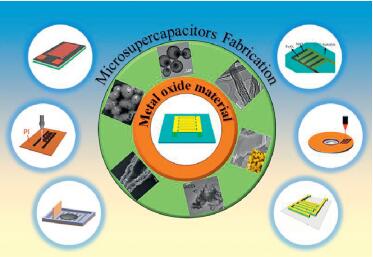
    The rapid development of portable electronic devices has accelerated the advancement of energy storage devices. On-chip microsupercapacitors (MSCs), as a group of high performance energy storage devices, have remarkable features of miniaturization, high security, and easy integration to build an all-in-one integrated system to meet the request of micro-portable electronic equipments. With the characteristics of high capacities, environmentally friendly and low cost, metal oxides are thought to be ideal candidates for on-chip MSCs. This paper summarizes the recent progress of metal oxides based on-chip MSCs. It starts with the introduction of several common methods for the synthesis of metal oxides nanostructures. The recent developments on the fabrication and electrochemical performance of metal oxides based on-chip MSCs are then highlighted in detail. Finally, the existing challenges and future perspectives of the on-chip MSCs are discussed.
  • Mengxue Chen, Yun Yang, Dezhi Chen, Hua Wang
    中国化学快报. 2018, 29(04): 564-570. https://doi.org/10.1016/j.cclet.2017.12.019
    摘要 ( ) PDF全文 ( ) HTML 可视化 收藏
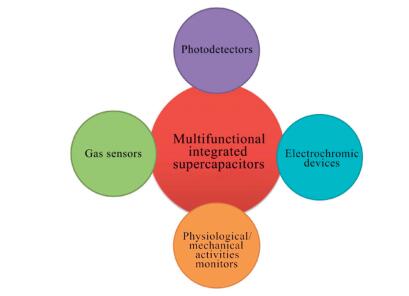
    Integration can diversify the function of a device with the same volume, therefore it facilitates the development of portable, wearable and flexible electronics. In this review, we described several kinds of novel and unconventional multifunctional integrated supercapacitors which can not only be used to storage energy but also be applied to other fields such as photodetecting, electrochromics, monitoring physiological/mechanical activities, gas sensor, and so on. First, a brief introduction of the significance and advantages of multifunctional integrated supercapacitors was presented. Then we outlined the enormous progress which has been made in the area of multifunctional integrated supercapacitors. In the end, the prospects and further developments in this exciting field were also suggested.
  • Lili Liu, Zhiqiang Niu, Jun Chen
    中国化学快报. 2018, 29(04): 571-581. https://doi.org/10.1016/j.cclet.2018.01.013
    摘要 ( ) PDF全文 ( ) HTML 可视化 收藏
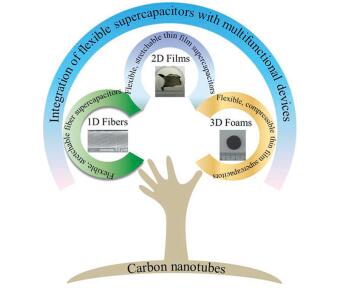
    Since carbon nanotubes (CNTs) possess unique one dimensional (1D) structure, considerable attention has been paid to constructing CNTs into macroscopic materials with different dimensions, including 1D fibers, 2D films,and 3D foams. SuchmacroscopicCNTmaterials exhibithigh conductivity,large surfacearea, aswell as goodmechanical properties, and thus can bedirectly used as theflexible supercapacitor (SC) electrodes or the scaffolds for supporting pseudo-capacitive electrode materials. Based on these macroscopic CNT electrodes, diverse SCs with different structures, including flexible, stretchable and/or compressible fiber and thin film SCs, have been designed. This review provides an overview of recent progress towards the development of flexible SCs based on macroscopic CNTs-based electrodes, with a focus on electrode preparation and configuration design as well as their integration with other multifunctional devices. Future development and prospects in the CNTs-based flexible SCs are also discussed.
  • 通信
  • Jieqiong Qin, Zhong-Shuai Wu, Feng Zhou, Yanfeng Dong, Han Xiao, Shuanghao Zheng, Sen Wang, Xiaoyu Shi, Haibo Huang, Chenglin Sun, Xinhe Bao
    中国化学快报. 2018, 29(04): 582-586. https://doi.org/10.1016/j.cclet.2017.08.007
    摘要 ( ) PDF全文 ( ) HTML 可视化 收藏
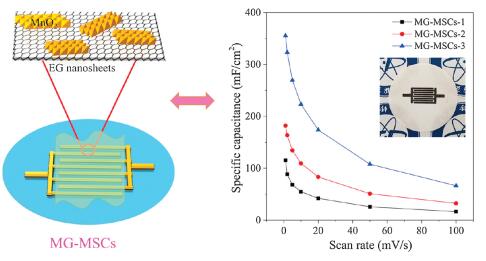
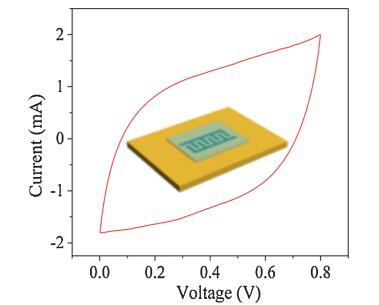
    All-solid-state micro-supercapacitors are acknowledged as a very promising class of microscale energy storage devices for directly integrating portable and wearable electronics. However, the improvement of electrochemical performance from materials to devices still remains tremendous challenges. Here, we demonstrate a novel and universal mask-assisted filtration technology for the simplified fabrication of all-solid-state planar micro-supercapacitors (MSCs) based on interdigital patterns of 2D pseudocapacitive MnO2 nanosheets and electrochemically exfoliated graphene film as both electrode and current collector, and polyvinyl alcohol/LiCl gel as electrolyte. Remarkably, the resulting MSCs exhibit outstanding areal capacitance of 355 mF/cm2, which is among the highest values reported in the state-of-the-art MSCs. Meanwhile, MSCs possess exceptionally mechanical flexibility as high as 92% of initial capacitance even at a highly bending angle of 180, excellent cyclability with a capacitance retention of 95% after 3000 cycles, and impressive serial or parallel integration for modulating the voltage or capacitance. Therefore, our proposed strategy of simplified construction of MSCs will pave the ways for utilizing graphene and analogous pseudocapactive nanosheets in high-performance MSCs.
  • Lanqian Yao, Tao Cheng, Xiaoqin Shen, Yizhou Zhang, Wenyong Lai, Wei Huang
    中国化学快报. 2018, 29(04): 587-591. https://doi.org/10.1016/j.cclet.2018.01.007
    摘要 ( ) PDF全文 ( ) HTML 可视化 收藏
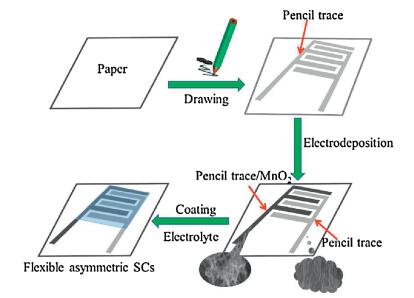
    Flexible micro-scale energy storage devices as the key component to power the flexible miniaturized electronic devices are attracting extensive attention. In this study, interdigitated asymmetric all-solidstate flexible micro-supercapacitors (MSCs) were fabricated by a simple pencil drawing process followed by electrodepositing MnO2 on one of the as-drawn graphite electrode as anode and the other as cathode. The as-prepared electrodes showed high areal specific capacitance of 220 μF/cm2 at 2.5 μA/cm2. The energy density and the corresponding power density of the resultant asymmetrical flexible MSCs were up to 110 μWh/cm2 and 1.2 μW/cm2, respectively. Furthermore, excellent cycling performance (91% retention of capacity after 1000 cycles) was achieved. The resultant devices also exhibited good electrochemical stability under bending conditions, demonstrating superior flexibility. This study provides a simple yet efficient methodology for designing and fabricating flexible supercapacitors applicable for portable and wearable electronics.
  • Lu Shi, Yang Wang, Peichao Zou, Xuanyu Wang, Dang Wu, Ronghe Wang, Cheng Yang
    中国化学快报. 2018, 29(04): 592-595. https://doi.org/10.1016/j.cclet.2018.01.024
    摘要 ( ) PDF全文 ( ) HTML 可视化 收藏
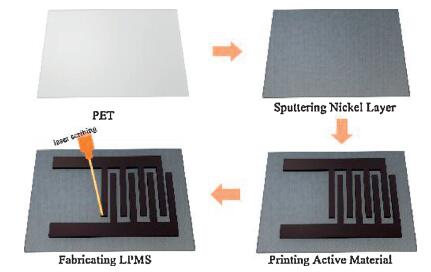
    Micro-supercapacitors with excellent electrochemical performance and aesthetic property are realized using the carbon nanotubes/manganese dioxide nanosheets (CNTs/δ-MnO2) composite as electrodes. This CNTs/δ-MnO2 nanocomposite is excellently compatible with the slurry dispensing process for electrode fabrication, and thus is conducive for preparing thick electrode films, which exhibits a specific capacitance of 257 F/g with an electrode thickness of 13 μm. By involving laser-scribing technique, the electrode film can be patterned with a high resolution and fabricated into a planar micro-supercapacitor, showing the maximum energy density of 6.83 mWh/cm3 at the power density of 154.3 mW/cm3, and maintained a value of 2.71 mWh/cm3 at the maximum power density of 2557.5 mW/cm3. Considering the versatility of the laser-scribing technical platform, the micro-supercapacitors fabricated in this way exhibit excellent aesthetic property and can cater to various miniaturized wearable electronic applications. This technology opens up opportunities for facile and scalable fabrication of high performance energy devices with shape diversity and a meaning of art.
  • Zhi Huang, Bo Yuan
    中国化学快报. 2018, 29(04): 596-598. https://doi.org/10.1016/j.cclet.2018.01.012
    摘要 ( ) PDF全文 ( ) HTML 可视化 收藏
    We report a simple method for fabricating all-solid-state micro-supercapacitors, utilizing laser writing technology. Porous graphene films with three-dimensional networks induced by laser from commercial polymer was acted as scaffold for loading MnO2, a typical pseudocapacitive materials. Using gel electrolyte, all-solid-state pseudocapacitive micro-supercapacitors were fabricated. Compare to traditional printing and lithography techniques produced micro-supercapacitors, the as-fabricated devices demonstrate high volumetric capacitances, good stability and low leakage current, indicating a scalable and facile approach for future energy storage devices in portable microelectronics.
  • Jiarui Tian, Chaojie Cui, Chao Zheng, Weizhong Qian
    中国化学快报. 2018, 29(04): 599-602. https://doi.org/10.1016/j.cclet.2018.01.027
    摘要 ( ) PDF全文 ( ) HTML 可视化 收藏
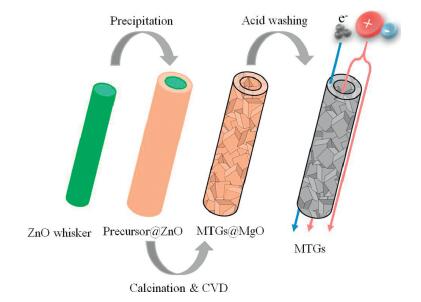
    We report the fabrication of mesoporous tubular graphene (MTG) by a chemical vapor deposition method using MgO@ZnO core-shell structure as the template. The unique bi-directional ions transfer in unstack graphene layers and high mesopore ratio of MTGs allows capacitance reach 15 μF/cm2 at 0.5 A/g, and 11 μF/cm2 at 10 A/g, which is closer to theoretical value (21 μF/cm2) than SWCNTs and DWCNTs at either low or high rate. Meanwhile, MTGs exhibited good structural stability, high surface area (701 m2/g), high conductivity (30 S/cm) and low oxygen ratio (0.7 atom%), allowing excellent SC performance. The 4 V EDLC using MTGs and EMIMBF4 electrolyte exhibited high energy density in wide range of high power density and excellent cycling stability, showing strong potential in EDLC and other electrochemical energy storage systems, in addition, showing significant factor of ion transfer distance for high performance SCs especially operating at high voltage using ionic liquid electrolyte.
  • Yang Li, Qingcong Zeng, Ian R. Gentle, Da-Wei Wang
    中国化学快报. 2018, 29(04): 603-605. https://doi.org/10.1016/j.cclet.2017.09.063
    摘要 ( ) PDF全文 ( ) HTML 可视化 收藏
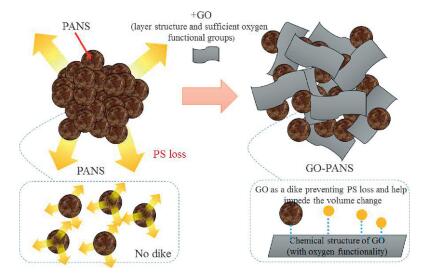
    We report a "soft" graphene oxide-polymeric organosulfide nanocomposite with improved pseudocapacitive performance for high-potential (1-2.8 V vs. Li0/Li+), high-capacity (278 mAh/g) and stable (500 cycles) lithium storage.
  • Chengjie Han, Zhen Tian, Huanglin Dou, Xiaomin Wang, Xiaowei Yang
    中国化学快报. 2018, 29(04): 606-611. https://doi.org/10.1016/j.cclet.2018.01.017
    摘要 ( ) PDF全文 ( ) HTML 可视化 收藏
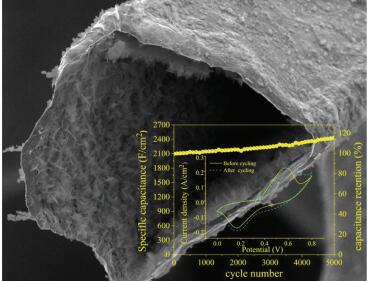
    Molybdenum disulfide (MoS2) has been stimulated in extensive researches due to its layered structure and the potential as an electrochemical energy material. However, the effects on electrochemical performance of concentration of MoS2 are rarely mentioned. In this paper, the effects of different concentrated layered MoS2 on the morphology and electrochemical properties of the composite of MoS2 and three-dimensional graphene (MoS2/3DG) were discussed. The results show that layered MoS2 was successfully compounded to 3DG and formed a vertical crosslinking structure. It can be observed that MoS2 nanosheets are vertically loaded on the inner and outer surface of graphene when the concentration of MoS2 is 0.20 mg/L. The specific capacitance of composite (MoS2 (0.20 mg/L)/3DG) reaches 2182.33 mF/cm2 at the current density of 1 mA/cm2, and the specific capacitance remains 116.83% after 5000 cycles. When the current density increased 100 times (from 1 mA/cm2 to 100 mA/cm2), the specific capacitance retains 78.9%. Meanwhile, the hybrid energy storage devises can deliver an energy density of 130.34 Wh/m2. The superior electrochemical properties are attributed to the synergistic effect of MoS2 and 3DG. Therefore, the material has a potential application on supercapacitor electrode material.
  • Peng Wang, Chunyang Li, Weigang Wang, Jing Wang, Yusong Zhu, Yuping Wu
    中国化学快报. 2018, 29(04): 612-615. https://doi.org/10.1016/j.cclet.2018.01.051
    摘要 ( ) PDF全文 ( ) HTML 可视化 收藏
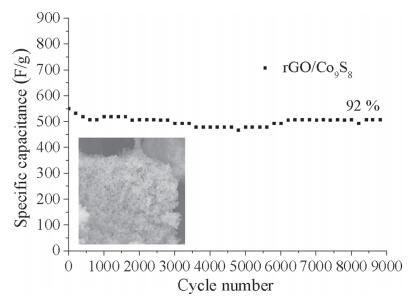
    Metal sulfides as a feasible candidate with high specific capacitance for supercapacitors suffer from sluggish ion/electron transport kinetics and rapid capacitance fading. Herein, we demonstrate a method to fabricate a composite of reduced graphene oxide (rGO) with hollow Co9S8 derived from metal organic framework (MOF). Due to the combined highly conductive rGO substrates and hollow shell, the prepared rGO/Co9S8 composite exhibits a high specific capacitance of 575.9 F/g at 2 A/g and 92.0% capacitance retention after 9000 cycles. Its excellent electrochemical performance provides great promise for application, and this versatile method can be extended to prepare other similar nanocomposite.
  • Yuling Chen, Chao Chen, Ruitao Lv, Wanci Shen, Feiyu Kang, Nyanhwa Tai, Zhenghong Huang
    中国化学快报. 2018, 29(04): 616-619. https://doi.org/10.1016/j.cclet.2017.12.028
    摘要 ( ) PDF全文 ( ) HTML 可视化 收藏
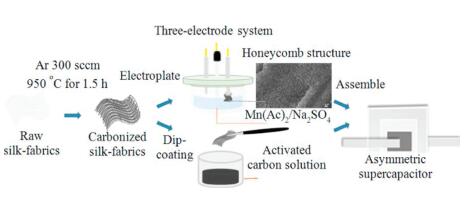
    A flexible asymmetric supercapacitor with high energy density was constructed by using a flexible substrate of carbonized silk-fabrics decorated with carbon nanotube, electroplating MnO2 nanosheets and dip-coating activated carbon powders as the positive and the negative electrodes, respectively. By controlling the electroplating time, the MnO2 nanosheets can be self-assembled to honeycomb structure and showed excellent electrochemical performance in 1 mol/L Na2SO4 electrolyte with SC950-EP30 performing the best. It exhibited a high specific capacitance (1110.85 F/g at a current density of 1 A/g based on the mass of MnO2) and superior rate capability (77.44% capacity retention from 1 A/g to 10 A/g). Thus, the optimal asymmetric device assembled with this material as positive electrode can deliver a maximum energy density of 43.84 Wh/kg and a maximum power density of 6.62 kW/kg.
  • Jin Zhang, Jing Wang, Zhiqiang Shi, Zhiwei Xu
    中国化学快报. 2018, 29(04): 620-623. https://doi.org/10.1016/j.cclet.2018.01.031
    摘要 ( ) PDF全文 ( ) HTML 可视化 收藏
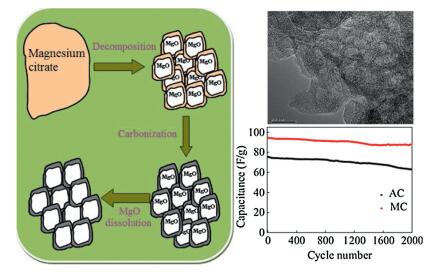
    Mesoporous carbon (MC) material with high specific surface area (1432 m2/g), large pore volume (2.894 cm3/g) and appropriate mesopore structure (about 6.5 nm) has been prepared. We use the magnesium citrate as the precursor of the carbon material and the nano-sized magnesium oxide (MgO) particles as template provided by magnesium citrate. The structure characterization and the electrochemical performance of MC are investigated. Compared with commercial activated carbon (AC) cathode, the utilization of MC cathode can obviously improve the energy density of LIC device. When the MC cathode is coupled with pre-lithiated hard carbon (HC) anode, the LIC device shows the optimal electrochemical performance, high energy density up to 95.4 Wh/kg and power density as high as 7.4 kW/kg (based on active material mass of two electrodes), excellent capacity retention of 97.3% after 2000 cycles. The present work indicates the combination of MC electrode with HC electrodes as promising candidates for the realization of LIC with high energy density, high power density and long cycle life.
  • Jiangmin Jiang, Ping Nie, Shan Fang, Yadi Zhang, Yufeng An, Ruirui Fu, Hui Dou, Xiaogang Zhang
    中国化学快报. 2018, 29(04): 624-628. https://doi.org/10.1016/j.cclet.2018.01.029
    摘要 ( ) PDF全文 ( ) HTML 可视化 收藏
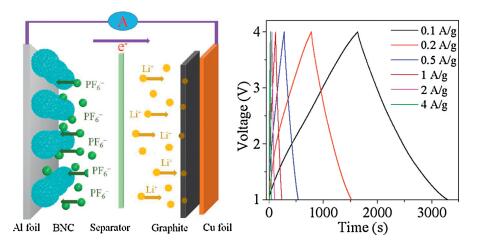
    Hybrid ion capacitors have been considered as a very attractive energy source with high energy density and power density since it combines both merits of lithium ion batteries and supercapacitors. However, their commercial application has been limited by the mismatch of charge-storage capacity and electrode kinetics between the capacitor-type cathode and battery-type anode. Herein, B and N dual-doped 3D superstructure carbon cathode is prepared through a facile template method. It delivers a high specific capacity, excellent rate capability and good cycling stability due to the B, N dual-doping, which has a profound effect in control the porosity, functional groups, and electronic conductivity for the carbon cathode. The hybrid ion capacitors using B, N dual-doping carbon cathode and prelithiated graphite anode show a high energy density of 115.5 Wh/kg at 250 W/kg and remain about 53.6 Wh/kg even at a high power density of 10 kW/kg. Additionally, the novel hybrid device achieves 76.3% capacity retention after 2000 cycles tested at 1250 W/kg power density. Significantly, the simultaneous manipulation of heteroatoms in carbon materials provides new opportunities to boost the energy and power density for hybrid ion capacitors.
  • Zhenshuai Zhao, Yihua Ye, Weihua Zhu, Liang Xiao, Bohua Deng, Jinping Liu
    中国化学快报. 2018, 29(04): 629-632. https://doi.org/10.1016/j.cclet.2018.01.011
    摘要 ( ) PDF全文 ( ) HTML 可视化 收藏
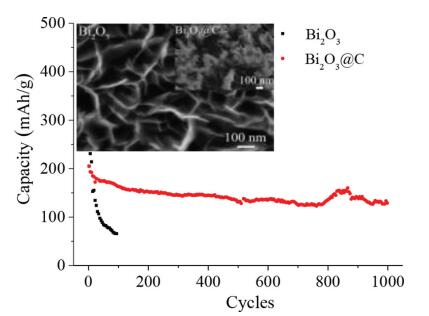
    Aqueous hybrid supercapacitors are promising due to their low cost and high safety. Herein, a freestanding battery-type electrode of Bi2O3 nanoflake@C on carbon cloth is designed for aqueous sodium ion hybrid supercapacitors. Due to the integration of nanoarray architecture and the conductive carbon, the Bi2O3@C electrode exhibits a high specific capacity of 207 mAh/g at 2 A/g (6C), good rate capability and cycling stability (133 mAh/g after 1000 cycles). With the activated carbon as the capacitive electrode and neutral sodium salts as the electrolyte, a 1.9 V hybrid supercapacitor is assembled, delivering a high energy density of 18.94 Wh/kg. The device can still maintain 72.3% of initial capacity after 650 cycles. The present work holds great promise for developing next-generation hybrid supercapacitors.
  • Xidong Lin, He Lou, Wenrui Lu, Fei Xu, Ruowen Fu, Dingcai Wu
    中国化学快报. 2018, 29(04): 633-636. https://doi.org/10.1016/j.cclet.2017.11.024
    摘要 ( ) PDF全文 ( ) HTML 可视化 收藏
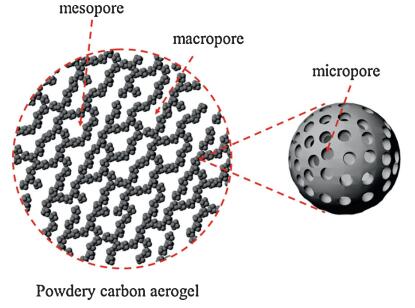
    A novel class of powdery carbon aerogels (PCAs) has been developed by the union of microemulsion polymerization and hypercrosslinking, followed by carbonization. The resulting aerogels are in a microscale powdery form, demonstrate a well-defined 3D interconnected nanonetwork with hierarchical pores derived from numerous interstitial nanopores and intraparticle micropores, and exhibit high surface area (up to 1969 m2/g). Benefiting from these structural features, PCAs show impressive capacitive performances when utilized as electrodes for organic electrolyte supercapacitors, including large capacitances of up to 152 F/g, high energy densities of 37-15 Wh/kg at power densities of 34-6750 W/kg, and robust cycling stability.
  • Wanwan Lv, Runping Xue, Sheng Chen, Mengjin Jiang
    中国化学快报. 2018, 29(04): 637-640. https://doi.org/10.1016/j.cclet.2017.11.035
    摘要 ( ) PDF全文 ( ) HTML 可视化 收藏
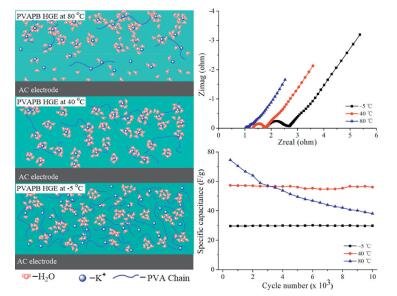
    The temperature stability of supercapacitor (SC) is largely determined by the properties of the electrolyte. Hydrogel electrolytes (HGE), due to their hydrophilic polymer skeleton, show different temperature stability to that of liquid aqueous electrolytes. In this study, symmetric activated carbon (AC) SCs had been assembled with in situ electrodeposited poly(vinyl alcohol) potassium borate (PVAPB) HGE. The electrochemical performance of the SCs was systematically studied at different temperatures. Results show that the conductivity of PVAPB HGE is comparable with that of liquid aqueous electrolytes at different temperatures. The operating temperature range of PVAPB HGE SCs is -5-60 C, while those of the 1 mol/L Na2SO4 SCs and the 0.9 mol/L KCl SCs are 20-80 C and 20-40 C, respectively. The specific capacitance of PVAPB HGE SC is higher than those of SCs using liquid aqueous electrolytes at any temperature. The excellent temperature stability of PVAPB HGE makes it possible to build stable aqueous SCs in the wider temperature range.
  • Yijie Zhang, Luhua Lu, Zhao Zhang, Zhu Shu, Kai Dai, Jinghai Liu, Ying Chen, Hongyun Jin, Shuen Hou
    中国化学快报. 2018, 29(04): 641-644. https://doi.org/10.1016/j.cclet.2017.10.030
    摘要 ( ) PDF全文 ( ) HTML 可视化 收藏
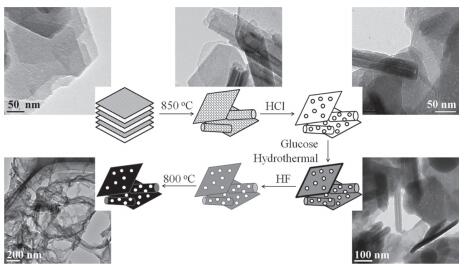
    Tuning porous structure of carbon nanomaterials has been found to be important for their performance enhancement in electrochemical energy storage applications. In this work we employed a natural nanomaterial kaolinite, which is abundant and cheap, as hard template to synthesis porous carbon nanomaterial. By tuning the structure of hard template kaolinite, we have achieved a template directed formation of holey carbon nanosheet/nanotube materials. This carbon nanomaterials with hierarchical in-plane and out-of-plane pores have shown electrochemical energy storage capacity of 286 F/g (equal to 314 F/cm3) at 0.1 A/g and 85 F/g (equal to 93 F/cm3) at 100 A/g, which is comparable to variety of reported carbon based electrochemical energy storage electrode materials.